Cuando los fans de la música de fuera de Estados Unidos piensan en Michigan, enseguida se van a Detroit, a la Motown, a MC5, Iggy Pop y Jack White… Quizá también a Madonna, Bob Seger o Eminem. Los más cafeteros, eso sí, también sabrán que las guitarras Gibson empezaron a fabricarse en Kalamazoo, una pequeña localidad de nombre bastante peculiar.
It’s been my experience that music fans overseas tend to think of Michigan and go right to Detroit, Motown, MC5, Iggy Pop and Jack White… maybe even as far as Madonna, Bob Seger or Eminem, while the enlightened few will also remember that Gibson guitars were first manufactured in a little odd-named town called Kalamazoo, Michigan.
Pero si alguna vez has estado en la “UP” (upper peninsula – la parte superior de Michigan) o en cualquier lugar al norte de Traverse City, sabrás perfectamente por qué de allí ha salido tan poca música ‘popular’.
Los de Michigan llamamos a esa zona «el otro Michigan»: el hermano mayor más curtido de la Mitten (la ‘manopla’). Y sí, basta con echar un vistazo al mapa para entender por qué muchos de nosotros utilizamos la palma de la mano derecha para señalar dónde cae cada sitio de este estado rodeado de agua por todas partes.
But if you’ve ever been to the UP (upper peninsula) in Michigan or anywhere north of Traverse City, to be honest, you’ll know why very little “popular” music came from “up north”.
For us Michiganders, we call it “the other Michigan”; the Mitten’s rugged older sibling (that’s right, look at a map and you’ll get why most of us use the palm of our right hand to pinpoint places in the waterlogged state).
Mientras que el resto de Michigan es bastante llano y aburrido (y directamente feo si nos fijamos en buena parte de la zona oriental), algunos de los parajes naturales más espectaculares del planeta están en esos bosques norteños: Pictured Rocks, Sleeping Bear, las ‘montañas’ Porcupine, las cataratas Tahquamenon, Copper Harbor y la península de Keweenaw, Leelanau… Y así podríamos seguir un buen rato.
La costa de los Grandes Lagos, con sus interminables dunas, puede tener aguas tan luminosas como las del Caribe, pero cuanto más al norte te adentras, más se oscurece el paisaje.
While the rest of Michigan is pretty flat and blasé (and downright ugly if we look at most of the eastern side), some of the most beautiful natural places on Earth can be found in “the north woods”: Pictured Rocks, Sleeping Bear, Porcupine “Mountains”, Tahquamenon Falls, Copper Harbor/Keweenaw, Leelanau… and the list goes on.
The dune-laden Great Lakes coastline might be bright as the Caribbean, but the further north you go, the darker it gets.
Total, si conoces un poco esta parte de Michigan, no te sorprenderá demasiado el tipo de música que hace Mothertomb, una banda procedente del norte del estado.
Llevan apenas año y medio juntos y ya suenan sorprendentemente seguros de sí mismos. Naturalmente, todavía tienen recorrido por delante para terminar de definir su propia identidad, pero han arrancado con una personalidad musical bastante definida y sorprendentemente distintiva.
Long story short… (me? ramble?) if you know any of this, you won’t be surprised by what kind of music the band Mothertomb, hailing from northern Michigan, puts out.
Formed only a year and a half ago, the band already sounds remarkably assured. Sure, there’s still room for their identity to evolve, but they’ve come out of the gates with a surprisingly distinctive musical personality.
La historia de cómo empezó todo es bastante interesante, en verdad. Según cuenta la propia banda: «En abril de 2025, el norte de Michigan sufrió una de las peores tormentas de hielo de los últimos cien años. Fue tan devastadora que dejó fuera de servicio toda la red eléctrica de la región y a 145.000 personas (nosotros incluidos) sin electricidad durante varias semanas, con temperaturas bajo cero, hasta el punto de que se declaró el estado de emergencia nacional».
Madre mía, qué poco echo de menos aquellos tiempos. Cuando era pequeña, recuerdo pasar una semana o más con lámparas de queroseno durante los inviernos más duros. Cuatro generaciones bajo el mismo techo, comiendo guisos preparados en la estufa de leña del sótano, y teniendo que abrirnos paso entre montañas de nieve y hielo para dar de comer a los animales de la granja. Ya que salíamos, aprovechábamos para llenar cubos de nieve y llevarlos a casa: una vez derretida, la utilizábamos para tirar de la cadena (si no hay electricidad, no hay bomba de agua del pozo, y no hay presión para llenar la cisterna).
The catalyst that got it all started is actually pretty interesting. According to the band, “In April 2025, Northern Michigan was hit with one of the worst ice storms recorded in the last 100 years — so much so, that it destroyed all power grids in the region and left 145,000 people (including us) without power in below freezing temperatures for several weeks, resulting in a national state of emergency.”
Boy, do I NOT miss those days. When I was growing up, I remember kerosene lamps for a week or more in bad winters, four generations under the same roof eating stews cooked on the wood stove down in the basement, braving the mile-high snow and ice to feed the animals out in the barn, and taking advantage of the trip to bring in snow in buckets from outside, which, when melted, we used to flush the toilets (no power → no well pump → no water pressure to refill the tank).
Lo único bueno era que, evidentemente, aquellos días no había cole. Pero, aparte de leer cuando empezaba a anochecer (¡a eso de las tres de la tarde!) y de convertirnos en unos cracks a base de interminables partidas de cartas después de cenar, tampoco es que sacáramos gran cosa de aquellos días de frío y confinamiento.
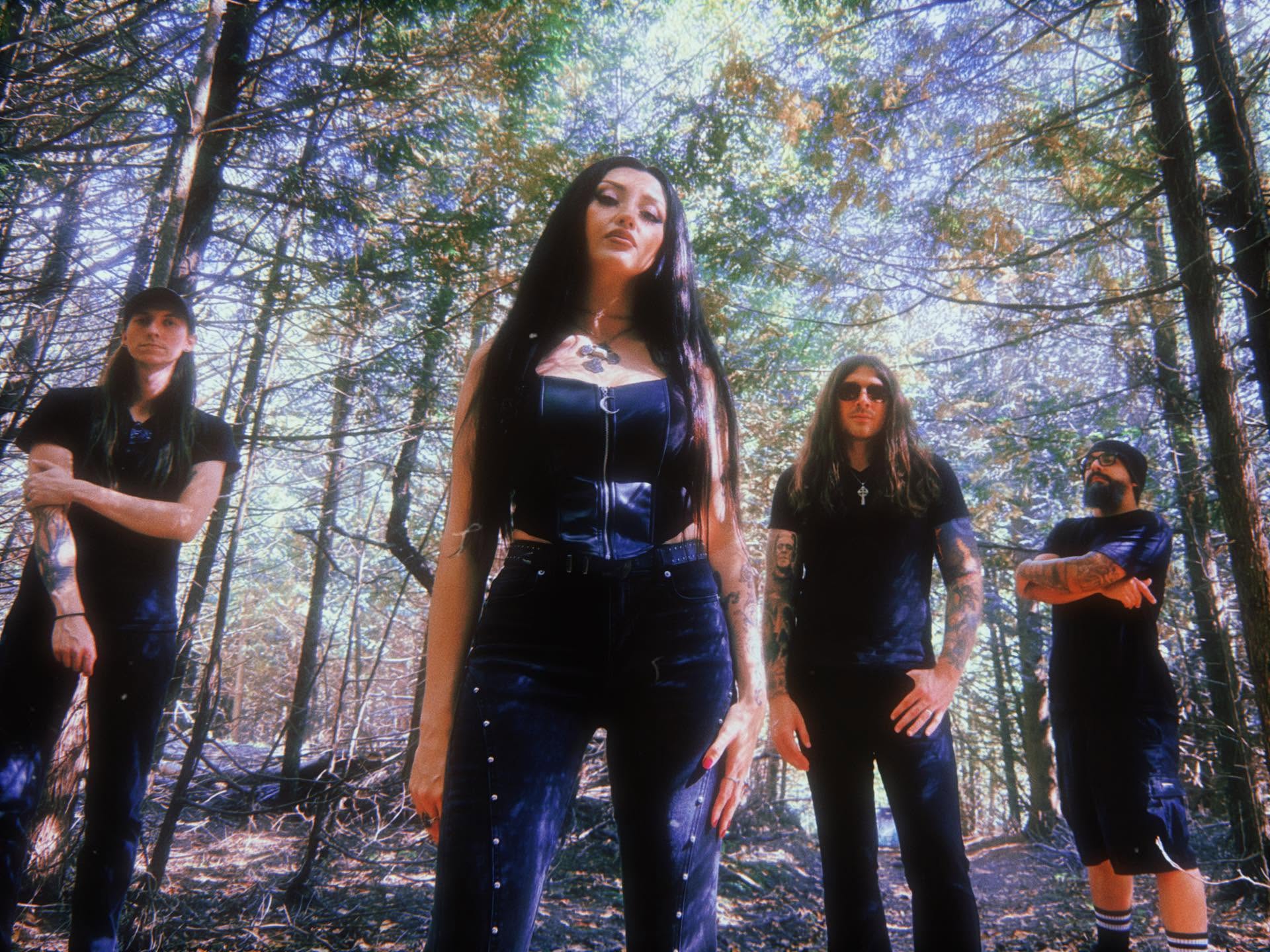
Mientras que los demás nos habríamos conformado tan felizmente con que volviera la luz, Mothertomb encontró en aquella experiencia algo capaz de transformar su creatividad. Lo que empezó siendo una catástrofe natural acabó convirtiéndose en el germen conceptual de una banda, de su nombre y, finalmente, de su sonido.
Ellos mismos lo explican mejor que nadie: «Al contemplar aquella autodestrucción natural de nuestros bosques, árboles y fauna, vimos cómo la belleza y la desesperación se entrelazaban, polarizadas y atrapadas bajo centímetros de hielo. Era algo tan mágico como aterrador. Parecía que la propia Madre Naturaleza se había construido su propia tumba. Y de ahí surgió el nombre… Mothertomb: una dualidad entre la luz y la oscuridad que representa la condición humana e inspira nuestro sonido».
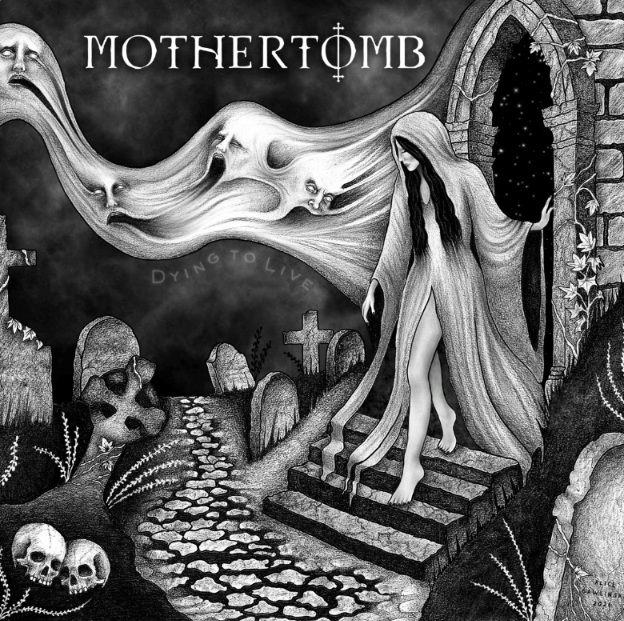
El cuarteto se puso manos a la obra enseguida y, apenas un año después, en julio de 2026, publicó Dying to Live por su cuenta.
The only good thing is that they were obviously snow days, meaning no school. But apart from what we read after dark (3pm-ish) and how much we improved our card playing skills with the rest of the family after dinner, we didn’t get much out of those cold, locked-in days.
While the rest of us would have been perfectly happy to just see the power come back on, Mothertomb found something creatively transformative in the experience. What began as a natural disaster became the conceptual foundation for a band, its name, and ultimately its sound.
The band describes it best: “In witnessing this natural self-destruction of our forests, trees, and wildlife, we saw the polarization of beauty and despair intertwined and encased in inches of ice. It was both mystical and horrifying. It felt like Mother Nature had created her own tomb. And thus, with that thought came the name… Mothertomb – a duality of the light and dark that represents the human condition and inspires our sound.”
The foursome got cooking right away and self-released Dying to Live only a year later (July 2026).
El primer tema, “The Summoning”, arranca muy rollo “Empress Rising” (Monolord), con esa repetición hipnótica, esos riffs relativamente sencillos y una contundencia sonora que te pasa por encima. Dicho esto, la voz de Alice Gawlinski y las características melodías modales de la banda no tardan en distanciarles con los pesos pesados suecos del doom.
De hecho, la voz es probablemente uno de los rasgos más distintivos y expresivos de Mothertomb. Alice tiene una fuerza conmovedora, una delicadeza casi espectral y una sensibilidad melódica que parece venir de otro mundo. Y, sin embargo, de vez en cuando también se arranca a rugir (“Cythraul”), sacando a relucir la faceta más metalera de la banda.
Se aprecian pequeños matices en su forma de frasear: retrasa una sílaba, alarga una vocal, varía la intensidad de una nota sostenida o introduce ligeras inflexiones en la voz. Y tiene sentido. Aquí hay bastante contradicción: «Mother» (madre, nacimiento), «Tomb» (tumba, muerte), morir («Dying»), aun así, luchar por vivir («to Live»)… Y es precisamente ese juego de contrastes, tanto en lo temático como en lo musical, lo que les da una enorme riqueza emocional, sin que desaparezca nunca esa sensación de amenaza latente.
The first track, “The Summoning“, starts out very much in “Empress Rising” (Monolord) territory, with its hypnotic repetition, relatively simple riff structures and overwhelming sonic weight. That said, Alice Gawlinski’s vocal phrasing and the band’s distinctive modal melodies soon set it apart from the Swedish doom heavyweights.
In fact, the vocals are probably one of the band’s most distinctive and expressive musical features. There’s a soulful power, a haunting delicacy, an almost otherworldly melodic sensibility to Alice’s voice, and yet, she does growl at times (“Cythraul”), bringing out the more “metallic” side of the band.
You can hear subtle variations in phrasing: delaying a syllable, stretching a vowel, varying the intensity of a sustained note or introducing a slight vocal inflection. It makes sense. There’s a lot of contradiction here: “Mother” (birth), “Tomb” (death), Dying, yet striving to live… And it’s that interplay of opposites, both thematically and musically, that gives the band its emotional depth, while maintaining a persistent undercurrent of dread.
La banda afirma que encuentra inspiración en el folclore galés de Alice (nativa de Gales), aunque cuánto de todo eso acaba reflejándose realmente en las letras es algo que prefiero dejar en manos de quienes prestan más atención a la dimensión lírica. A mí, personalmente, me impresionó más su manera de cantar.
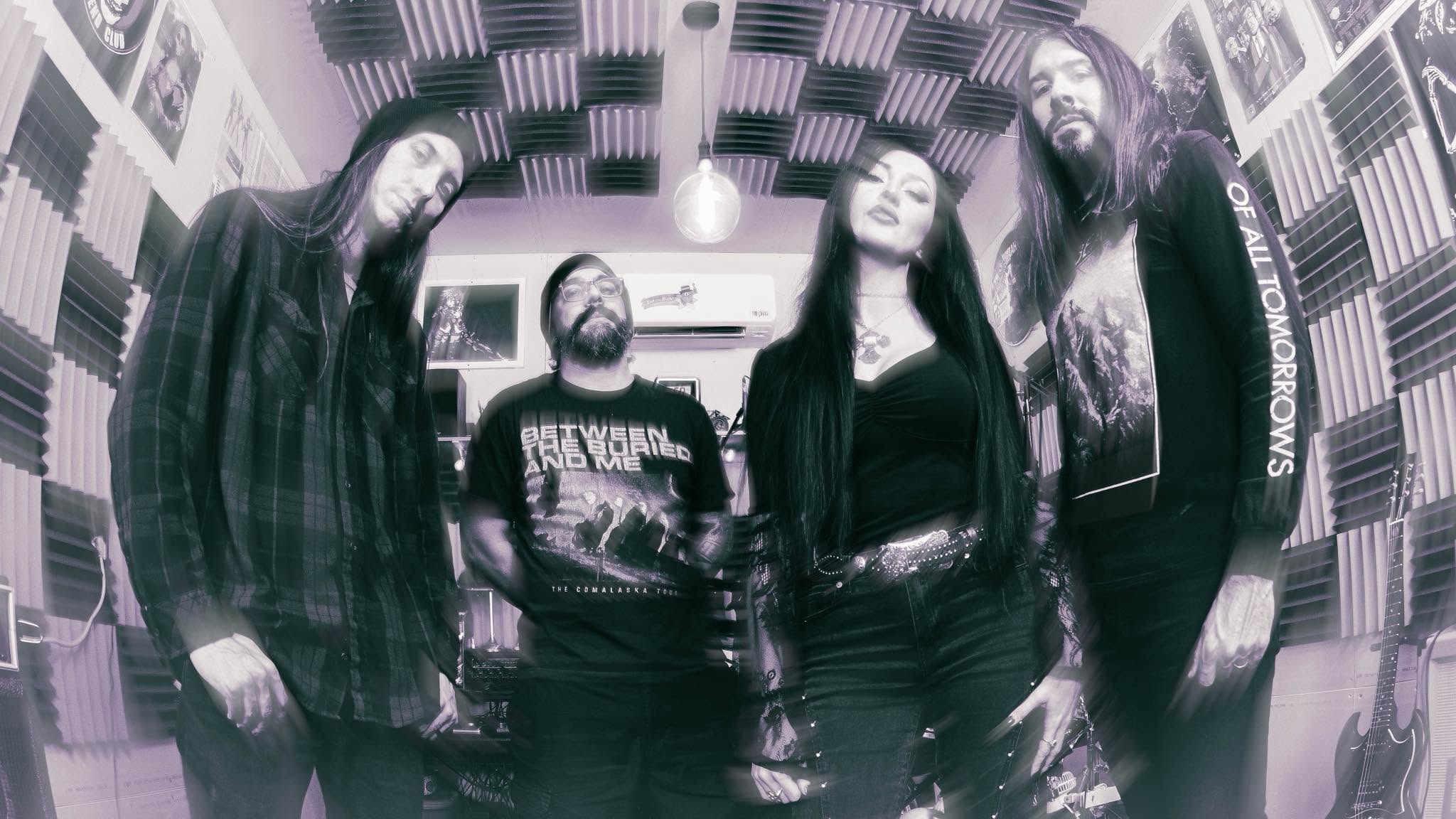
Alice y su marido Chance aportan buena parte del carácter melódico de Mothertomb, mientras que el bajo de Alton Minor y la batería de Mike Benitez ponen el peso y la base rítmica: pesada, parsimoniosa y sin demasiadas prisas por llegar a ninguna parte.
Gran parte de la guitarra de Chance gira en torno a riffs enormes, de tonalidad oscura y con una presencia especialmente contundente en los medios-graves. Eso sí, de vez en cuando se adentra en terrenos más abiertamente metaleros, con riffs entrecortados y algún que otro sutil pinch harmonic (como en “Beware”). Eso sí, estos recursos se repiten bastante a lo largo del disco.
The band claims to draw inspiration from Alice’s native Welsh folklore, although how much of that actually comes through in the lyrics is something I’ll leave to more lyrically attentive listeners to explore. I was more impressed by her vocal delivery, myself.
Alice and her husband Chance provide much of Mothertomb’s melodic character, while Alton Minor’s bass and Mike Benitez’s drumming supply the lumbering, plodding rhythmic foundation.
Chance’s guitar work seems mostly built around massive, dark-toned riffs, with a particularly physical low-midrange presence. He does, however, venture into more overtly metal domains at times, introducing some chugging riffs and even the occasional subtle pinch harmonic (as on “Beware”). These elements, however, remain recurring motifs throughout the album.
En “Mountain Hag” las cosas se ponen algo más interesantes y aventureras. Es un tema realmente sólido y, si te gustan Messa, Chelsea Wolfe, King Woman o Monolord (curiosamente, ninguna de estas bandas aparece en el apartado de “FFO – para fans de” de la nota de prensa), lo más probable es que te enganche a la primera.
Y la canción que da título al álbum, “Dying to Live”, es la encarnación sonora del doom más oscuro, sensual e hipnótico. La producción acentúa ese carácter crudo y orgánico, permitiendo que las guitarras levanten un muro de sonido denso y atmosférico.
En definitiva, un debut bastante increíble para una banda tan joven. Y eso que todavía tienen mucho margen para crecer.
In “Mountain Hag”, things get more adventurous. It’s a really solid track and if you’re a fan of Messa, Chelsea Wolfe, King Woman, or Monolord (bands that are curiously not listed on the “FFO” section of the press kit), odds are you’re going to get hooked right away.
And the title track, “Dying to Live”, is the sonic embodiment of dark, sensual, hypnotic doom. The production adds to the raw, organic feel, allowing the guitars to build a thick, atmospheric wall of sound.
All in all, a pretty unbelievable debut from such a young band. Can’t wait to hear what’s next.
Mothertomb: Bandcamp I Facebook I Instagram I Spotify I YouTube
Dying to Live Tracklist:
1. The Summoning
2. Cythraul
3. Beware
4. Mountain Hag
5. Dying to Live
Recorded in Charlevoix, MI at Death Box Records
Music written by: Mothertomb
Produced by: Alton Minor and Mothertomb
Lyrics written by: Alice Gawlinski
Mixed and mastered by: Alton Minor
Recording engineer: Alton Minor and Mike Benitez
Artwork Design and Illustration by: Alice Gawlinski