
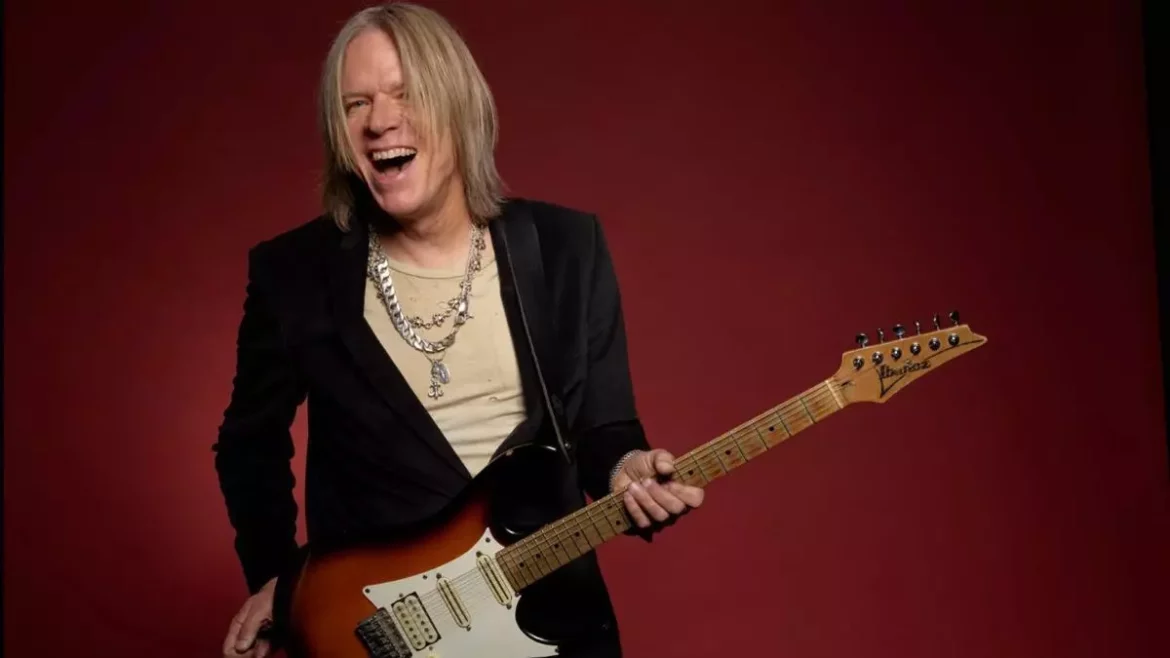
Andy Timmons: “Si puedo formar parte de la recuperación de alguien a través de la música, eso es lo mejor que podría transmitir”
El guitarrista Andy Timmons repasa su presente creativo, habla de Recovery y de su actual gira, de su relación con la depresión, de su manera de entender la melodía y de proyectos tan especiales como su recreación de Sgt. Pepper.
Siempre resulta un placer departir unos minutos con alguien tan apasionado por la música. Aprovechando su próximo paso por España para presentar su último trabajo “Recovery”, Andy Timmons nos recibe (via Zoom) en el estudio donde realiza sus grabaciones para hablar con nosotros. Tras unas pequeñas dificultades técnicas, el guitarrista aparece amable y disculpándose por no haberse podido conectar antes. Comienza así una charla que tranquilamente podría haberse alargado durante mucho más.
Hola Andy. En primer lugar agradecerte estos minutos que dedicas a Dirty Rock Magazine. Vienes de trabajar en distintos frentes, tanto con tu banda como en colaboraciones paralelas. ¿En qué andabas trabajando antes de conectarte?
Estaba haciendo algunas cosas con Josh Smith mi productor. Realmente disfruto mucho trabajando con él. Ya sabes, es otro gran guitarrista y siempre es agradable colaborar con alguien así. La mayor parte del tiempo suelo autoproducirme o trabajar con Mike Dane, el bajista de mi banda. Pero él y yo estamos trabajando ahora mismo en el nuevo disco de la Andy Timmons Band. Así que esto es un poco como un proyecto paralelo entre medias de todo lo relacionado con la Andy Timmons Band.
Siempre es algo muy saludable trabajar con gente diferente y nueva, porque va a sacar cosas distintas de ti. Pero, ya sabes, me encanta trabajar con mi banda, y con lo que voy a ir a España es precisamente con la Andy Timmons Band. Tocaremos parte del material de Recovery. Tenemos un catálogo amplio de trabajos que va desde 1988 hasta hoy, así que tenemos mucha música para tocar para todo el mundo.
Hablemos de tu último trabajo “Recovery”. ¿Cómo se siente uno cuando termina un disco y por fin puede expresarse con él sobre un escenario?
Siempre estás deseando compartir tu música con el público, ya sabes, y cada noche es nueva y diferente. Puede que quizá toque las mismas notas cada noche, pero están tocadas de una manera muy distinta cada vez, según cómo se sienta la banda, cómo sea el sonido, la respuesta del público… todo eso puede inspirar momentos especiales, ya sabes, que solo ocurren cuando todos nos juntamos. Es una energía especial.
Si no recuerdo mal, tienes varias fechas en España…
Sí, tengo que mirar el calendario. Empezamos en Bilbao, tocamos en Madrid, Barcelona y luego dos en las Islas Canarias.
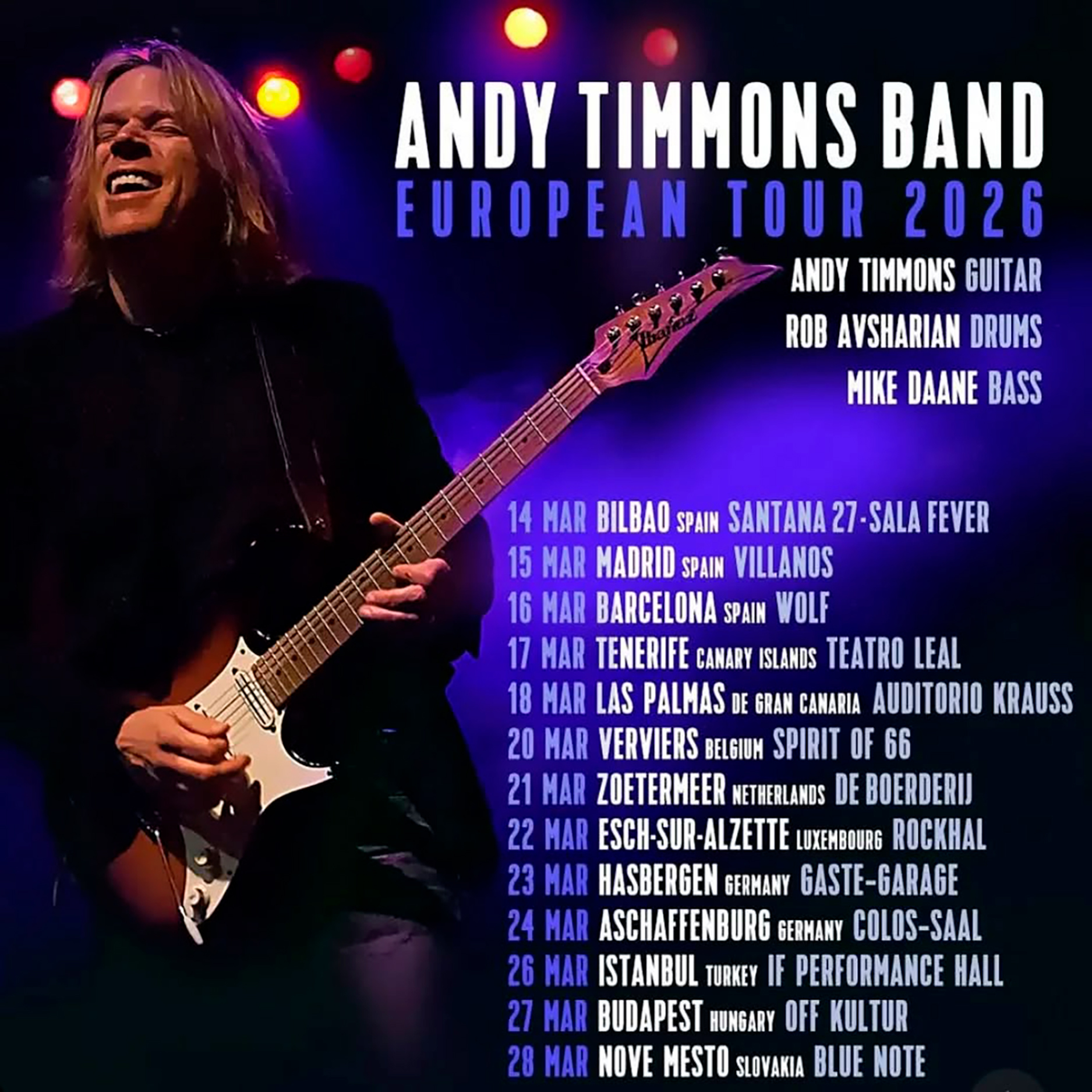
Hacía muchos años que no tocabas por aquí…
Ha pasado un tiempo desde la última vez. No recuerdo el año exacto, pero hemos dado conciertos muy buenos en España, de verdad, siempre con una gran energía, con un público estupendo, muy apasionado. Así que estamos muy felices de volver.
Será la primera vez que te vea en directo y tu estilo resulta muy interesante incluso para un guitarrista de la clase 101 como yo…
Está bien, todos somos guitarristas 101, ya sabes (risas).
Me gusta mucho tu estilo melódico. ¿Es una de las cosas que buscas cuando haces un disco? ¿Quieres usar la guitarra como una voz?
Sí, muchísimo. Amo la guitarra, la historia de la guitarra y todo lo que ha venido antes de mí y todo lo que está ocurriendo ahora. Hay tanta capacidad técnica y técnicas increíbles que siguen superando los límites.
Pero al final del día, a mí lo que me encanta es escuchar grandes melodías, y eso es siempre lo que atrae a mi oído. Me gusta el shred, la velocidad y la técnica, y me gusta trabajar en todo eso. Y eso forma parte de lo que yo llamo la paleta. Es como pintar con una gran paleta de sonidos y sensaciones diferentes. Pero, de nuevo, básicamente estoy tocando lo que me gustaría escuchar. Me encanta sentirme atraído por una buena melodía, tocada de una manera realmente especial. Ese es el objetivo para mí cada noche.
Hablemos de tu nuevo disco. Vienes a España con Recovery. ¿Qué significa ese título para ti? ¿Te estás recuperando de algo?
Sí, tiene muchos significados, y cada día nos estamos recuperando de algo. Recuperándonos de cosas que vimos en las noticias, recuperándonos de lo que sea, de un comentario negativo de alguien o de algo que no salió bien, de algo que intentaste pero no funcionó.
Pero sí, he tenido problemas de salud en mi vida, desde el cáncer hasta la depresión y problemas de audición. He lidiado con la depresión toda mi vida. Así que hay muchas cosas de las que siempre intento recuperarme y sanar. Y la música ha sido una parte muy importante de ese proceso. Escucharla, absorberla, pero también participar en ella, tocar la guitarra. La música cura a muchos de nosotros. Y simplemente escucharla y participar, tocar delante de la gente… Sé que la música puede ayudar a la gente. Y si yo formo parte de esa curación, de esa recuperación suya, entonces eso es lo mejor que podría ayudar, lo mejor que podría esperar transmitir, ya sabes, de todo lo que yo he recibido de la música.
Sí, lo entiendo perfectamente. Cada día hay algo de lo que recuperarse.
Algunas cosas son pequeñas, pero otras son muy profundas. A veces lleva mucho tiempo y otras es simplemente un proceso diario.
Hacía mucho que no te escuchábamos cantar pero en este disco tenemos “Something Good’s Gonna Come” tu voz gana protagonismo. ¿Es una pista de algo más, de un disco más pop contigo a la voz, o es solo un pequeño regalo para nosotros?
No, escribo mucho material vocal, ya sabes, lo que supongo que se podría considerar pop. Esa canción la tenía desde hace tiempo, de hecho. Y colaboré con Stan Lynch, de Tom Petty and the Heartbreakers, que me ayudó a terminar la letra.
Y sí, tengo material más que suficiente para un par de discos vocales. Así que es solo cuestión de ponerse a ello, porque me encanta escribir en ese estilo. Ya sabes, soy muy fan, por supuesto, de los Beatles, muy fan de Elvis Costello. Me encanta el estilo de Tom Petty. Así que, ya sabes, tengo mi propia combinación de todas esas influencias.
Así que sí, la respuesta corta es sí: en algún momento habrá discos completos con voz. Pero también creo que soy mejor cantante con la guitarra. Ahora bien, hay canciones, ya sabes, como en el último disco con Josh Smith, “Electric Truth”, en las que escribí un par de temas pero hice que otra persona los cantara porque pensé que lo haría mejor. Pero hay letras y melodías que escribo para cantar que nadie más haría bien. Puede haber voces técnicamente mejores, pero yo tengo una forma de presentarlas porque son mis palabras, ya sabes, y escribo con mucho cuidado. Así que significan mucho para mí. Así que sí, sin duda haré más cosas vocales.
Tengo que preguntarte por tu homenaje a los Beatles y a Sgt. Pepper. Me parece un trabajo increíble. Amo ese disco, tanto el tuyo como el de los Beatles. ¿Qué significó para ti hacer ese álbum?
Sí, pues todo ocurrió un poco sin planearlo. Mi idea inicial no era: “Oye, quiero grabar el disco Sgt. Pepper de los Beatles”. Pero desde luego ese disco, y cada uno de sus discos, están profundamente incrustados en mi ADN musical, porque los he escuchado sin parar desde el principio. Ya sabes, nací en 1963 y tenía un hermano que me sacaba doce años, que compraba cada uno de esos discos cuando salían. Así que no tengo ningún recuerdo de mi vida sin los Beatles.
Estábamos haciendo una gira por Italia con nuestro mánager de gira, Riccardo Capelli… ya sabes, estábamos tocando “Strawberry Fields”; fue el primer arreglo que hice, un poco por probar, simplemente elegí esa canción. Funcionaba muy bien con la guitarra. Tuvo tan buena respuesta que él me sugirió: “Bueno, quizá la próxima vez que vengas deberías hacer una noche entera de Beatles”. Y yo pensé: esta canción funciona, pero dudo que pueda hacer eso. Fui un poco negativo, me dije a mí mismo que no podía hacerlo. Y eso es lo peor que puedes decirte, ¿verdad?
Pero que él dijera eso fue en realidad el catalizador para pensar: bueno, ¿y si lo intentara? Quizá probar con “Help!” o “In My Life”, e ir haciendo esos arreglos. Y se convirtió un poco en una afición. Estaba jugueteando con ello. Ya había hecho el disco Resolution, que me llevó a tocar acordes y melodías sin sobregrabaciones. Como en canciones como “Gone” o “The Prayer/The Answer”. Así que ya había pasado por eso y, además, tenía un buen conocimiento del jazz, de tocar melodías con acordes al estilo de Joe Pass o Wes Montgomery. Así que tenía conocimientos sobre cómo reunir todo eso en una sola interpretación con guitarra.
Entonces se convirtió en una afición. Seguí haciendo pequeños arreglos de Beatles puramente por diversión. Pero la siguiente que realmente me llamó fue “Lucy in the Sky”. Y ese arpegio de teclado era un gran motivo para la guitarra. Así que hice eso. Y en algún momento pensé: bueno, ¿y si pudiera hacer todo Sgt. Pepper? Y fue pura y simplemente: ahora me estoy desafiando a mí mismo. Ricardo lo puso en marcha y yo pensé: vale. Y así fue. En fin, resumiendo, fue eso: fue una labor de amor y se convirtió en una afición, simplemente ver si podía sacar adelante esos arreglos. Y entonces tuvimos algo de tiempo extra en el estudio de grabación. Estábamos grabando “Theme from A Perfect World” aquel disco. Quedaron un par de días libres y mi batería, Mitch, y Herbie, hablando de los arreglos, dijeron: “Grabemos esos temas de los Beatles”.
Y ahí fue cuando pensaste: vale, vamos.
Sí, sí. Pero desde ese día me llevó alrededor de un año terminar las pistas. Aproximadamente la mitad las grabamos en directo. Ya sabes, las había tocado tanto que sabía exactamente cómo quería hacerlas. Y Mitch entiende perfectamente la forma de tocar de Ringo, y yo sabía que lo haría de maravilla. Pero luego me llevó aproximadamente otro año más trabajar de verdad en las demás canciones.
Eso me ayudó a aprender todavía más sobre afinación de lo que ya sabía, por los problemas de entonación y afinación. La guitarra es un instrumento muy imperfecto. Así que crecí mucho en ese sentido, y también intentando conseguir los tonos adecuados, como siempre. Y hubo muchos momentos a lo largo de ese disco en que pensé: “Esto no está funcionando. No es lo bastante bueno”. Si iba a intentar grabar ese disco entero, tenía que estar realmente a un nivel muy alto o no me iba a convencer.
Ya sabes, no soy muy fan de las versiones de los Beatles, la verdad. Tiene que ser algo especial y único. Y como yo lo estaba abordando sin sobregrabaciones, tenía que crear de forma lineal las partes más importantes de la canción en todo momento, ya sabes, qué iba a representar lo que yo escucho del disco en mi cabeza. ¿En qué me estoy concentrando realmente? ¿En la voz, en la guitarra, en la orquestación? Así que intenté hacer eso lo mejor posible, representar las canciones. Y creo que eso fue lo que lo hizo interesante, en lugar de intentar replicar todas las partes y sobregrabar mil cosas o lo que fuera.
Y al final eso es precisamente lo que lo hace tan personal.
Exacto. Lo hizo muy personal. Y creo que por eso funciona, al menos para mí. Esperaba que a la gente le gustara. La respuesta fue increíble. Me alegra que te encante. Gracias.
Con los Beatles da la sensación de que uno puede seguir aprendiendo toda la vida…
Oh, desde luego. Y yo sigo escuchándolos. Sigo siendo fan y sigo… Paso por etapas en las que me obsesiono con cosas y puedo estar un año entero con Chopin o otro año con Tom Petty. Pero los Beatles siempre entran y salen de eso. Siempre están ahí. Puede que me aleje durante un tiempo, pero algo me los vuelve a recordar y regreso a ellos. Es como una manta de seguridad, siempre me hacen sentir bien. Y sí, sigo aprendiendo y seguimos hablando de ellos. Es increíble.
Así que ha sido maravilloso tenerlos en nuestras vidas durante todo este tiempo, ya sabes, y cuesta imaginar la música y la vida sin ellos.
Yo no puedo imaginarlo.
Es un mundo diferente, amigo. Nos dieron muchísimo.
¿Has pensado alguna vez en hacer algo parecido con otro artista?
De hecho, lo hice otra vez, también por diversión. Hice entero el Ziggy Stardust de David Bowie.
O sea… ¡que todo empieza por diversión!
Eso es. Todo empieza con cosas que amas y que quizá puedan funcionar. Pero tampoco quiero que me encasillen como el tipo de las versiones, porque tengo mucha música propia que necesito sacar. De hecho, como mencioné antes con Chopin, acabamos de terminar mi disco Nocturnes. Son 12 piezas. Escribí 10 de las 12. Las otras dos son un preludio de Chopin y la otra es la canción de Charlie Chaplin “Smile”. Así que saldrá más adelante este año.
Pero ahora que hemos terminado eso, nos hemos metido de lleno en el nuevo disco de la Andy Timmons Band. Así que hay mucho material mío, aunque quizá metamos alguna versión de vez en cuando. Ya veremos.
En cualquier caso, es una gran noticia que estés tan ocupado. Eso significa que hay mucho trabajo y que nosotros podemos seguir disfrutándolo.
Pero, ya sabes, yo siempre le digo a la gente que parte de la vida es crecer. Si estoy practicando y exigiéndome… el disco Nocturnes fue realmente difícil. Suena sencillo, sí, pero creo que es lo más difícil que he hecho. Así que siempre es bueno estar en un lugar en el que sabes que tienes que exigirte.
Pero también, cuando se trata de escribir y publicar música, todo empieza de una manera muy egoísta. No estoy pensando en ti. No estoy pensando en el público. Tiene que ser algo muy auténtico para mí. Y luego, por supuesto, espero que tú y todo el mundo encontréis algo que os guste. Pero lo más importante es que yo esté honrando lo que sea que me llegue, la musa o el don que sea. Voy a explorarlo.
Hice un disco de bossa nova hace unos años y estoy seguro de que a muchos de mis fans más rockeros probablemente no les interesó. Y está bien. Pero como artista me siento orgulloso de hacer eso. Y tengo artistas favoritos de los que no me encanta todo lo que hacen, pero me encanta que lo hagan.
Como Todd Rundgren, por ejemplo.
Sí. Todd Rundgren es uno de mis grandes héroes y hace todo tipo de cosas distintas. Algunas, para mí, son un poco raras. Y quiero decir, algunas me encantan; algunas creo que son de las mejores músicas jamás hechas. Pero me encanta que las haga. Eso es lo importante: dejar que un artista sea un artista de verdad. Y aunque no sea tu taza de té, cosa que va a pasar con cualquiera de tus artistas favoritos, siempre habrá discos que te gusten más o menos.
He tenido la suerte de poder seguir haciéndolo. Quiero hacerlo. Y hay gente a la que le importa. Y eso está muchísimo más allá de lo que yo podría haber imaginado jamás. Yo, de niño, solo quería tocar la guitarra e intentar ser bueno. Y todavía soy ese niño que solo quiere mejorar y seguir aprendiendo.
Otra de las formas de entrar en tu universo es a través de los temas que dedicas a otros músicos. En Recovery está esa pieza tan breve y emocional “Elegy for Jeff” dedicada a Jeff Beck, y también hay una canción dedicada a Steve Morse, que es de mis favoritas del disco. En el pasado también has hecho temas inspirados por Stevie Ray Vaughan. Cuando compones algo así, ¿de dónde nace: de la emoción o de la forma de tocar de esa persona?
Bueno, claramente podría hablar de cada una por separado porque quizá sean ligeramente diferentes. Por supuesto, recuerdo a Stevie… Stevie Ray Vaughan murió trágicamente en aquel accidente de helicóptero. Y yo no fui uno de esos tantos grandes guitarristas muy influidos por Stevie Ray Vaughan. Aunque fui y soy muy fan, nunca pude captar realmente eso que él tenía.
Pero quería homenajearlo y tocar mi propia versión de algo blues y rockero. Con Jeff… claramente me estoy acercando un poco a su mundo para rendirle tributo, pero ni de lejos a lo que él hacía. Pero es una de mis influencias de toda la vida. Y hay mucho de mi música, especialmente los Nocturnes y otras cosas, donde hay ciertos niveles de expresión que él alcanzó y a los que muy pocos siquiera se acercan.
Y me encanta tenerlo como uno de esos héroes a los que aspiro. Pero, precisamente porque no hago las cosas como él y no soy capaz de hacerlo así, al final sale algo más parecido a mí. No siento que tenga que sonar como Jeff Beck, pero sí quiero honrar toda su trayectoria y cómo siguió evolucionando hasta el final. Siguió mejorando y cambiando, sin repetirse. Eso es muy importante para un artista que realmente quiere seguir creciendo. Su muerte prematura fue un gran shock. Ya estaba haciéndose mayor, sí, pero daba la impresión de que podía seguir veinte años más.
En ese sentido, una de tus composiciones más queridas sigue siendo “Cry for You”. ¿Recuerdas cómo nació?
Sí, lo recuerdo perfectamente. Me uní a Danger Danger en 1988, 1989. Yo vivía en Dallas cuando entré en la banda y tuve que mudarme a Nueva York, que era donde ellos estaban establecidos. Tenía una novia todavía en Dallas. Y yo estaba durmiendo en el sofá del salón del apartamento del cantante, Ted Poley, sintiéndome lejos de ella y un poco solo en general, porque estaba en un entorno nuevo y no conocía prácticamente a nadie aparte de la banda.
Así que preparé una caja de ritmos, una HR-16 con el preset Latin 3 a 73 bpm, y tenía una grabadora de cassette de cuatro pistas, un bajo y una guitarra y… quiero decir, re menor es una gran tonalidad triste para empezar, ¿no? Y la cosa salió un poco así. Estoy seguro de que primero di con esa progresión de acordes y luego encontré melodías sobre ella.
Y también me gusta decir que la canción duró mucho más que la novia. Pero a día de hoy sigo asombrado de que la gente haya conectado tanto con aquella interpretación con Simon Phillips en el 90 aniversario de Hoshino. Y por supuesto estaba la versión de estudio en mi primer disco, “Ear X-Tacy”. Pero me encanta tocar esa canción cada noche, porque cada noche es diferente y tiene una energía distinta y pensar no necesariamente en aquella relación concreta, sino en cualquier cosa que te esté pesando. Puedes volcarlo todo en esa canción. Es el vehículo perfecto para eso.
Es como tocar desde el corazón…
Eso es. Ese es el objetivo con cada canción que toco. El ayer no importa. No sabemos nada del mañana. Este es el concierto más importante que haré nunca. Y puede que el día anterior haya dado el mejor concierto de mi vida, pero si este no va bien, me va a afectar. No quiero decepcionarme a mí mismo. No quiero decepcionar a la banda. No quiero decepcionar al público. Así que trato cada concierto como si fuera el más importante que haré jamás.
Y vas a tener altibajos. Es parte de ser humano. Y he aprendido a aceptar mejor ese hecho. Y está bien.
¡Está bien ser imperfecto!
Sí, ser imperfecto.
Antes de terminar, hay algo que repites mucho: sigues aprendiendo. ¿Hay guitarristas nuevos a los que sigas ahora, músicos de los que estés aprendiendo?
Tiendo a mirar hacia atrás. Dicho eso, creo que hay muchos guitarristas que me impresionan técnicamente, y hay músicos asombrosos que ves en Instagram. Pero cuando se trata de música, tiendo a volver a mis influencias más tempranas. Obviamente, mi influencia más reciente es Chopin. Así que sigo yendo hacia atrás.
Pero sigues abierto.
Siempre estoy abierto y sí quiero aprender. Hay un guitarrista que descubrí que se llama Josh Meader, al que vi en Instagram. Creo que es originario de los Países Bajos, pero me parece que vive en Australia. Es un guitarrista increíble. Incluso hice una clase por Zoom con él, porque tiene técnicas realmente interesantes y lo pasamos muy bien charlando.
Así que no depende de la edad ni del estilo.
Exacto. Siempre se puede aprender. Pero, de nuevo, en cuanto a música, últimamente no ha habido nada nuevo que me haya hecho pensar… Bueno, sigo amando el trabajo de Pat Metheny y su nuevo disco promete ser bastante emocionante. Sacó un single hace un tiempo. Así que me gusta su evolución y cómo sigue adelante. Trabaja con mucha constancia. Y eso también es un modelo muy bonito para todos nosotros.
Es importante tener la mente abierta y seguir aprendiendo de todas partes.
Absolutamente.
Ha sido un placer charlar contigo. Espero que disfrutes de la gira española tanto como nosotros de tu música.
Bueno, ese es mi objetivo: que lo pasemos bien todos. Gracias a todos los lectores de Dirty Rock Magazine que están ahí por leer esta entrevista. Gracias por hacerla. Tengo muchas ganas de tocar para todo el mundo la próxima semana. Creo que empezamos el jueves en Bilbao. Así que ya falta poco.
English translation. Interview with Andy Timmons.
Guitarist Andy Timmons looks back on his current creative moment, talks about Recovery and his current tour, his relationship with depression, his way of understanding melody, and projects as special as his recreation of Sgt. Pepper.
It is always a pleasure to spend a few minutes talking with someone so passionate about music. Ahead of his upcoming visit to Spain to present his latest work, “Recovery”, Andy Timmons welcomes us (via Zoom) into the studio where he does his recordings to talk with us. After a few minor technical difficulties, the guitarist appears friendly and apologetic for not having been able to connect earlier. What follows is a conversation that could easily have gone on much longer.
Hi Andy. First of all, thank you for taking a few minutes for Dirty Rock Magazine. You’ve been working on different fronts lately, both with your band and on parallel collaborations. What were you working on before connecting with us?
I was doing a few things with Josh Smith, my producer. I really enjoy working with him. You know, he’s another great guitar player and it’s always nice to collaborate with someone like that. Most of the time I tend to self-produce or work with Mike Dane, the bass player in my band. But he and I are working right now on the new Andy Timmons Band record. So this is kind of a side project in between everything related to the Andy Timmons Band.
It’s always a very healthy thing to work with different and fresh people, because they bring different things out of you. But, you know, I love working with my band, and what I’m bringing to Spain is the Andy Timmons Band. We’ll be playing some of the material from Recovery. We have a broad catalogue of work dating from 1988 to today, so we’ve got a lot of music to play for everybody.
Let’s talk about your latest release, “Recovery.” How does it feel when you finish a record and can finally express it on stage?
You’re always looking forward to sharing your music with the audience, you know, and every night is new and different. I might play the same notes every night, but they’re played in a very different way each time, depending on how the band feels, how the sound is, the reaction from the crowd… all of that can inspire special moments that only happen when we all come together. It’s a special energy.
If I remember correctly, you have several dates in Spain…
Yes, I have to check the schedule. We start in Bilbao, then we play Madrid, Barcelona and after that two shows in the Canary Islands.
It had been many years since you last played here…
It’s been a while since the last time. I don’t remember the exact year, but we’ve played some really great shows in Spain, truly, always with great energy and a wonderful, very passionate audience. So we’re really happy to be coming back.
It will be the first time I see you live, and your style is interesting even for a class-101 guitar player like me…
That’s okay, we’re all Guitar 101 players, you know (laughs).
I really like your melodic style. Your guitars have a lot of voice. Is that one of the things you look for when making a record? Do you want to use the guitar like a voice?
Yes, very much so. I love the guitar, the history of the guitar, and everything that came before me and everything that’s happening now. There’s so much technical ability out there, and amazing techniques that keep pushing the boundaries.
But at the end of the day, what I really love is hearing great melodies, and that’s always what my ear is drawn to. I love shred, speed and technique, and I love working on all of that. And that’s part of what I call the palette. It’s like painting with a large palette of different sounds and feelings. But again, basically I’m playing what I would want to hear. I love being drawn to a great melody, played in a really special way. That’s the goal for me every night.
Let’s talk about your new album. You’re coming to Spain with Recovery. What does that title mean to you? Are you recovering from something?
Yes, it has many meanings, and every day we’re recovering from something. Recovering from things we saw on the news, recovering from whatever it may be, from a negative comment somebody made or from something that didn’t go well, something you tried that didn’t work out.
But yes, I’ve had health issues in my life, from cancer to depression and hearing problems. I’ve dealt with depression all my life. So there are many things I’m always trying to recover and heal from. And music has been a very important part of that process. Listening to it, absorbing it, but also participating in it, playing guitar. Music heals many of us. And simply listening and participating, playing in front of people… I know music can help people. And if I can be part of that healing, part of their recovery, then that’s the best thing I could help with, the best thing I could hope to pass on, you know, from everything music has given me.
Yes, I understand that perfectly. Every day there’s something to recover from.
Some things are small, but others are very deep.
Yes, yes. It doesn’t matter.
Sometimes it takes a long time and sometimes it’s just a daily process.
It had been a long time since we heard you sing, but on this record we have “Something Good’s Gonna Come” and your voice takes on more prominence. Is that a sign of something more, maybe a more pop-oriented album with you on vocals, or is it just a little gift for us?
No, I write a lot of vocal material, you know, what could probably be considered pop. I’d actually had that song for a while. And I collaborated with Stan Lynch, from Tom Petty and the Heartbreakers, who helped me finish the lyrics.
And yes, I have more than enough material for a couple of vocal records. So it’s really just a matter of getting around to doing it, because I love writing in that style. You know, I’m a huge Beatles fan, a huge Elvis Costello fan. I love Tom Petty’s style. So, you know, I have my own combination of all those influences.
So yes, the short answer is yes: at some point there will be full records with vocals. But I also think I’m a stronger singer on the guitar. That said, there are songs, you know, like on the last record with Josh Smith, Electric Truth, where I wrote a couple of tunes but had someone else sing them because I thought they would do a better job. But there are lyrics and melodies I write to sing that nobody else would do right. There may be technically better voices, but I have my own way of delivering them because they’re my words, you know, and I write very carefully. So they mean a lot to me. So yes, I’ll definitely do more vocal stuff.
I have to ask you about your tribute to the Beatles and Sgt. Pepper. I think it’s an incredible work. I love that album, both yours and the Beatles’. What did making that album mean to you?
Well, it all happened a bit without planning it. My initial idea wasn’t, “Hey, I want to record the Beatles’ Sgt. Pepper album.” But that record, and every one of their records, are deeply embedded in my musical DNA, because I’ve listened to them nonstop since the beginning. You know, I was born in 1963, and I had a brother who was twelve years older than me, and he bought every one of those records as they came out. So I have no memory of life without the Beatles.
We were touring in Italy with our tour manager, Riccardo Capelli… you know, we were playing “Strawberry Fields”; it was the first arrangement I did, just as an experiment, I simply chose that song. It worked really well on guitar. It went over so well that he suggested, “Well, maybe next time you come, you should do a whole night of Beatles.” And I thought, this song works, but I doubt I can do that. I was a little negative, I told myself I couldn’t do it. And that’s the worst thing you can say to yourself, right?
But him saying that was actually the catalyst for me to think, well, what if I tried? Maybe try “Help!” or “In My Life,” and start coming up with those arrangements. And it became a bit of a hobby. I was just playing around with it. I had already made the album Resolution, which led me to play chords and melodies without overdubs. Like in songs such as “Gone” or “The Prayer/The Answer.” So I’d already gone through that and, on top of that, I had a solid knowledge of jazz, of playing chord melodies in the style of Joe Pass or Wes Montgomery. So I had the knowledge to bring all that together in a single guitar performance.
Then it became a hobby. I kept doing little Beatles arrangements purely for fun. But the next one that really struck me was “Lucy in the Sky.” And that keyboard arpeggio was a great motif for guitar. So I did that. And at some point I thought, well, what if I could do the whole Sgt. Pepper? And it was purely and simply: now I’m challenging myself. Ricardo got it started and I thought, okay. And that was it. Anyway, long story short, that’s what it was: a labor of love, and it became a hobby, just seeing if I could pull off those arrangements. Then we had some extra time in the recording studio. We were recording “Theme from A Perfect World,” that record. A couple of days opened up and my drummer Mitch and Herbie, talking about the arrangements, said, “Let’s record those Beatles tunes.”
And that was when you thought: okay, let’s do it.
Yeah, yeah. But from that day it took me about a year to finish the tracks. About half of them we recorded live. You know, I’d played them so much that I knew exactly how I wanted to do them. And Mitch really understands Ringo’s drumming, and I knew he’d do it beautifully. But then it took me about another year to really work on the remaining songs.
That helped me learn even more about tuning than I already knew, because of intonation and tuning problems. The guitar is a very imperfect instrument. So I grew a lot in that respect, and also in trying to get the right tones, as always. And there were many moments along the way with that record when I thought, “This isn’t working. It’s not good enough.” If I was going to try to record that whole record, it had to be at a really high level or I wasn’t going to be happy with it.
You know, I’m really not a big fan of Beatles covers, to be honest. It has to be something special and unique. And because I was approaching it without overdubs, I had to create, in a linear way, the most important parts of the song throughout, you know, what would represent what I hear on the record in my head. What am I really focusing on? The vocal, the guitar, the orchestration? So I tried to do that as well as I could, to represent the songs. And I think that’s what made it interesting, instead of trying to replicate every part and overdub a thousand things or whatever.
And in the end, that’s exactly what makes it so personal.
Exactly. It made it very personal. And I think that’s why it works, at least for me. I hoped people would like it. The response was incredible. I’m glad you love it. Thank you.
With the Beatles, it feels like you can keep learning your whole life…
Oh, absolutely. And I still listen to them. I’m still a fan and I still… I go through phases where I obsess over things, and I might spend a whole year on Chopin or another year on Tom Petty. But the Beatles always come in and out of that. They’re always there. I may go away from them for a while, but then something reminds me of them and I go back. They’re like a security blanket, they always make me feel good. And yes, I’m still learning and we’re still talking about them. It’s amazing.
So it’s been wonderful to have them in our lives all this time, you know, and it’s hard to imagine music and life without them.
I can’t imagine it.
It’s a different world, man. They gave us so much.
Have you ever thought about doing something similar with another artist?
Actually, I did it again, also just for fun. I did the whole Ziggy Stardust by David Bowie.
So… it all starts as something playful!
That’s it. It all starts with things you love and that might work. But I also don’t want to be pigeonholed as the covers guy, because I have a lot of my own music that I need to get out. In fact, as I mentioned before with Chopin, we’ve just finished my Nocturnes album. It’s 12 pieces. I wrote 10 of the 12. The other two are a Chopin prelude and Charlie Chaplin’s song “Smile.” So that will come out later this year.
But now that we’ve finished that, we’ve dug into the new Andy Timmons Band record. So there’s a lot of my own material, although we may fit a cover in here and there. We’ll see.
In any case, it’s great news that you’re so busy. That means there’s plenty of work and that we get to keep enjoying it.
But, you know, I always tell people that part of life is growing. If I’m practicing and pushing myself… the Nocturnes album was really difficult. It sounds simple, yes, but I think it’s the hardest thing I’ve done. So it’s always good to be in a place where you know you have to push yourself.
But also, when it comes to writing and releasing music, it all starts in a very selfish way. I’m not thinking about you. I’m not thinking about the audience. It has to be something very authentic to me. And then, of course, I hope you and everybody else find something in it that you connect with. But the most important thing is that I’m honoring whatever is coming to me, whatever muse or gift it is. I’m going to explore it.
I made a bossa nova record a few years ago and I’m sure a lot of my heavier rock fans probably didn’t care for it. And that’s okay. But as an artist I’m proud that I do that. And I have favorite artists whose every move I don’t necessarily love, but I love that they do it.
Like Todd Rundgren, for example.
Yes. Todd Rundgren is one of my great heroes and he does all kinds of different things. Some of it, to me, is a little weird. And I mean, some of it I love; some of it I think is some of the greatest music ever made. But I love that he does it. That’s the important thing: letting an artist be a real artist. And even if it’s not your cup of tea, which is going to happen with any of your favorite artists, there are always going to be records you like more or less.
I’ve been lucky to keep doing it. I want to do it. And there are people who care. And that’s far beyond anything I could ever have imagined. As a kid, I just wanted to play guitar and try to get good. And I’m still that kid who just wants to get better and keep learning.
Another way into your universe is through the pieces you dedicate to other musicians. On Recovery there’s that brief and emotional piece, “Elegy for Jeff”, dedicated to Jeff Beck, and there’s also a song dedicated to Steve Morse, which is one of my favorites on the record. In the past you’ve also written pieces inspired by Stevie Ray Vaughan. When you compose something like that, where does it come from: from the emotion or from the way that person plays?
Well, I could clearly talk about each one separately because they may be slightly different. Of course, I remember Stevie… Stevie Ray Vaughan died tragically in that helicopter crash. And I wasn’t one of those many great guitar players deeply influenced by Stevie Ray Vaughan. Although I was and still am a huge fan, I could never really capture that thing he had.
But I wanted to honor him and play my own version of something bluesy and rocky. With Jeff… clearly I’m leaning a little into his world to pay tribute to him, but nowhere near what he did. But he’s one of my lifelong influences. And there’s a lot in my music, especially the Nocturnes and other things, where there are certain levels of expression that he reached that very few people even come close to.
And I love having him as one of those heroes I reach for. But precisely because I don’t do things the way he did and I’m not able to do it like that, what comes out ends up sounding more like me. I don’t feel I have to sound like Jeff Beck, but I do want to honor his whole trajectory and how he kept evolving right up to the end. He kept getting better and changing, not repeating himself. That’s so important for an artist who really wants to keep growing. His untimely death was a huge shock. He was getting older, yes, but it felt like he could have kept going for another twenty years.
In that sense, one of your most beloved compositions is still “Cry for You.” Do you remember how it came about?
Yes, I remember it perfectly. I joined Danger Danger in 1988, 1989. I was living in Dallas when I joined the band and had to move to New York, which is where they were based. I still had a girlfriend in Dallas. And I was sleeping on the couch in the living room of singer Ted Poley’s apartment, feeling far away from her and kind of lonely in general, because I was in a new environment and didn’t really know anyone except the band.
So I set up a drum machine, an HR-16 with the Latin 3 patch at 73 bpm, and I had a four-track cassette recorder, a bass and a guitar and… I mean, D minor is a great sad key to start with, right? And it kind of came out that way. I’m sure I came up with that chord progression first and then found melodies over it.
And I also like to say that the song lasted a lot longer than the girlfriend. But to this day I’m still amazed that people connected so much with that performance with Simon Phillips at Hoshino’s 90th anniversary. And of course there was the studio version on my first album, “Ear X-Tacy”. But I love playing that song every night, because every night is different and has a different energy, and I’m thinking not necessarily about that specific relationship, but about whatever may be weighing on you. You can pour it all into that song. It’s the perfect vehicle for that.
It’s like playing from the heart…
That’s it. That’s the goal with every song I play. Yesterday doesn’t matter. We don’t know anything about tomorrow. This is the most important gig I’ll ever do. And I may have played the best gig of my life the day before, but if this one doesn’t go well, it’s going to affect me. I don’t want to let myself down. I don’t want to let the band down. I don’t want to let the audience down. So I treat every gig like it’s the most important one I’ll ever play.
And you’re going to have ups and downs. That’s part of being human. And I’ve learned to accept that better. And that’s okay.
It’s okay to be imperfect!
Yes, to be imperfect.
Before we finish, there’s something you keep repeating: you’re still learning. Are there any new guitar players you follow now, musicians you’re learning from?
I tend to look backwards. That said, I think there are many guitar players who impress me technically, and there are astounding musicians you see on Instagram. But when it comes to music, I tend to go back to my earlier influences. Obviously, my most recent influence is Chopin. So I keep going backwards.
But you remain open.
I’m always open and yes, I do want to learn. There’s a guitar player I discovered named Josh Meader, whom I saw on Instagram. I think he’s originally from the Netherlands, but I believe he lives in Australia. He’s an incredible guitar player. I even did a Zoom lesson with him, because he has some really interesting techniques and we had a great time talking.
So it doesn’t depend on age or style.
Exactly. You can always learn. But again, in terms of music, there hasn’t been anything new lately that made me think… Well, I still love Pat Metheny’s work and his new record promises to be pretty exciting. He released a single a while ago. So I like his evolution and how he keeps moving forward. He works with great consistency. And that’s also a really beautiful model for all of us.
It’s important to keep an open mind and keep learning from everywhere.
Absolutely.
It’s been a pleasure talking with you. I hope you enjoy the Spanish tour as much as we enjoy your music.
Well, that’s my goal: for all of us to have a good time. Thanks to all the readers of Dirty Rock Magazine out there for reading this interview. Thank you for doing it. I’m really looking forward to playing for everybody next week. I think we start on Thursday in Bilbao. So it won’t be long now.
1 Comentario