
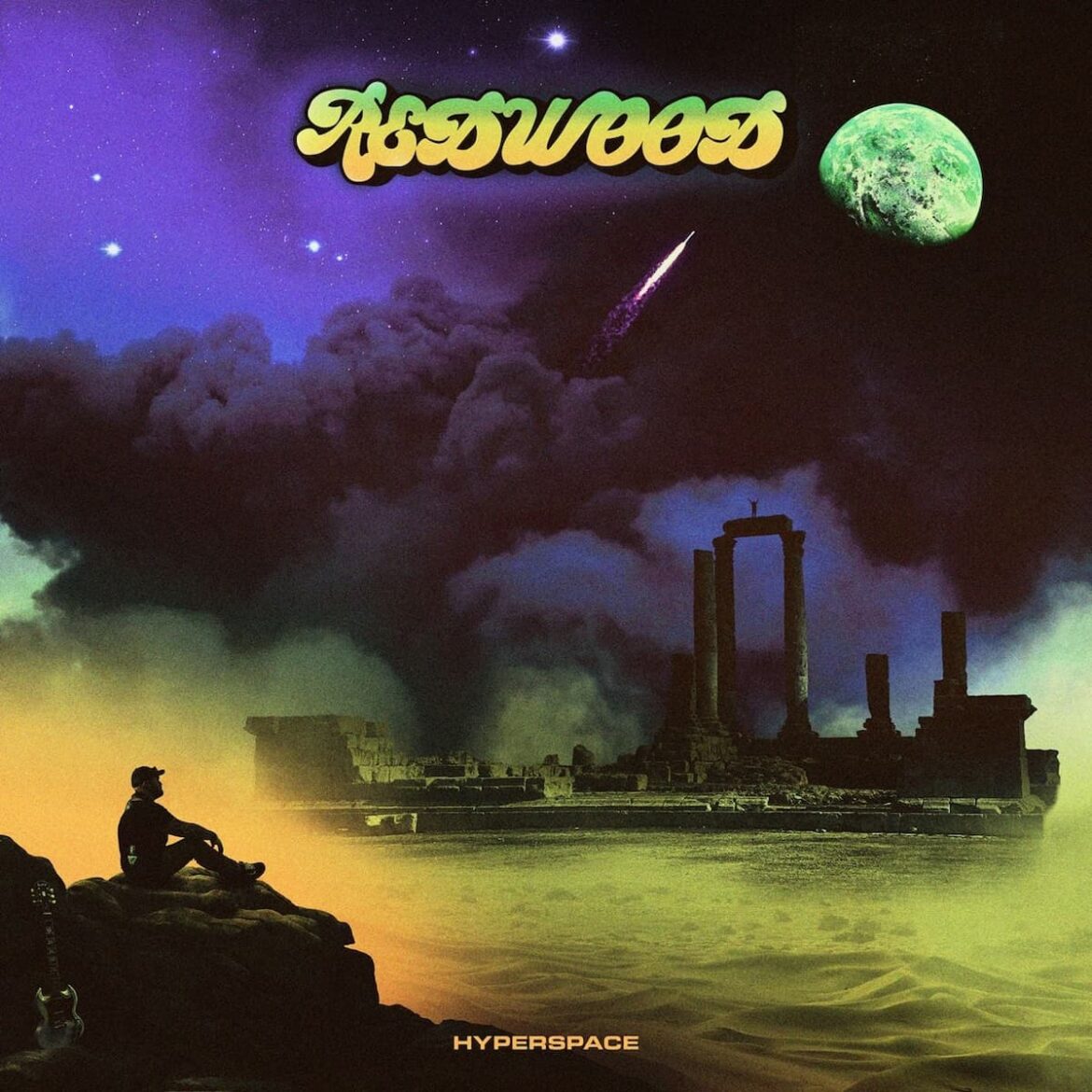
Antes de meterme de lleno en el nuevo disco de Redwood, Hyperspace, tengo que decirte algo: esto es un proyecto de un tío solo. Sheafer McOmber lo toca todo. Normalmente eso me pone nerviosa. Demasiado control, nadie que diga «Oye, igual aquí te has venido un poco arriba».
Pero este disco funciona. Y funciona de verdad.
Before I get into the new Redwood record, Hyperspace, I need you to know something upfront: it’s a one-man operation. Sheafer McOmber plays everything. Usually that makes me nervous: too much control, nobody to say “hey maybe that part is too much”…
But this one? It works. Really works, actually.
Sesenta y dos minutos. Diez canciones. Y sí, es heavy psych y stoner y todas esas etiquetas de siempre, pero lo que me ha llamado la atención es que las canciones se mueven. ¿Sabes eso de que algunas bandas creen que “largas” automáticamente significa “hipnóticas” o “trippy”? Un riff repetido siete minutos mientras esperan que se pase el colocón. Pues esto no va de eso.
Sixty-two minutes. Ten tracks. And yeah, it’s heavy psych and stoner and all the usual tags, but here’s what got me: the songs actually move. You know how some bands think “long” automatically means “hypnotic” or “trippy”? Just a riff on repeat for seven minutes while they wait for the bong hit to wear off? Not here.
La mayoría de estos temas no dejan de cambiar de forma. Incluso cuando un riff se queda quieto, algo a su alrededor se está moviendo. El platillo suena distinto. El bajo gira en otra dirección. Aparece una guitarra de donde no la esperabas.
Esa sensibilidad impregna todo el disco. Y sí, las guitarras son el centro gravitacional de Hyperspace, pero no porque sean más ruidosas que el resto. Es porque todo orbita alrededor de ellas.
Most of these tracks keep shape-shifting. Even when a riff stays put, something around it is moving. …the crash sounds different, the bass takes a left turn, a guitar shows up from a direction you weren’t expecting. That sensibility runs throughout the record.
Yeah, the guitars are the gravitational center of Hyperspace, but not because they’re louder than everything else – because every song seems to orbit around them.
Reseña de Cloud Colony de Redwood: https://www.dirtyrock.info/2025/10/redwood-cloud-colony
“Highway Nova” abre. Las guitarras molan, muy repetitivas, hay un uso del hi-hat bastante interesante y el momento lento y grave del final aplasta. Seis minutos y medio dan tiempo a que el tema se transforme y pase por mil cambios.
“Highway Nova” opens. The guitars are cool, very repetitive, there’s a pretty interesting use of the hi-hat and the slow, low throwdown at the end simply crushes. Six and a half minutes gives the track time to morph and go through all kinds of changes.
“Hyperspace” es probablemente el mejor ejemplo. Lo que arranca con una intro de ritmo casi tribal se va convirtiendo en uno de los mejores solos de guitarra del disco. Pero no es para lucirse. Vale, hay casi dos minutos de pedal y shredding ochentero, pero en verdad, no es shredding. Es flotar. Deja huecos donde otro músico menos seguro metería más notas. Y cuando esa nota finalmente se mueve, lo hace hacia un lado, no hacia adelante. Termina en un acorde mayor “feliz” que no sé si pega ahí. Pero respeto la decisión.
The title track, “Hyperspace”, is probably the best example of that. What begins with a compelling, almost tribal rhythm-section intro, gradually unfolds into one of the album’s strongest guitar performances. But not in a show-off way. OK, there are almost two minutes of pedal-laden flare with these 80s guitar-hero moments, but it isn’t really shredding. It’s floating… leaving gaps where a lesser player would cram in more notes. And when the note finally moves, it’s sideways, not forward. Then it ends on this “happy” major chord that doesn’t seem to belong. But I respect the choice.
La mayoría de los “stoners” viven en el pentatónico menor, la caja del blues – el sonido del “peligro” y el “swag”. Eddie Van Halen descubrió hace cuarenta años que, si metes un acorde mayor en un contexto menor, todo cambia. Un acorde mayor con un Marshall a tope y la ganancia suficiente deja de sonar alegre. Se vuelve agresivo, pero de otro color. Es un subidón. Esa sensación en el estómago cuando el coche vuela sobre una cuesta. Ese golpe de acorde mayor casi gracioso cerca del final de “Hyperspace” es donde Sheafer McOmber, igual que Eddie, demuestra que lo “heavy” no siempre necesita oscuridad.
Most stoners live in the minor pentatonic – the “blues box”, the sound of trouble and swagger. Eddie Van Halen figured out forty years ago that you can throw a major chord into a minor context and suddenly everything shifts. A major chord through a cranked Marshall with enough gain stops sounding cheerful. It becomes aggressive in a different color. It’s lift. The feeling of your stomach dropping when the car flies over a hill. That random major stab near the end of “Hyperspace” is when Sheafer McOmber, much like Eddie, proves that heaviness doesn’t necessarily require gloom.
“Land of Ancient Nothing” destaca sin duda. Los primeros quince segundos ya me tenían dentro. A mitad de tema, el bajo y la batería se marcan un ritmo que me tuvo bailando por la cocina (vale, no es extraño en mi caso) y no aflojan. Luego llega ese martilleo que es puro Monster Magnet, y de repente estoy en los 90, pegada a la tele viendo esos vídeos épicos de la MTV. Entonces acelera y el cohete despega.
“Land of Ancient Nothing” definitely stands out. All I needed was the first fifteen seconds and I was in. Mid-song, bass and drums lock into a groove that had me dancing around my kitchen (admittedly, not unusual for me). And the momentum doesn’t let up. The hammering section that follows is pure Monster Magnet. Suddenly I’m back in the 90s, watching those epic MTV videos. Then the pace speeds up and the rocket takes off.
“Mother Earth” son cuatro minutos de pájaros y ambiente instrumental. Está bien que metan algo así, ¿pero cuatro minutos? Eso sí, enlaza directamente con “Asteroid”, así que igual es por eso. La intro me recuerda a Earthless y el groove es irresistible, antes de que lleguen las armonías y los riffs. Pero lo que realmente lo vende es lo cinematográfico que resulta.
“Mother Earth” is four minutes of birds chirping and ambient instrumental. Cool that they threw something like that in, but four minutes? It bleeds right into “Asteroid,” though, so maybe that’s the point. Its opening reminds me of Earthless and the groove is irresistible, before the harmonies and riffs come in. What really sells it, though, is how cinematic it feels.
Mientras escucho la voz, me imagino perfectamente al profeta loco con el sombrero de papel de aluminio en una esquina, megáfono en mano, intentando avisarnos de que el final está cerca. Entonces el tema prácticamente lo confirma. Llega ese breakdown lento, esta vez con sirenas, perfecto para una advertencia apocalíptica. Más guitarreo guapo y un final incluso más guapo. Otro favorito mío.
As I listen to the vocals, I can perfectly picture the crazy prophet with the aluminum-foil hat standing on a street corner with a megaphone, trying to warn us that disaster is on the horizon. Then the song practically confirms it. The breakdown arrives – this time with sirens. Perfect for an apocalyptic warning. More great guitar work follows and THE ENDING IS RAD. (Who else misses “rad”? We’re talking about the 90s, aren’t we?) Another favorite.
Es larguísimo, pero no quieres que se acabe. En realidad, no quieres que se acabe ningún tema de este disco.
Hyperspace es la prueba de que, gracias a un puñado de guitarristas infravalorados de los 90, toda una generación de músicos stoner dejaron de intentar sonar a Iommi y empezaron a intentar sonar… perdidos?
It’s Energizer Bunny long, but you don’t want it to end. In fact, you don’t want any of this record to end.
Hyperspace is proof that, thanks to a handful of underrated 90s guitarists, a whole generation of stoner-rock musicians stopped trying to sound like Iommi and started trying to sound… lost?
Eso es lo que la gente suele olvidar de los 90. El grunge iba de sentimiento, pero el stoner rock iba de atmósfera. Y los mejores guitarristas de aquella época (Mascis, Mundell, Thayil, Homme, quizá hasta Malkmus) entendían que la nota que no tocas puede ser tan heavy como la que tocas.
Quizá lo aprendieron de Hendrix. Quizá de Hawkwind. Da igual. Lo filtraron a través de la escena de Palm Desert y del underground de principios de los 90. Tocar lento era una decisión, no una falta de técnica. Y aquí hay MUCHA técnica.
That’s the 90s thing everyone forgets. Grunge was about feeling, but stoner rock was about atmosphere. And the best guitarists from that era (Mascis, Mundell, Thayil, Homme, maybe even Malkmus) understood that the note you don’t play can be just as heavy as the one you do.
Maybe they learned that from Hendrix. Maybe from Hawkwind. Either way, they filtered it through the Palm Desert scene and the early-90s underground. Slowness was a choice, not a lack of skill. And there’s some MIGHTY skill on display here.
Aunque todavía no he terminado con las guitarras, el bajo merece su propia mención. Por un proyecto en solitario donde las guitarras son las protagonistas, el low-end no para de robar escenas.
As much as I’m still not done gushing about the guitar work, the bass deserves its own shout-out. For a solo project where the guitars are obviously the main event, the low end keeps stealing scenes.
Reseña de Time To Lose de Redwood: https://www.dirtyrock.info/2026/02/redwood-time-to-lose
En “Invaders”, no solo ha vuelto el fuzz, sino que hay una línea de graves que suena a que el tío está haciendo el tonto, sin intentar impresionar a nadie. Pero cuando me puse mis cascos rollo Princesa Leia… ¡Ostia, qué bueno! Me encanta cuando el bajista se va por una tangente creyendo que nadie le escucha.
On “Invaders”, not only has the fuzz returned, but there’s a bass passage that sounds like the guy is just messing around, not trying to impress anybody. Then, when I put on my Princess Leia headphones to really listen, it’s HELLAGOOD. Gotta love it when the bassist goes off on a tangent when they think nobody’s paying attention.
Quien sea que toque estas partes podría lucirse si quisiera. Si de verdad es un tío solo, McOmber es un pedazo de músico. Los pasajes instrumentales a mitad de tema lo dejan bien claro.
También está claro que Redwood entiende algo fundamental de la música heavy: a veces la trascendencia no llega a través de la complejidad, sino de la experiencia física colectiva.
Whoever is playing these parts could show off if they wanted to. If it is indeed a one-man show, McOmber is one hell of a musician. The instrumental passages halfway through make that abundantly clear.
It’s also clear that Redwood understands something fundamental about heavy music: sometimes transcendence arrives not through complexity but through collective physical experience.
“Invaders” es probablemente el tema con más rollo “festival”. Me transporta directamente: mini en mano, sol machacándome, una brisa que de alguna manera se abre paso entre la masa de gente, y yo flotando en esta ola de fuzz con una sonrisa tonta en la cara mientras el cuello empieza a quejarse.
Hay incluso un momento de puños al aire antes del final, y el outro es perfecto para que el público aplauda. Entonces llegan los sintes para un último minuto que vuelve a la intro y cierre el círculo. Inesperado. E inteligente.
“Invaders” might be the most festival-ready song on the record. I’m instantly transported: beer in hand, sun beating down on my hat, a little breeze somehow finding its way through a packed crowd, and I’m riding this fuzz wave with a big stupid grin on my face as my neck starts to complain.
There’s even a fist-pounding moment before the end, and the outro is perfect for a crowd ovation. Then the synths arrive for a final minute that circles back to the intro. Unexpected. And smart.
Pero no todo funciona igual de bien.
A “Got A Feeling” le falta la personalidad del resto. “Opium and Stimulants” es un temazo de rock and roll perfectamente sólido, pero queda un poco raro aquí también.
“Another Planet” me enganchó desde el primer segundo, es verdad. Fue el primer tema con ese groove que incita al headbanging y, con un poco más de pedal, podría haber entrado en territorio “Bulls on Parade”. Aun así, es muy repetitivo y no me convence del todo el fade-out de la voz. Nunca me ha gustado el looping y, tratándose de un proyecto en solitario, no sé cómo defenderían esto en directo.
Alas, not everything works equally well.
“Got A Feeling” lacks the personality found elsewhere. “Opium and Stimulants” is a perfectly solid heavy-rock song, but it sits a little awkwardly within the larger flow of the album.
“Another Planet” hooked me immediately. It was the first track that gave me a nice chicken-pecking nod and, with a little more pedal abuse, it could have wandered into “Bulls on Parade” territory. Still, it’s repetitive, and I wasn’t completely sold on the vocal fade-out. I’ve never been much of a fan of looped anything and, being a solo project, I found myself wondering how some of these moments would translate live.
Dicho esto, con el épico cierre “Future”, volvemos al territorio más sludgy y lleno de fuzz que los fans de Redwood reconocerán de discos anteriores. El tema más largo del disco arranca con la misma energía de puño en el aire que hace tan efectiva a “Invaders”.
That said, with the closing epic “Future”, we’re back in the sludgier, fuzzier territory that Redwood fans will recognize from earlier releases. The longest track on an already long album opens with the same fist-in-the-air energy that makes “Invaders” so effective.
Conceptualmente, es ambicioso. La canción está escrita desde la perspectiva de una criatura llamada FUTURO que básicamente dicta el curso de la evolución humana. Sí, lectura fácil, como la letra de “Aserejé”.
Las voces siguen siendo fantasmalmente distantes, encajando con los temas recurrentes del disco: ansiedad tecnológica, aislamiento cósmico, futuros inciertos. Hay varios momentos de “¡Oh yeah!” repartidos por el tema pero a estas alturas, letras tan repetitivas, casi hipnóticas, empiezan a cansarme un poco.
Lo que realmente me llama la atención es que Redwood nos pregunta cosas muy distintas a las que pregunta la mayoría de las bandas en este terreno sónico.
Conceptually, it’s ambitious. The song is written from the perspective of a sentient creature called FUTURE that’s essentially dictating the course of human evolution. Heavy stuff.
The vocals remain haunting and distant throughout, fitting the album’s recurring themes of technological anxiety, cosmic isolation and uncertain futures. There are definitely some “hell yeah” moments scattered throughout the track but by this point, the repetition starts wearing on me a little.
Honestly, what I keep coming back to is that Redwood is asking different questions than most bands operating in this lane.
Muchos proyectos de este rollo se contentan con orbitar alrededor de estados “alterados”, amplis viejos, imaginería desértica y el mito del riff. ¡Ojo, no hay nada malo en eso! Pero McOmber no para de tirar de la conversación hacia el futuro: IA. Progreso. Control. La posibilidad de que la humanidad no tenga tanto el control como le gustaría creer.
Plenty of heavy psych records are happy to orbit around altered states, old amplifiers, desert imagery and the myth of the riff. Nothing wrong with that. But McOmber keeps pulling the conversation toward the future instead: AI. Progress. Control. The possibility that humanity isn’t nearly as in charge as we’d like to believe.
Hyperspace no es un disco retro disfrazado de moderno ni al revés. Es un tío grabándose, que se ha preguntado si todavía se puede hacer algo nuevo con el heavy rock. Spoiler: se puede.
Sale mañana. Escúchalo y me cuentas.