
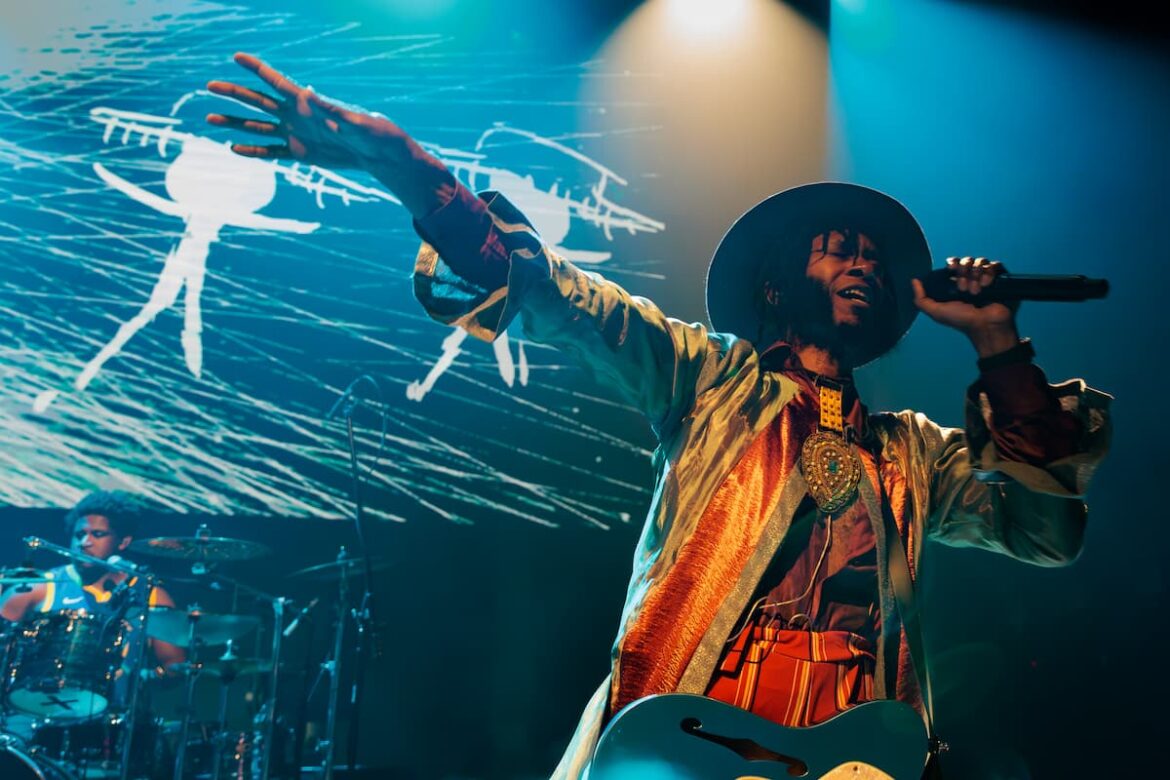
A estas alturas, casi todo el mundo sabe de qué va la historia de Xavier Amin Dphrepaulezz. El contrato millonario con Interscope en los noventa. El accidente de coche que casi le destroza la mano. Los años desaparecido de la música, totalmente derrotado por la industria. La granja de marihuana (legal). El renacer pasados los cuarenta como Fantastic Negrito. Tres Grammys seguidos.
En mitad de la conversación, le pregunté si le parecía que había vivido una sola vida larga o varias vidas distintas. Se quedó callado un momento y soltó una risa: “Probablemente tres vidas”. Pero reducir a Xavier Amin Dphrepaulezz a un simple “relato de superación” es no entender nada. No es que cuente una historia: Fantastic Negrito ES la historia.
By now, most people know the gist of the Xavier Amin Dphrepaulezz story. The million-dollar Interscope deal in the ‘90s. The near-fatal car accident that almost destroyed his hand. The years disappearing from music completely after feeling defeated by the industry. The (legal) marijuana farm. The rebirth in his forties as ‘Fantastic Negrito’. Three consecutive Grammy wins.
At one point during our conversation, I asked him whether it feels like one long life or several different ones. He paused for a second and laughed: “Probably three lives.” But reducing his story to a “comeback” misses the point entirely. Fantastic Negrito IS the story.
VIDEO ENTREVISTA / VIDEOINTERVIEW:
Hablamos antes de su regreso a España para los conciertos de Vibra Mahou by Mad Cool en julio, justo cuando prepara el lanzamiento de Alive!, su primer álbum en directo, y su nuevo single furioso “Please Computer”.
El tema suena ansioso, agitado, humano. El estribillo central, “Please don’t let computers end the man”, se te queda dando vueltas mucho después de que acabe la canción. Según Fantastic Negrito, la gente parece aterrorizada de que la IA convierta a la humanidad en esclava de las máquinas, pero entonces él lanza la pregunta real: “¿no somos ya esclavos de las máquinas?”.
We spoke ahead of his return to Spain for the Vibra Mahou by Mad Cool concert series in July, right as he prepares to release Alive!, his first-ever live album, and its furious new single “Please Computer”. The song sounds anxious, agitated. The central line, “Please don’t let computers end the man” lingers long after the song ends. According to Fantastic Negrito, people seem terrified AI will turn humanity into slaves to the machine, but then he asked the real question, “haven’t we already become slaves to the machine?”
Esa tensión entre humanidad y el sistema, incomodidad y seguridad, libertad y comodidad, atraviesa en silencio casi todo lo que dice.
“Me hice artista para arriesgar… Me encanta el artista independiente y luchador que hace el arte que le gusta y que quiere hacer”.
Y quizá ese sea el verdadero hilo que conecta todas las versiones de Fantastic Negrito: “La incomodidad es donde vive el arte real”. Cuando se siente incómodo, se siente un artista de verdad. Y eso explica en parte por qué, después de ganar tres Grammys seguidos, su siguiente disco fue White Jesus, Black Problems, un álbum profundamente personal y provocador que generó reacciones adversas casi al instante.
That tension of humanity versus systems, discomfort versus safety, freedom versus convenience, quietly runs through almost everything he says.
“I became an artist to take chances… I love a scrappy, independent artist who does the art that they love and want to do.”
And that may be the real thread connecting every version of Fantastic Negrito: “Discomfort is where real art lives.” When he feels uncomfortable, he feels like he’s a true artist. And it kind of explains why, after winning three consecutive Grammys, he followed up with White Jesus, Black Problems, a deeply personal, provocative album that sparked backlash almost immediately.
Durante nuestra conversación, él admitió que ese disco probablemente le costó cierto apoyo en la industria, ventas, incluso premios. Se lo quitó de encima con un encogimiento de hombros y soltó una respuesta que suena obvia hasta que caes en la cuenta de lo pocos que en la industria musical se la creen de verdad:
“El éxito no se mide por tu cartera financiera, sino por tu cartera de PERSONAS”
During our conversation, he admitted the record probably cost him industry support, positions, sales, maybe even awards. He shrugged it off, giving the kind of answer that sounds obvious until you realize how few people in the music industry actually believe it:
“Success is based on your PEOPLE portfolio, not your financial portfolio.”
A pesar de todo el caos que rodea su experiencia vital, la conversación volvía una y otra vez a conceptos sorprendentemente simples: Amor. Vida. Y la idea de que el arte y la música siguen importando porque la gente sigue necesitándose. Pero también entramos en el meollo real: sus orígenes, la Virginia rural, la violencia en Estados Unidos, la creatividad nacida de la incomodidad, la libertad artística, y por qué sigue creyendo que el propósito de la vida es lo que damos a los demás. (Sí, Pablo Picasso y Fantastic Negrito tienen algo en común).
Despite all the chaos surrounding his life experience, the conversation kept circling back to surprisingly simple concepts: Love. Life. And the idea that art and music still matter because people still need each other. But we also got into the real nitty gritty of it all: his origins, rural Virginia, violence in America, creativity born from discomfort, artistic freedom, and why he still believes the purpose of life is what we give to others. (Yes, Pablo Picasso and Fantastic Negrito have something in common!)
Cuando a la gente le arrancan la humanidad […], la música se convierte en una forma de recuperarla”
“When people are stripped of their humanity […], music becomes a way to recover it.”
Esa frase fue un puñetazo.
Igual que la forma en que habló de Chris Cornell. No como un icono del rock, sino como persona. Una persona amable. Alguien que cambia silenciosamente la vida de otro artista. El día de la entrevista se cumplían nueve años de la muerte de Cornell, y Negrito admitió que probablemente no tendría el público que tiene hoy si Cornell no lo hubiera llevado de gira varias veces. Incluso reveló que habían hablado de colaborar en “Plastic Hamburgers” poco antes de que el cantante de Soundgarden y Temple of the Dog falleciera.
“No pienso en la música de Chris. Pienso en Chris”. Y, sinceramente, esa frase probablemente te dice todo lo que necesitas saber sobre Fantastic Negrito.
That hit hard.
So did the way he talked about Chris Cornell. Not as a rock icon, but as a person. A kind person. Someone who quietly changes another artist’s life. The day of the interview marked the ninth anniversary of Cornell’s passing and Negrito admitted that he likely would not have the audience he has today if Cornell hadn’t taken him on tour multiple times. He even revealed they had discussed collaborating on “Plastic Hamburgers” shortly before the Soundgarden and Temple of the Dog frontman passed away.
“I don’t think about Chris’ music. I think about Chris.” And honestly, that statement probably tells you everything you need to know about Fantastic Negrito.
Para alguien cuya carrera entera se ha construido sobre la supervivencia, la reinvención y el abrirse paso a golpes en la vida, lo que más me quedó después de la entrevista no fue el trauma, ni las historias, ni siquiera la música o el hecho de que su objetivo a los 70 sea convertirse en batería y aprender por fin algo de teoría musical. Fue algo mucho más simple: la humildad.
Lo que, por extraño que parezca, tiene todo el sentido viniendo de un hombre que una vez dejó la música por completo y que, de algún modo, regresó sonando más vivo que nunca.
For somebody whose entire career has been built around survival, reinvention and fighting his way through life, what stayed with me most after the interview wasn’t the trauma, the stories, or even the music or the fact that his goal at 70 is to become a drummer and finally learn some music theory. It was something much simpler: the humility.
Which, strangely enough, makes perfect sense coming from a man who once quit music entirely and somehow came back sounding more alive than ever.

España parece entenderlo de forma instintiva. Cada vez que Fantastic Negrito vuelve, la conexión se siente más honda, más vibrante, más fuerte. No te lo pierdas el 6 de julio en la mítica Sala El Sol de Madrid, dentro del ciclo de conciertos Vibra Mahou by Mad Cool.
Spain seems to understand that instinctively. Every time Fantastic Negrito comes back here, the connection feels deeper, louder, stronger. Be sure to go and see him on July 6th at Madrid’s legendary Sala El Sol during the Vibra Mahou By Mad Cool set of concerts.
ENTREVISTA COMPLETA A FANTASTIC NEGRITO:
original English version below
JESSICA: Hola. Aquí Fantastic Negrito con Dirty Rock Magazine desde España. Muchísimas gracias por estar hoy con nosotros. Vamos directos al grano.
Acabas de publicar “Please Computer”, el segundo single del próximo álbum en directo Alive!, que sale el 17 de julio, y suena enfadado, ansioso, casi confrontacional. ¿Qué te empujó a escribir esa canción justo ahora?
FANTASTIC NEGRITO: Bueno, el año pasado, cuando fui a Europa, decidí que íbamos a grabar todo en directo, así que eso sale de mi primer álbum en directo, Fantastic Negrito Alive!. Y con “Please Computer” intentaba encarnar ese sentimiento que tiene la gente ahora… ese miedo a la IA, esta nueva era de la información en la que estamos. Intentaba entender qué se siente realmente la gente. Se convirtió casi en un mantra repetitivo: “Please don’t let computers end the man”. Creo que de ahí salió. Me gusta hablar con la gente y escuchar.
JESSICA: ¿Qué tipo de reacciones has recibido?
FANTASTIC NEGRITO: Lo que me hizo escribirla fue oír a la gente decir: “La IA va a tomar el control de todo, todos vamos a ser esclavos de la máquina”. Y yo pensé… ya lo somos un poco, esclavos de la máquina. Creo que la gente lo decía pensando en un futuro distópico, de ver demasiadas películas. Algunos se sorprendieron de que sacara algo así.
JESSICA: Bueno, es diferente. Suena más pesado, más agresivo. Incluso pensé en tu época de Blood Sugar y en “Pay It Back”.
FANTASTIC NEGRITO: Siento que todo eso sigue dentro de mí. Lo bueno de ser un artista independiente es que, si no sacas exactamente lo que amas, ¿qué sentido tiene ser independiente? Siempre digo que me hice artista para arriesgar. Si quisiera estar cómodo, me iría a trabajar al Starbucks.
JESSICA: ¿Buscabas que Alive! capturara algo que tus discos de estudio quizá no pueden?
FANTASTIC NEGRITO: Buena pregunta. Quiero parecer inteligente al responder (risas), pero creo que diría que sí. Me interesaba saber qué puedo darle a la gente a partir de mi directo. La gente de la industria me dijo que no hiciera un disco en directo, pero a mí me pareció que molaría. Creo que cuando estoy incómodo es cuando siento que estoy siendo realmente un artista. En mis directos canto diferente. La banda toca diferente. Tempos diferentes, energía diferente. Hay una energía elevada.
JESSICA: Cierto, cada directo captura algo diferente. También vi que tocarás con la Sinfónica de San Francisco en septiembre. ¿Qué se siente al pensar en tu música traducida a ese mundo?
FANTASTIC NEGRITO: Para empezar, es un honor enorme. Siento que ya he vivido una vida tan condenadamente afortunada que si pidiera algo más sería avaricioso. Estoy muy emocionado por tocar con ellos. Estoy trabajando con un arreglista, así que, sinceramente, no tengo ni idea de cómo va a sonar. Ya veremos.
JESSICA: Se me nota ese lado orquestal ya en Son of a Broken Man, en el arreglo de “Goddamn Biscuit”…
FANTASTIC NEGRITO: Sí, en Son of a Broken Man hay cuerdas, pero en directo ese concepto se pierde. Para el concierto con la sinfónica, estoy sacando canciones de distintas épocas, sobre todo las primeras. Voy a tocar “Son of a Broken Man”, “I Hope Somebody’s Loving You”, claro, porque tiene ese rollo balada… canciones que funcionan bien con cuerdas. Pero cuando trabajas con la orquesta, quieres dejar que ellos hagan su trabajo y ya. Esa es la parte interesante. Ellos son probablemente más sofisticados que yo.
JESSICA: Desde luego, se puede hacer mucho con la música clásica. Pero es cierto que el acompañamiento es importante. ¿Qué buscas en los músicos cuando montas una banda? ¿Hay diferencia entre la gente que quieres en el estudio y la que quieres en el escenario?
FANTASTIC NEGRITO: Cambio mi banda casi cada año o cada dos años, solo para renovar las cosas mental y musicalmente. Hay un tipo con el que toco continuamente, el teclista, Brian Simmons, pero el estudio y el directo son dos cosas diferentes. En directo, si alguien va a ir de gira contigo durante un año, lo más importante es su actitud. Positividad. Esa es la parte más difícil: llevarse bien con la gente. La energía tiene que ser la correcta. Mis conciertos son de alta energía e intensos. Tienes que estar listo para darlo todo.
JESSICA: La gente que te rodea es importante, sin duda. Hoy se cumplen nueve años de la muerte de Chris Cornell. Giraste con él hace años. ¿Qué se te viene a la cabeza cuando piensas en él ahora?
FANTASTIC NEGRITO: Creo sinceramente que gran parte del público que tengo hoy existe gracias a Chris Cornell. Incluso hablo de eso a veces en los conciertos. Digo: “Estoy aquí porque Chris Cornell se interesó por mí como artista”. Fui su telonero tres veces. Con Soundgarden, en Europa y en Estados Unidos, y luego con Temple of the Dog. Cuando pienso en Chris, no pienso primero en la música. Pienso en lo cálido, lo decente y lo amable que era. Hace poco publiqué un vídeo que no había enseñado a mucha gente durante años… tardé quizá siete años después de que él muriera. Es él asomando la cabeza en mi camerino y diciendo: “Oye, ¿cómo estás? ¿Cómo está tu familia?”. Así era él. Increíblemente amable. Le debo muchísimo a ese tipo. Era simplemente brillante. Sinceramente, creo de verdad que no estaría donde estoy si él no me hubiera llevado de gira tres veces. Cuando alguien hace eso, te presenta a miles de personas.
JESSICA: Y a un público muy diferente al que quizá habrías tenido al principio.
FANTASTIC NEGRITO: Exacto. Sabes, de hecho escribí “Plastic Hamburgers” para los dos. Él lo sabía. Habíamos hablado de que él cantara en ella. Incluso le guardé una estrofa. Estuvimos escribiéndonos por email sobre eso quizá una semana antes de que muriera.
JESSICA: Me encanta ese disco. Otro momento decisivo fue tu actuación en NPR Tiny Desk.
FANTASTIC NEGRITO: Oh, sí, me encanta ser el primero en las cosas. Soy el octavo de quince hijos, así que quizá eso influye. Siempre bromeo diciendo que soy un narcisista en recuperación. En aquella época, nadie sabía lo que era Tiny Desk. Hubo alguien que se me acercó en una estación de tren diciendo: “Deberías presentarte a este concurso de Tiny Desk”. Yo decía que no porque ni siquiera sabía lo que era. Al final lo hice. Me recuerda que no siempre lo sabes todo. A veces tienes que mantenerte abierto. Y si no llega a ser por Tiny Desk, Chris probablemente nunca habría oído hablar de mí.
JESSICA: Vaya. Todo está relacionado. Eres un compositor increíble. Muchos músicos a los que entrevisto hablan de recuperar “la canción”: la melodía, la estructura, la narrativa. Cuando escribes, ¿hay alguna fórmula o es mayormente instinto?
FANTASTIC NEGRITO: No tengo realmente una fórmula. Creo que soy un artista, pero no sé demasiado sobre teoría musical. Solo sé lo que tengo en la cabeza. Sinceramente, disfruto no saber demasiado. Quizá cuando tenga setenta años estudie música (risas). Siempre bromeo con mi banda: cuando cumpla setenta, me haré batería, estudiaré música y empezaré a fumar porros (risas).
JESSICA: Nunca es tarde (risas).
FANTASTIC NEGRITO: (Risas) Sí, no fumo, así que soy el raro ahora. Pero sí, ¡me haré batería, estudiaré música y fumaré a los setenta! (risas)
JESSICA: ¡Qué bueno! (risas). Pues, tu música muchas veces me recuerda al country blues original en el sentido de que es autobiográfica: gente procesando la supervivencia en tiempo real. ¿Escribir canciones es catártico para ti como proceso, o lo haces más para conectar con la gente?
FANTASTIC NEGRITO: Es catártico, sin duda. Pero también creo que el sentido de la vida es vivir para los demás. Eso lo abracé más tarde en la vida. ¡El propósito de por qué estoy aquí eres TÚ y todos vosotros! Eso es lo que le da sentido a la vida. No es muy americano, pero sabes, dejé la música durante cinco años. Me casé, me hice agricultor de marihuana, bastante bueno, la verdad (risas). Pero cuando volví a la música, entendí que ya no era para mí. Necesitaba estar ahí fuera para la gente. Ahí fue cuando cobró verdadero sentido para mí. Así que sí, es catártico, pero también se trata de conexión. Una cosa no quita la otra.
JESSICA: Tiene sentido. Picasso dijo una vez que el sentido de la vida es encontrar tu don, y el propósito de la vida es regalarlo.
FANTASTIC NEGRITO: ¡Vaya! ¿Así que coincido con Picasso!? ¡Hostia! (risas)
JESSICA: Bueno, a mí no me sorprende. No debería sorprenderte a ti. (risas)
FANTASTIC NEGRITO: A veces soy muy poco consciente de mí mismo.
JESSICA: Has tenido ya tantos capítulos: los años de Interscope, el accidente de coche, casi perder la mano, la escena afro punk underground de Los Ángeles, apartarte completamente de la música… ¿Te parece una sola vida o varias vidas diferentes?
FANTASTIC NEGRITO: Nadie me había preguntado eso nunca. En realidad, me parecen probablemente tres vidas diferentes.
JESSICA: Entonces la cuarta vida será cuando te hagas batería (risas).
FANTASTIC NEGRITO: Exacto (risas). Cuando me haga batería y aprenda música. Aunque probablemente seré un desastre porque esta mano aún no cierra del todo.
JESSICA: Bueno, si puedes tocar la guitarra con esa mano, puedes tocar la batería. Eso es parte de tu historia de éxito, aunque “éxito” es algo difícil de definir… A veces es simplemente sobrevivir al día. Pero como la mayoría de la gente coincide en que tiene algo que ver con la superación, y tú eso lo has hecho muchas veces… ¿te consideras exitoso?
FANTASTIC NEGRITO: Absolutamente. Soy exitoso porque quiero a la gente y la gente me quiere a mí. Eso es el éxito. No tiene nada que ver con reconocimientos, premios o dinero. El éxito es tu cartera de personas. Pasamos demasiado tiempo pensando en nuestra cartera financiera. Así que, en ese sentido, sí, creo que soy moderadamente exitoso.
JESSICA: Sí, te he oído decir que todo puede enseñarnos. En “Bullshit Anthem”, hablas de afrontar los obstáculos y convertirlos en combustible para la inspiración y la motivación: “take the bullshit and turn it into good shit”. Hay mucha esperanza ahí, pero después de tantos años luchando y reconstruyéndote… ¿no te cansas a veces de luchar?
FANTASTIC NEGRITO: No. A veces uso mi otro mantra: “respira hondo, reinicia y refresca”. Siento que no estoy aquí luchando por mí, lucho por todos y espero que todos luchen también por mí. Ese es mi propósito: servir. Mientras me mantenga en ese camino, las cosas van bien. Cuando empiezo a pensar demasiado en mí mismo, me salgo del camino… ¡Cuidadooooo! (risas)
JESSICA: Tú y yo tenemos algo en común. Ambos queremos a nuestro país, pero también hemos vivido violencia en nuestras vidas. Llevo años viviendo en España, y aquí la violencia no se siente culturalmente presente como puede ser el caso en Estados Unidos. ¿Crees que América resolverá alguna vez su relación con la violencia?
FANTASTIC NEGRITO: Un momento, ¿de dónde eres?
JESSICA: De Michigan, originalmente.
FANTASTIC NEGRITO: ¡No me digas! Vaya, te mudaste a España y te quedaste allí, ¿eh?
JESSICA: Bueno, es un país precioso, es difícil irse.
FANTASTIC NEGRITO: Oh, sí, lo sé. ¡Me encanta España! Tengo algunos amigos que también se mudaron para allá y no quieren volver (risas). Cuando me voy de vacaciones con mi gran familia, vamos a España… Madrid, Valencia… ¡Me encanta! Pero volviendo a tu pregunta, creo que puedes solucionar cualquier cosa cuando te enfrentas a ello. El problema de América es que no nos enfrentamos a ello. Mi enfrentamiento fue despertarme después de tres semanas en coma. Pude corregirme. Si admites lo que te pasa, entonces puedes hacer el trabajo. Pero si finges que no existe y te dedicas simplemente a alzar la banderita, eso no es hacer el trabajo. El matrimonio es trabajo. La crianza es trabajo. Ser una nación es trabajo. Mucho trabajo. Así me siento acerca de EEUU. Hay que hacer el trabajo. La gente se enfada si criticas a América, pero yo tengo hijos: no voy a decirles que son perfectos todo el rato. Así es como crías a capullos mimados. Hay que hacer el trabajo. Si no, te pasas la vida yendo a la guerra.
JESSICA: Sí, todo eso es importante: la reflexión, la autocrítica, el amor duro. Pero eso no es cómodo. Has dicho antes que la incomodidad hace que el arte se sienta más real. ¿Por qué crees que el dolor y la creatividad están tan conectados?
FANTASTIC NEGRITO: Tengo muchos recuerdos de cuando era pequeño en la Virginia rural con mi abuela. Una zona muy tranquila, solo 600 personas, todos llevan una pistola en su camioneta, no importa… Recuerdo escuchar esa música blues antigua que escuchaba su hermano y esas guitarras que sonaban como gente llorando. Le pregunté a mi abuela qué era eso. Y ella dijo algo así: “Ay, eso es el blues, cariño”… Ahí siempre te llaman “cariño” [honey] (risas)… Me decía: “Sabes, los blancos siempre pensaban que estábamos tristes, pero solo hay que seguir adelante”. Y pensé en eso durante años… Cuando a la gente le arrancan su nombre, su idioma, su religión, su dignidad, la expresión artística en el dolor se convierte en un intento de recuperar la humanidad. Mi abuela no era intelectual, pero entendía algo muy profundo.
JESSICA: Ese tipo de sabiduría no viene de los libros.
FANTASTIC NEGRITO: Exacto. Ella era una persona feliz, adorable. Y toda esta música viene de gente que intenta recuperar su humanidad.
JESSICA: Eso es hermoso. Pero no todo el que escucha tu música ha vivido el caos que has vivido tú. ¿Crees que la gente necesita una lucha real para conectar con tu música?
FANTASTIC NEGRITO: ¿Acaso hay elección? Todo el mundo lucha. Eso es la vida. Sales del vientre de tu madre y ya estás luchando. Es inevitable. La vida es luchar. Hay diferentes niveles, seguro, pero la lucha es parte del ser humano. Llevarse bien con la gente es una lucha. Comer bien es una lucha. La adicción es una lucha. La vida es una lucha.
JESSICA: Cierto, como dijimos… a veces solo sobrevivir al día ya es una lucha. Hablando de tu abuela, durante la pandemia, investigar tu historia familiar te llevó a White Jesus, Black Problems. Has dicho que quizá la naturaleza rebelde y luchadora de tu familia es parte de por qué tus ideas son tan poco convencionales. ¿Te preocupa que se te vaya la pinza del todo? (risas)
FANTASTIC NEGRITO: (risas) No. No me preocupa. Quiero decir, yo soy el tipo que hizo un disco llamado White Jesus, Black Problems después de ganar tres Grammys (risas). Eso debería advertirte de algo. (risas) Sinceramente, lo más gracioso que descubrí fue que yo era un 28% blanco (risas). Eso me sorprendió. Me quedé: “¿Soy blanco? ¿Dónde?” (risas) Pero aprender que mi tataratatarabuela era una mujer blanca luchadora…
JESSICA: ¡Y escocesa!
FANTASTIC NEGRITO: (Risas) ¡Sí! ¡Escocesa! Me vino bien. Todo eso lo llevo dentro.
JESSICA: Ese disco generó reacciones inmediatas, solo por el título. ¿Te sorprendió la reacción negativa?
FANTASTIC NEGRITO: Un poco. Me llegó bastante correo de odio bastante desagradable.
JESSICA: ¿En serio?
FANTASTIC NEGRITO: Sí, pero estuvo bien. Solo quería ser un artista. Podría haber elegido otro camino, pero me gusta vivir en un pueblo pequeño. Estoy agradecido simplemente por poder hacer mi música. Quería hacer algo que fuera importante y creo que era importante contar la historia de mis antepasados porque me pareció que eran personas increíblemente valientes. ¿Me costó ventas o apoyo de la industria? Probablemente. Pero yo no funciono bien dentro de la industria musical. De hecho, de eso va mucho ese single, “Please Computer”. ¿Sabes? No dejes que ese sistema te rompa con todas esas “cosas brillantes”… Me alegro de no querer lo que ellos ofrecen… Su validación. Me encanta el artista independiente y luchador que hace el arte que le gusta y quiere hacer. Los demás pueden quedarse con todo lo otro, a mí no me interesa.
JESSICA: A veces el arte incómodo tiene un precio. Casualmente, tu racha de tres Grammys seguidos se rompió más o menos cuando sacaste ese disco. No tienes pelos en la lengua. ¿Te arrepientes alguna vez de haber dicho cosas públicamente o de haber tomado esas decisiones artísticas?
FANTASTIC NEGRITO: No. Sinceramente, seguir ganando Grammys me estaba haciendo sentir incómodo. Ninguno de mis héroes ganó montones de Grammys. Si pasa, genial. Si no, también. A mí me interesa la música, el arte, la expresión, viajar, conocer gente. Solo quería ser yo. No soy adicto a nada, estoy sano. Estoy bien. Y oye, ya tengo tres. No me los pueden quitar (risas). Sobre todo a mi edad. Me repito constantemente: ve y sé un artista. Vive bien. Come buena comida. Sal con amigos, pásalo bien, toca en festivales.
JESSICA: Eso es parte de tu magia. Eres muy real. Ayuda a conectar. Quiero compartir algo personal contigo. La última vez que tocaste en Madrid, interpretaste “This Little Light of Mine”, y me impactó mucho. No me imagino que mucha gente en Madrid, España tenga una conexión personal con ese himno gospel, pero yo crecí yendo a una pequeña iglesia bautista en la Michigan rural, y escuchar esa canción, y la forma en que la tocaste, me trajo mogollón de recuerdos. Había un teatro lleno, hubo sold-out, pero sentí como si estuvieras cantando solo para mí. Voy a muchos conciertos, pero sinceramente, fue uno de los momentos más especiales que he vivido en directo. Conectas muy bien con tu público. Y ni siquiera iba de dolor o supervivencia (risas). ¡Era alegría pura!
FANTASTIC NEGRITO: Vaya. Sinceramente, no me puedo creer que pueda hacer esto. Estoy viendo el mundo. He estado ya en cuarenta y tres países. Este año toco en Marruecos. Eso es lo que quiero. Quiero saborear el mundo, verlo todo. Quiero llevar a mi familia por todo el mundo. Crecí pobre y soy el octavo de quince hijos y no subí a un avión hasta los veintidós años. Así que al final de mi vida, eso es lo que quiero.
JESSICA: Aparte de ser batería y…
FANTASTIC NEGRITO: (Risas) ¡Aparte de todo eso, sí! (risas)
JESSICA: Lo has hecho todo. Tu música ha explorado la raza, la supervivencia, el abuso, la familia, la identidad, América… y tu trabajo más reciente sobre tu padre y tu historia familiar… Creativamente, ¿qué estás persiguiendo ahora?
FANTASTIC NEGRITO: Siempre estoy persiguiendo a los grandes. Me encanta poner un disco increíble y pensar: “Eso mola. Eso es lo que quiero”. Es algo bueno que perseguir. Probablemente nunca llegaré, pero quiero seguir persiguiéndolo. Estoy trabajando en un disco nuevo para cuando cumpla sesenta, y quiero que sea el disco más experimental y melódico que haya hecho nunca.
JESSICA: ¿Así que no un giro total al estilo Miles Davis hacia el jazz fusión?
FANTASTIC NEGRITO: ¡Quizá! No lo sé (risas). Solo creo en la libertad. Pero sí, me encantaría que la gente dijera: “¡Guau! ¡¿Qué coño es eso?!” (risas) Cuando escuchaba nueva música de niño, quería que me volara la cabeza. No quiero comodidad ni repetición. Vivo en la incomodidad. Ahí es donde te sientes vivo. David Bowie dijo que cuando no sientes los pies tocar el suelo, ese es el momento que quieres. Y yo creo firmemente en eso.
De hecho, estoy trabajando en unas memorias ahora mismo. Por fin. Quiero contar mi historia.
JESSICA: Wow. Muchas ganas de leerlas. Es importante que la gente escuche tu historia con tus palabras. No queremos algo como lo de Robert Johnson, donde otros cuentan tu historia. Ojalá pudiéramos profundizar más en eso, pero desgraciadamente se nos acaba el tiempo… Tenemos muchas ganas de verte de vuelta en Madrid en julio. ¿Algo que quieras decirle al público español antes de que regreses?
FANTASTIC NEGRITO: Os quiero muchísimo a todos. Me siento muy acogido en España. O sea, ahí es donde me voy de vacaciones. Me encanta la gente española, su pasión… sinceramente, algunos de mis públicos favoritos del mundo. Tengo muchas ganas de volver a estar juntos.
JESSICA: Nosotros tambien. Muchísimas gracias.
FANTASTIC NEGRITO: Gracias, Jessica.