
No soy de los que cogen una nota de prensa, cambian cuatro palabras y lo llaman “reseña”. Cuando una banda confía en ti con su “labor de amor” – y más aún cuando te pasan un adelanto – pues es un honor. Y claro, con la bandeja de entrada casi siempre petada y mis ganas de subir algo, aunque sea escueto, de la mayoría de lo que me llega, reconozco que a veces suelto unas líneas y ya. Pero creo que realmente dedicarle tiempo a un disco es lo mínimo que puedo hacer antes de atreverme a dar una opinión.
I’m not big on taking a press kit, swapping out a few words here and there, and then calling it a “review”. It’s humbling when a band trusts you with their “labor of love” and even more so when you get an early listen. And sure, with an increasingly overflowing inbox and a genuine desire to give most of what reaches me at least a little attention, I’ll admit I sometimes write up a few lines and move on. But I also think that listening to an album or a track at least a dozen times is the least I can do before offering some sort of verdict.
Es bastante raro que un disco me parezca la hostia a la primera escucha. La mayoría me hacen pensar y entonces lo escucho una y otra vez.
Básicamente, es lo que me pasó con Graveyards of Joy (Season of Mist, 2026), el tercer álbum de TodoMal.
El disco salió a principios de julio, y tenía tanta tela que no sabía ni por dónde cogerlo. Así que seguí escuchando. Dos meses después, creo que por fin tengo algunas ideas claras…
It’s a pretty unheard of phenomenon for an album to grab you by the throat on the first listen, at least for me. Most albums make me think, hmm… Then I listen again. And again.
Basically, that sums up my experience with Graveyards of Joy (Season of Mist, 2026), the third album from TodoMal.
Released in early July, I could hear so much going on that I couldn’t quite get my head around how I felt about it. So I kept listening. Two months later, I think I’ve finally figured it out…
Biográficamente, TodoMal ha dado un giro importante. Los veteranos del metal underground español Christopher B. Wildman y Javier Fernández Milla empezaron en 2020 como un dúo de estudio. Pero para dar vida a las densas capas de Graveyards of Joy, han reclutado a Javier “Bud” Martínez a la batería, Javier Félez a las guitarras y Cecilia Tallo (de Maud the Moth) a los teclados y arreglos vocales.
Esa debería ser la primera pista de que esto no es un disco de doom al uso. Los arreglos cinematográficos y los pasajes acústicos de cuerdas y teclados crean suficiente atmósfera como para que te preguntes si alguien ha dejado la puerta abierta a otra dimensión.
Pero sí, de alguna manera, sigue habiendo doom.
Biographically speaking, TodoMal has undergone a major shift. Spanish underground metal veterans Christopher B. Wildman and Javier Fernández Milla first started out back in 2020 as a studio duo. But to bring the dense layers of Graveyards of Joy to life, they’ve since recruited Javier ‘Bud’ Martínez on drums, Javier Félez on guitars, and Maud the Moth’s Cecilia Tallo to handle keyboards and vocal arrangements.
That should be your first clue that this isn’t your run-of-the-mill doom album. The cinematic arrangements and folk-tinged string and keyboard acoustic passages create enough atmosphere to make you wonder whether someone accidentally left the door open to another dimension.
But yes, somehow, there’s still doom.
Y te lo dejan claro desde el principio. El primer tema tiene esa sensación de narración épica, casi rollo John Williams; una atmósfera de saga, de algo mucho más grande que el riff que estás escuchando. Parece el comienzo de una peli donde ya sabes que alguien va a cruzar una montaña, enfrentarse a un imperio y probablemente perder un brazo o una pierna por el camino.
Y entonces el doom aparece.
Es una táctica que TodoMal utilizan a lo largo de Graveyards of Joy.
And they let you know right from the get-go. The opening track has this huge, John Williams-esque sense of epic storytelling to it; a saga-like feeling of something much bigger than the riff you’re currently hearing. It feels like the beginning of a film where you already know someone is about to cross a mountain, fight an empire and probably lose a limb somewhere along the way.
And then the doom kicks in.
That’s the clever little trick TodoMal seem to pull throughout Graveyards of Joy.
Hay momentos que se acercan más al rock cósmico que al doom tradicional, con esa atmósfera de gran pantalla que hace comprensibles las comparaciones con el prog.
Pero lo importante es que no parecen influencias que simplemente se tachan de una lista. Todos podemos nombrar bandas heavys que meten un sintetizador detrás de un riff y de repente anuncian que han descubierto a Pink Floyd. O que añaden cuerdas porque eso aparentemente significa “cinematográfico”. No es así. No siempre, al menos.
No, TodoMal no parecen especialmente interesados en pisar sobre seguro.
There are moments that feel closer to cosmic rock than traditional doom, with the kind of widescreen atmosphere that makes the prog rock comparisons understandable.
But the important thing is that they don’t feel like influences that are being ticked off a list. We can all name heavy bands that piece in a synth behind a riff and suddenly proclaim that they’ve discovered Pink Floyd. Or throw in some strings because apparently that automatically means “cinematic.” They don’t. Not always, at least.
No, TodoMal don’t seem particularly interested in coloring inside the lines.
Y luego está la voz. En el doom, la voz suele ser un mazazo más. Aquí no. Aquí hace que la pesadez se sienta más humana. Christopher B. Wildman canta con un barítono cálido y expresivo, y para mí tiene momentos de cierto regusto a Geoff Tate. Hay agudos con un brillo casi operístico, una dinámica sigilosa de crooner de jazz, y una capacidad pulmonar que no sé de dónde saca, todo ello navegado por tonalidades menores.
Se podrían mencionar otras referencias, pero básicamente, las voces limpias no están aquí para sustituir a los gruñidos. La voz cambia la relación emocional con la música.
And then there’s that voice. In doom, the vocals can be another weapon of heaviness. Here, it does almost the opposite; making the heaviness feel more human. Christopher B. Wildman sings in a warm, expressive baritone, and for me there’s a very strong Geoff Tate quality at times. He’s got the ping of a Pavarotti high C, the dynamic stealth of a jazz crooner, and the lung capacity of a deep-sea diver, all while navigating minor-key modality.
There are other references you could throw around, but basically, the clean vocals aren’t simply replacing growls here. They change the emotional relationship with the music.
Y teniendo en cuenta que Graveyards of Joy se escribió tras tragedias personales en la familia de la banda, esa contención importa. El disco habla de dolor y pérdida sin gritar “MIRAD LO JODIDAMENTE TRISTES QUE ESTAMOS”.
TodoMal confía en la música para hacer el trabajo pesado.
And given that Graveyards of Joy was written following personal tragedies within the band’s family, that restraint matters. The record deals with grief and loss without screaming “LOOK HOW FUÇKING SAD WE ARE”.
TodoMal trusts the music to do the heavy lifting.
Los arreglos corales de Cecilia Tallo ayudan enormemente. Las voces suelen flotar alrededor de la instrumentación más pesada en lugar de posarse encima, haciendo que todo parezca extrañamente ingrávido si tenemos en cuenta todo lo que está pasando debajo, musicalmente. Es como entrar en una catedral enorme, mirar alrededor asombrada por las dimensiones del lugar, y al mismo tiempo no poder dejar de pensar en todo el trabajo y la artesanía que se necesitaron para construirla siglos atrás.
Cecilia Tallo’s choral arrangements are an enormous part of that. The voices often seem to float around the heavier instrumentation rather than sit on top of it, making the whole thing feel strangely weightless considering how much is actually going on musically. It’s like going inside a huge cathedral and looking around in awe, amazed by the sheer dimensions of it all, and yet you can’t stop thinking about how much work and craftsmanship must have gone into building it centuries ago.
Probablemente por eso he tardado tanto en hacer esta reseña. Graveyards of Joy es un disco denso. Muy denso. Las guitarras tienen peso, los teclados aportan mucho color, las cuerdas y las voces crean un espacio sorprendentemente enorme en lugar de limitarse a “rellenar”, y la producción es lo suficientemente inteligente como para que todo no se convierta en una especie de “guiso sónico” (que no es fácil cuando tienes tantos ingredientes).
That’s probably why it took me so long to get to this review. Graveyards of Joy is a dense record. Really dense. The guitars have weight, the keys add so much color, the strings and voices create a surprisingly enormous sense of space instead of merely filling it, and the production is intelligent enough to make sure the whole thing doesn’t just turn into a kind of sonic “soup” (not an easy feat when you’ve got this many ingredients).
Graveyards of Joy exige paciencia. Hay tantas texturas, capas y pequeños exquisitos matices que al principio cuesta saber dónde agudizar el oído. ¡No es algo malo! Seamos sinceros, este es básicamente el debut de TodoMal como quinteto. Pero siento que parte de la tensión dramática no siempre termina acumulándose tanto como esperas. Por suerte, la recompensa siempre está ahí: hay suficiente para volver una y otra vez, que siempre consigue emocionarme.
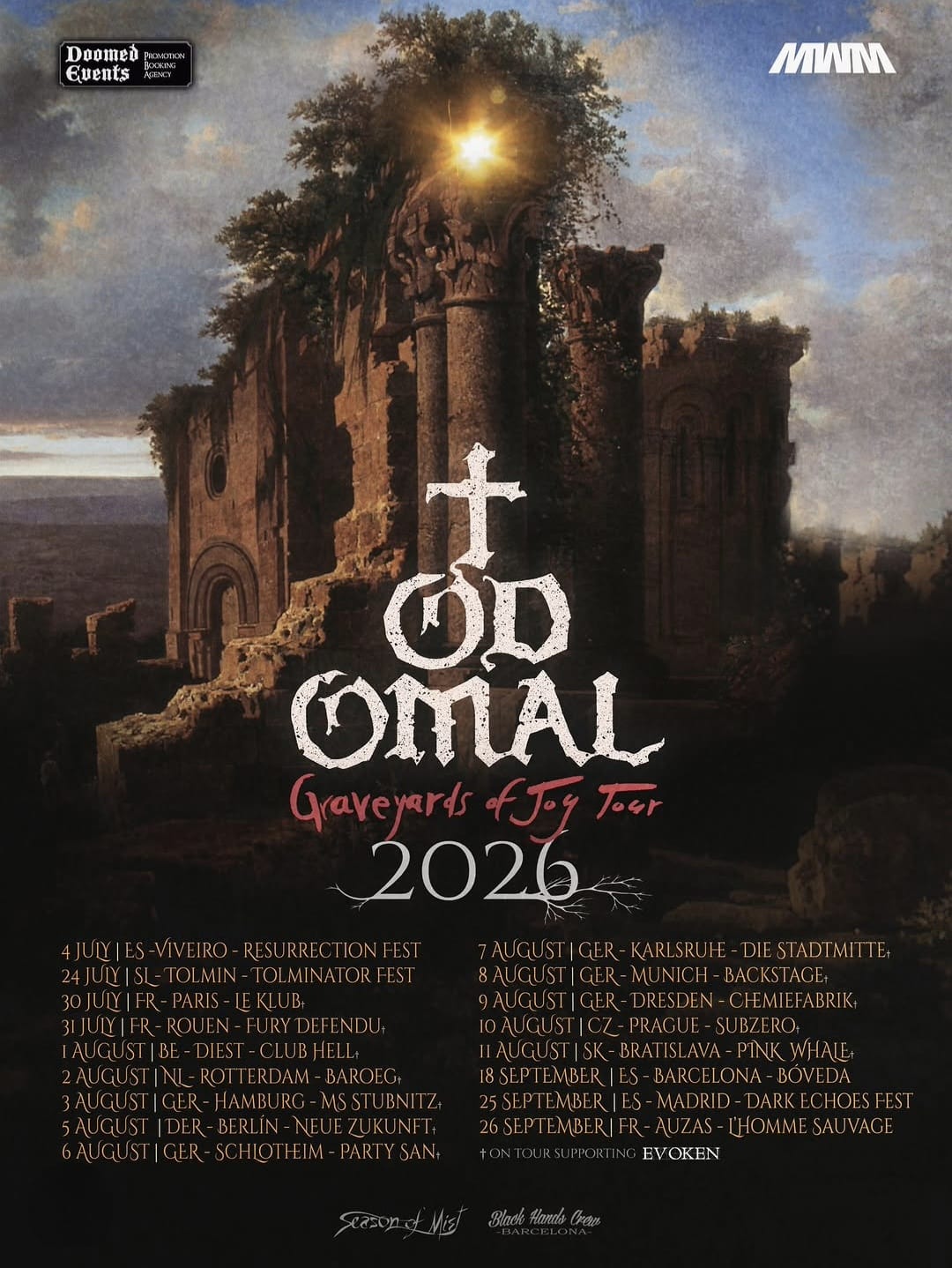
La portada igual: el cuadro de Lluís Rigalt, Ruïnes (1865), parece casi una traducción visual del disco. Graveyards of Joy parece fascinado por ese punto donde la belleza y la decadencia coexisten. Las cosas se desmoronan. La gente, los objetos y los lugares desaparecen. Y, sin embargo, algo siempre permanece.
Graveyards of Joy demands patience. There are so many textures, layers and exquisite little nuances that it’s difficult to know where to put your ears at first. It’s not necessarily a bad thing – after all, this is basically TodoMal’s five-piece debut. I just feel like some of the dramatic tension doesn’t always build up quite as much as you’d expect it to. Thankfully, the reward is always there – there’s enough to keep coming back to that it almost always moves me.
The album artwork does, as well. Lluís Rigalt’s 1865 painting Ruïnes feels almost like a visual translation of the record. Graveyards of Joy seems fascinated by the point where beauty and decay exist at the same time. Stuff falls apart. Things and people and places all disappear. And yet something always remains.
La conexión de TodoMal con las llamadas ‘tierras vacías’ de España, esas zonas rurales despobladas y pueblos fantasma de lugares como la Alcarria o el Matarraña, hace que esa imagen sea aún más apropiada.
¿Cuántas bandas estatales pueden presumir de haber convertido paisajes de su tierra en parte del vocabulario emocional de un disco heavy? No hablo de la España de los folletos turísticos. Sino de esa España por la que conduces dos horas y te das cuenta de que no hay nadie alrededor. Lo he experimentado con mis propios ojos. Mis viajes por carretera me han llevado a pueblos como Ráfales, Valderrobres, Beceite, Moranchel y otros pueblos cerca de Entrepeñas: aldeas medio abandonadas, de tierra seca y construcciones que parecen estar siendo lentamente devoradas por la naturaleza.
Hay belleza en eso, pero tristeza también. Y Graveyards of Joy parece entender que esas dos cosas no tienen por qué anularse mutuamente.
TodoMal’s connection to Spain’s so-called ‘tierras vacías’, the depopulated rural areas and ghost towns of the geography, such as Alcarria and Matarraña, makes that imagery even more appropriate.
How many bands can boast that they’ve turned Spanish landscapes into part of the emotional vocabulary of a heavy record? I’m not talking about the tourist-brochure Spain. But the place-you-drive-through-for-two-hours-and-realize-there’s-no-one-around Spain. I’ve been there and done that. My road trips have taken me to Ráfales, Valderrobres, Beceite, Moranchel and other villages near Entrepeñas: the abandoned villages, the dry land and the buildings that seem like they’re slowly being taken back by nature.
There’s beauty in that, yet sadness at the same time. And Graveyards of Joy seems to understand that those two things don’t have to cancel each other out.
Entonces, ¿mereció la pena esperar?
Sin duda.
Si hubiera escrito esta reseña en julio, probablemente habría dicho que Graveyards of Joy era ambicioso, hermoso, denso y a veces abrumador.
Todo eso sigue siendo cierto. Pero después de casi dos meses con él, escucho algo más ahora.
So, was it worth the wait?
Definitely.
If I’d written this review in July, I probably would have written that Graveyards of Joy was ambitious, beautiful, dense and occasionally overwhelming.
All of that is still true. But after nearly two months with it, I hear something else now.
Escucho por qué están ahí las capas. Escucho los espacios entre ellas. Escucho la voz de Wildman de otra maravillosa manera. Escucho esa sensación de épica cinematográfica del tema de apertura con otros oídos. Y, quizá lo más importante, entiendo por qué es un disco que necesitaba tiempo.
Graveyards of Joy no es siempre inmediato. Tampoco es siempre fácil.
Pero debajo de tantas capas y de tanta densidad, hay algo sorprendentemente sencillo: una banda procesando la pérdida sin necesidad de montar un numerito.
Quizá por eso el título funciona tan bien: Alegría en los Campos de la Muerte.
Porque a veces las cosas más cautivadoras crecen en los lugares donde todo lo demás ya se ha ido. A veces, solo hay que darles un poco de tiempo.
I hear why the layers are there. I hear the spaces between them. I hear Wildman’s sultry voice differently. I hear the cinematic sweep of the opening track in a different way. And perhaps most importantly, I understand why this is an album that needed time.
Graveyards of Joy isn’t always immediate. Nor is it always easy.
But underneath all those layers and slabs of doom, there’s something surprisingly simple happening: a band trying to make sense of loss without turning it into spectacle.
Maybe that’s why the title works so well.
Because sometimes the most captivating things grow in the places where everything else has already gone away. Sometimes you just need to give them a little time.
Por cierto, si estás en Barcelona o Madrid, no te pierdas sus próximos directos este mes: el 18 de septiembre en Estraperlo y el 25 de septiembre en el Dark Echoes Fest en Madrid.
TodoMal: Bandcamp I Instagram I Facebook I Season of Mist