Voy a ser sincera. Antes de escuchar este disco, no estaba emocionada.
Yo. La chica que lleva más de una década diciéndole a cualquiera que le preste atención que Graveyard es una de las mejores bandas del planeta. La que considera 6 (2023, Nuclear Blast) uno de sus discos favoritos del siglo.
Desde Peace (2015, Nuclear Blast), solo habían sacado un disco. Un disco en casi una década. Y aun así, aquí estaba, sin ganas. Me odié un poco por ello.
No fueron los adelantos. “Tongue Tied” y “Back From The Grave” cumplieron. Eran buenos. Eran Graveyard. Pero no podía quitarme esa sensación en la tripa, y sabía exactamente qué era.
I have to be honest with you. Going into this album, I wasn’t excited.
Me. The girl who’s spent the last decade telling anyone who’ll listen that Graveyard are one of the best bands on the planet. The person who considers 6 (2023, Nuclear Blast) one of her favorite albums of the century.
REVIEW OF ‘6’: https://www.dirtyrock.info/2023/10/graveyard-regresan-con-un-disco-sublime-resena-de-6
Since Peace (2015, Nuclear Blast), they’d released just one album. That’s right. One album in almost a decade. And yet, here I was, not excited. I hated myself for it.
It wasn’t the teasers. “Tongue Tied” and “Back From The Grave” did their job. They were good. They were Graveyard. But I couldn’t shake the feeling in my gut, and I knew exactly what it was.
Jonatan LaRocca-Ramm dejó la banda el pasado junio, después de casi veinte años. Ya, ya… Las bandas cambian. La gente sigue adelante. La vida pasa. En 2023 me dijo que su creatividad se había ralentizado durante la pandemia, que ahora todos eran padres… Leyendo entre líneas, quizás esto llevaba tiempo viniendo.
Pero la guitarra de Jonatan fue una de las razones por las que me enamoré de Graveyard. Su vibrato. Eso que hace con el brazo entero en lugar de solo con la muñeca. Nunca he visto a otro guitarrista hacerlo así.
Y cuando eres fan de una banda como Graveyard, perder a un miembro se siente como perder una parte de lo que te hizo sentir algo hace todos esos años atrás. ¿Irracional? Totalmente. Pero la música no es racional.
Jonatan LaRocca-Ramm left the band last June, after nearly twenty years. Yeah, yeah… Bands change. People move on. Life happens. Back in 2023, he told me his creativity had slowed down during the pandemic, that they were all parents now... Reading between the lines, maybe this had been coming for a while.
But Jonatan’s guitar was one of the reasons I fell in love with Graveyard in the first place. His vibrato. That thing he does with his entire arm instead of just his wrist. I’ve never seen another guitarist do it quite like that.
And when you’re a fan of a band like Graveyard, losing a member feels like losing a piece of what made you feel something in the first place. Irrational? Absolutely. But music isn’t rational.
Así que estaba nerviosa. No sabía cuánto de esto iba a sonar como el “nuevo Graveyard en formato power trio”. Estaba de luto por algo que ni siquiera había perdido.
Y entonces le di al play.
So, I was nervous. I didn’t know how much of this would sound like the “new power trio Graveyard”. I was grieving something I hadn’t even lost yet.
Then I pressed play.
Treinta segundos de “Back From The Grave” y escucho una intro de batería que suena como “Dragonaut” de Sleep al 2x. Ya estoy sonriendo. Luego entran las guitarras, y escucho algo que reconozco: el tono de Jonatan, su fraseo, su vibrato (o algo lo bastante parecido como para lamentar no tener los credits delante para comprobarlo).
Sigue estando presente el guitarrista en este disco. No creo que esté en todos los temas, pero se le oye en los solos, en las armonías, en esos pequeños momentos en los que la guitarra parece hablar un idioma que solo él habla.
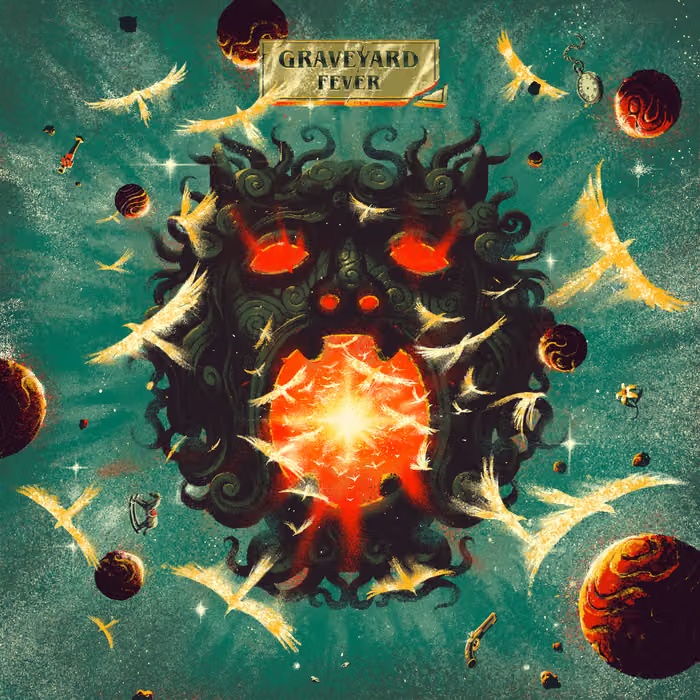
Definitivamente, Fever suena a Graveyard. Suena a casa.
Thirty seconds into “Back From The Grave” and I heard a drum intro that sounds like Sleep’s “Dragonaut” played at twice the speed. I’m already smiling. Then the guitars come in, and I hear something I recognize: Jonatan’s tone, his phrasing, his vibrato (or something close enough that I wish I had the liner notes to check).
He’s on this album. I don’t think he’s on every track, but you can hear him in the solos, the harmonies, those little moments when the guitar seems to speak a language only he speaks.
Relief set in. Fever sounds like Graveyard. It sounds like home.
Luego arranca “Tongue Tied”. Empieza despacito, como una cafetera percolando. Me encantan la batería y las armonías de guitarra. No suena mucho a Graveyard al principio, pero en cuanto llega el break, de repente estamos en territorio Lights Out (2012). El Graveyard más cabreado, más rápido, más breve. El que tantos fans siguen considerando su mejor disco. Si te va el hard rock garajero sueco, este tema podría ser tu favorito. Es Graveyard a otro rollo, y se desmarca del resto del álbum.
Ahí es cuando empecé a entender qué es Fever.
Then “Tongue Tied” kicks in. It starts slowly, like a coffee pot percolating. I love the drums, the guitar harmonies… It doesn’t sound much like Graveyard at first, but as soon as the break hits, suddenly we’re back in Lights Out (2012) territory. The angrier, faster, shorter Graveyard. The one so many fans still consider their best. If you’re really into Swedish garage hard rock, this one could be your favorite. It’s Graveyard in a different mood, and it stands apart from the rest of the album.
That’s when I started to understand what Fever is.
Llevo unos días con él, pensando en esas seis canciones que Jonatan me dijo que les habían sobrado cuando hacían 6. ¿Podría ser “Tongue Tied” una de ellas? No encaja del todo con el rollo de 6 (esa montaña rusa oscura a través de la locura). Quizá la guardaron para este Graveyard que vuelve de la tumba y lidia con el caos que viene después.
Y no dejo de volver a la misma idea: este no es solo el séptimo disco, el que sigue a 6. Es el disco que lo completa.
Seguramente estoy leyendo demasiado entre líneas. Lo hago a menudo. Pero cuanto más miro estos dos discos lado a lado, más difícil me resulta verlos como proyectos separados. No estoy diciendo que Graveyard se sentaran a hacer una narrativa en dos partes. No creo que sea un disco conceptual. Pero hay una forma, un arco temático que se vuelve visible cuando escuchas ambos discos seguidos.
Y Fever, intencionadamente o no, empieza exactamente donde 6 nos dejó.
No por sonar igual, sino por responder a las preguntas que 6 hacía. Y si has escuchado algo más que un par de letras de Graveyard, sabes que les gusta hacer preguntas. (“Why?” y “How come?” tienen que estar presentes en al menos una docena de sus canciones.)
¿Por qué? Dejadme que me explique.
I’ve been sitting with it for a few days, and thinking about those six songs Jonatan told me they had left over when they were making 6. Could “Tongue Tied” be one of them? It doesn’t quite fit 6’s vibe — that dark rollercoaster ride through madness. Maybe they saved it for this coming-back-from-the-dead-and-dealing-with-the-crazy-aftermath-that-follows Graveyard.
And I keep coming back to the same thought: this isn’t just the album that follows 6. It’s the album that completes it.
I’m probably reading too much into things. I do that. But the more I look at these two records side by side, the harder it is to see them as separate projects. I’m not saying Graveyard set out to make a two-part narrative. This isn’t a strict concept album. But there’s a shape here, a thematic arc that becomes visible when you listen to both records back to back.
And Fever, whether intentionally or not, picks up exactly where 6 left off.
Not by sounding the same, but by answering the questions 6 asked. And if you’ve listened to more than a couple of Graveyard’s lyrics, you know they like asking questions. (“Why?” and “How come?” have got to be in a dozen of their songs.)
Let me back up for a second. Hear me out.
6 abre con “Godnatt”, sueco para “buenas noches”. Una nana. El sueño. La muerte. Es un disco que empieza con una canción que suena como el final de algo, aunque el viaje no hubiera hecho más que comenzar.
Cierra con “No Way Out”. Estamos atrapados. Sin salida.
Ahí es donde te deja 6: en una habitación oscura, mirando al techo, preguntándote cómo llegaste ahí.
Fever abre con “Back From The Grave”, una resurrección: la única salida de la trampa de 6 era morir y volver.
Y termina con “Dead Note”. El silencio final. El último sonido.
Godnatt (sueño/muerte) → No Way Out (sin salida) → Back From The Grave (resurrección) → Dead Note (silencio final). Un ciclo completo: descenso, confinamiento, regreso, final. Muerte y renacimiento.
6 opens with “Godnatt”, Swedish for “good night”. A lullaby. Sleep. A death. It’s an album that begins with a song that sounds like the end of something, even though the ride had only just begun.
It closes with “No Way Out”. Trapped. No exit.
That’s where 6 leaves you: in a dark room, staring at the ceiling, wondering how you got there.
Fever opens with “Back From The Grave”, a resurrection: the only way out of 6’s trap was to die and come back.
It ends with “Dead Note”. The final silence. The last sound.
Godnatt (sleep/death) → No Way Out (entrapment) → Back From The Grave (resurrection) → Dead Note (final silence) – a complete cycle: descent, confinement, return, ending. Death and rebirth.
También tenemos “Room Tempered”. El título sugiere regulación y control, pero la batería es rápida y furiosa; una marcha frenética. Pero no es una marcha cualquiera. La manifestación se ha convertido en disturbio. El control ha fallado. Esos parones y arranques te mantienen en alerta, mientras que la voz más rasposa de Joakim me hace preguntarme si este es uno de los temas más recientes que grabaron. No, aquí no hay nada “templado”.
De hecho, es donde el “rock pandémico” del que Jonatan hablaba en 2023 empieza a tener sentido para mí. 6 se escribió en pleno caos. Fever es lo que pasa después. La fiebre rompe, pero la enfermedad ya lo ha cambiado todo. No una enfermedad física, ojo. Es más bien la enfermedad de la sociedad actual: las mentiras que nos contamos a nosotros mismos y a los demás, la resaca de la pandemia, los cambios en la sociedad, el odio que ha crecido desde entonces.
¿Graveyard se propusieron hacer un disco conceptual? Probablemente no. Pero cuentan una historia, y una vez que la ves, es difícil dejar de verla.
Then there’s “Room Tempered”. The title suggests regulation and control, yet the drumming is fast and furious; a frenzied march. Not a demonstration – a riot. The control has failed. Those stops and starts keep you on your toes, while Joakim’s raspier voice makes me wonder if this is one of the more recent tracks they recorded. No, nothing “tempered” here.
This is where the “pandemic rock” Jonatan talked about in 2023 starts to make sense to me. 6 was written during the height of the chaos. Fever is what happens after. The fever breaks, but the illness has already changed everything. Not a physical illness, mind you. It’s more about the illness present in today’s society: the lies we tell ourselves and each other, the backlash of the pandemic, the changes in society, the hatred that’s grown since then.
Did Graveyard set out to make a concept? Probably not. But the sequencing tells a story, and once you see it, it’s hard to unsee.
¿Y musicalmente? Hay mucho que desentrañar.
“A Better Cut (Note To Self)” trae una batería brutal, junto con un órgano precioso y, aunque quizá se me alarga un poco más de lo que me gustaría, sigue teniendo pegada. Y luego están las letras: “You brought this shit upon yourself” (Tú mismo te buscaste esta mierda). Wow. La voz de Joakim suena más rasposa aquí, y espero que aguante muchos años más. Las últimas veces que he visto a Graveyard en directo, ha sufrido, y Truls ha ido asumiendo cada vez más voces. Sinceramente, no sé qué sería de Graveyard sin Joakim.
And musically? There’s a lot to unpack.
“A Better Cut (Note To Self)” brings more of those drum flourishes, along with some gorgeous organ work and, even though it might drag on a tiny little bit longer than I’d like, it still packs a punch. And the lyrics: “You brought this shit upon yourself.” Wow. Joakim’s voice sounds raspier here, and I hope it holds up for many more years. The last couple of times I’ve seen Graveyard live, he’s struggled, and Truls has taken over more and more of the vocals. I honestly don’t know what Graveyard would be without Joakim.
“Year Of The Horse” me trae inmediatamente “Get Some Action” de Hellacopters a la cabeza. Rock sueco en su máxima expresión. Se nota mucho la mano de Gunnerfeldt aquí, y me encanta hacia dónde va la canción después del break. Cuando pasa el minuto tres, empieza a sonar mucho más a Graveyard.
Los finales abruptos de “A Means To An End” y “Don’t Shoot!” (estoy bastante segura de que canta Truls en esta) tienen las preguntas implorantes características de Graveyard, pero no me entusiasman especialmente en verdad.
Algo parecido me pasó con “Time To Tell”, aunque abre con más de ese batería a lo “Dragonaut” que tanto me mola. La producción es increíble, los teclados sublimes, y me recuerda a una versión más decidida de uno de mis temas favoritos de 6, “No Way Out”. Sin embargo, por alguna razón que no termino de pillar, no me convence del todo. Las letras son probablemente lo mejor: “Por cierto, ya nos veremos por ahí. Tiempo bien gastado, buscando la paz mental. Después de todo lo dicho y hecho. ¿Qué es la vida? Supongo que habrá que esperar a que el tiempo lo diga”.
Hay mucho que masticar en esos versos. Y luego, otra vez, la canción termina de golpe.
“Year Of The Horse” immediately brings Hellacopters’ “Get Some Action” to mind. Swedish rock at its best. You can really feel Gunnerfeldt’s touch here, and I love where the song goes after the break. Once it passes the three-minute mark, it starts sounding much more like Graveyard.
The abrupt endings on “A Means To An End” and “Don’t Shoot!” (I’m pretty sure Truls is singing on this one) both feature Graveyard’s signature imploring questions but I’m not particularly thrilled with either of them, to be honest.
Something similar happened with “Time To Tell”, even though it opens with more of those “Dragonaut”-like drum vibes that I dig so much. The production is stellar, the keys are sublime, and it reminds me of a more determined version of one of my favorite tracks on 6, “No Way Out”. yet, for some reason I just can’t put my finger on, I’m not entirely sold. The lyrics are probably the highlight here: “By the way, I’ll see you later down the line. Time well spent, looking out for peace of mind. After all was said and done. What is life? Oh well, I guess we’ll have to wait around for time to tell.”
There’s a lot to sit with in those lines. And then, once again, the song ends abruptly.
Lo cual nos lleva a “Dead Note”, probablemente mi tema favorito del disco.
Es el más largo de lejos, y me trae “Bright Lights” a la cabeza, solo con un bajo y batería que no frenan ni cuesta abajo. La sección rítmica es gloriosa. Y los órganos. Y las guitarras… Y entonces, este tema me llevó a un sitio completamente inesperado: “El Fantasma de la Ópera”. En concreto, ese bucle hacia abajo alrededor del minuto 5:30 que recuerda a la intro del órgano en ese tema tan famoso de Andrew Lloyd Webber.
Me acuerdo de haber hablado con otro rockero sueco, Tobias Forge (Ghost), en una entrevista sobre lo mucho que le gustan los musicales. ¿Pero y Truls? ¿También es fan? Hay algo en ese bucle de acordes oscuro, repetitivo y agridulce en modo menor que no deja de hundirse. Y luego está la frase “Put a leash around your pain” (Amordaza tu dolor). WOW.
Y con eso, Fever termina de verdad en una nota “Dead” (muerta).
Which brings us to “Dead Note”, probably my favorite track on the album.
It’s the longest by far, and it brings “Bright Lights” to mind, only with more driving drums and bass. The rhythm section is glorious. And the organs. And the guitars… Actually, this track took me somewhere completely unexpected: “The Phantom of the Opera”. Specifically, those riffs reminiscent of Andrew Lloyd Webber’s organ-intro around the 5:30 mark on “Dead Note”.
I remember talking to another Swedish rocker, Tobias Forge (Ghost), in an interview about how much he loves musicals. But what about Truls? Is he a fan, too? There’s something about that dark, repeating bittersweet minor chord loop that keeps sinking. Then there’s the line “Put a leash around your pain.” WOW.
And with that, Fever really does end on a “Dead” Note.
Pero hay mucho pasando detrás del sonido de Fever; cosas que hacen feliz a una nerd del rock como yo. En sus dos discos anteriores, Graveyard grabaron en salas más pequeñas, con techos bajos. Esta vez querían más espacio, más ambiente, un sonido más grande. Así que, aunque los overdubs, efectos de sonido y voces se grabaron en su estudio “casero” donde ensayan, la batería y más pistas básicas se grabaron a cinta por Mattias Glavå en Kungsten Studios de Gotemburgo. Equipo viejo, grabación analógica y espacio para respirar. Ya me entendéis.
El diablo está en los detalles, dicen. Y aquí ayudan a hacer el disco lo que es. Truls pasa más tiempo con los órganos, vuelven el Dynacord Echocord Super Tape Echo (un clásico alemán de Graveyard desde su debut homónimo en 2007), los amplis tuneados de Joakim, un magnetófono noruego Tandberg de época.
La producción es brutal, de hecho. Truls produjo Fever él mismo, con Pelle Gunnerfeldt (The Hives, The Baboon Show, Viagra Boys) encargándose de la mezcla (y dándole al disco ese rollo “rock sueco”). Todo el proceso llevó un año, y se nota el cuidado que pusieron. Esto no suena a disco hecho con prisas. Hay espacio en la batería, capas metidas en la mezcla y detalles que se revelan cuando vuelves a escucharlo (o veinte veces más).
There’s also a lot going on behind the sound of Fever; stuff that makes a rock nerd like me happy. For their previous two albums, Graveyard recorded in smaller rooms with low ceilings. This time, they wanted more space, more ambience, a bigger sound. So, even though the overdubs, sound effects and vocals were recorded back at their makeshift studio where they rehearse, the drums and basic tracks were recorded on tape by Mattias Glavå at Kungsten Studios in Gothenburg. Old gear, analog recording, and room to breathe. You get the idea.
The devil’s in the details, they say. And here they help make the album what it is. Truls spends more time on the organs, the German Dynacord Echocord Super Tape Echo (a Graveyard staple since their self-titled debut back in 2007), Joakim’s go-to modified amps and a vintage Norwegian Tandberg reel-to-reel recorder are back.
The production is not to be brushed aside here. Truls produced Fever himself, with Pelle Gunnerfeldt (The Hives, The Baboon Show, Viagra Boys) handling the mix (and giving the album that “Swedish rock band” feel). The whole process took a year, and you can hear the care that went into it. This doesn’t sound like a rushed record. There’s room in the drums, layers tucked into the mix, and details that reveal themselves when you go back for another listen (or twenty).
Entonces, ¿qué pasa cuando no hay salida? Vuelves de la tumba. Vuelves cambiado. Dices la verdad. Aceptas que algo se ha ido. Quizás para siempre.
6 era melancólico y hacía una pregunta tipo lecho de muerte. Fever, menos ahogado en tristeza, respondió. No es una respuesta feliz. Pero es una respuesta, igualmente. Y eso es lo que hace que, juntos, estos dos discos digan algo que ninguno podría decir por separado.
Graveyard son los mejores haciendo blues soul rock hoy en día. Sin duda. En cuanto al resto de mi diatriba, escucha ambos discos seguidos. Luego dime que me equivoco.
Fever ya está disponible a través de Nuclear Blast.