¿Qué hace que alguien se suba al coche y conduzca tres horas para ver a una banda que acaba de descubrir?
Me lo he preguntado alguna vez, porque yo hice exactamente eso con Saturna, banda afincada en Barcelona.
Había escuchado The Reset, su disco de 2023, y tenía tantas ganas de verlos que decidí que no podía esperar a que volvieran a Madrid me subí al coche y me fui hasta León para verlos, con otras treinta personas en la sala, pensando todo el rato “esta banda debería estar tocando delante de miles”.
Eso fue como Saturna empezó a formar parte de mi mundo musical.
What makes somebody get in a car and drive three hours to see a band they’ve only recently discovered?
I’ve asked myself that question before, because I did exactly that with Saturna.
I’d listened to The Reset,their 2023 album, and I couldn’t wait for them to come back to Madrid and felt I had to see the Barcelona-based so much, I drove up to León, and saw them, along with maybe 30 other people, thinking they should have been playing to thousands.
That was my introduction to Saturna.
SATURNA: ¿La banda más infravalorada de España?: https://www.dirtyrock.info/2026/08/saturna-la-banda-mas-infravalorada-de-espana
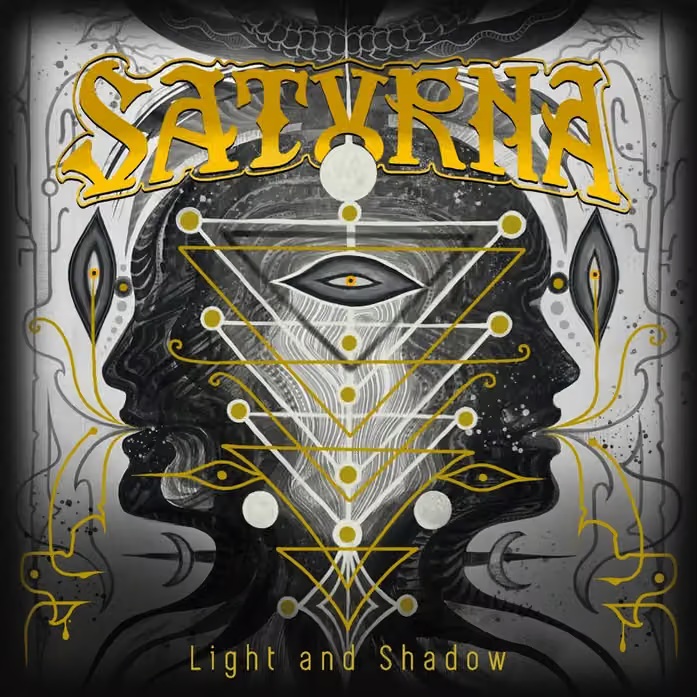
Unos años después, aquí estoy, escuchando su sexto disco de estudio, Light and Shadow, que sale mañana, 17 de septiembre, de la mano de Spinda Records, Discos Macarras y Ripple Music.
Hay algo especialmente satisfactorio en escuchar a una banda cuya música ya conoces lo suficiente como para reconocerla al instante, y aun así seguir encontrando cosas nuevas que escuchar.
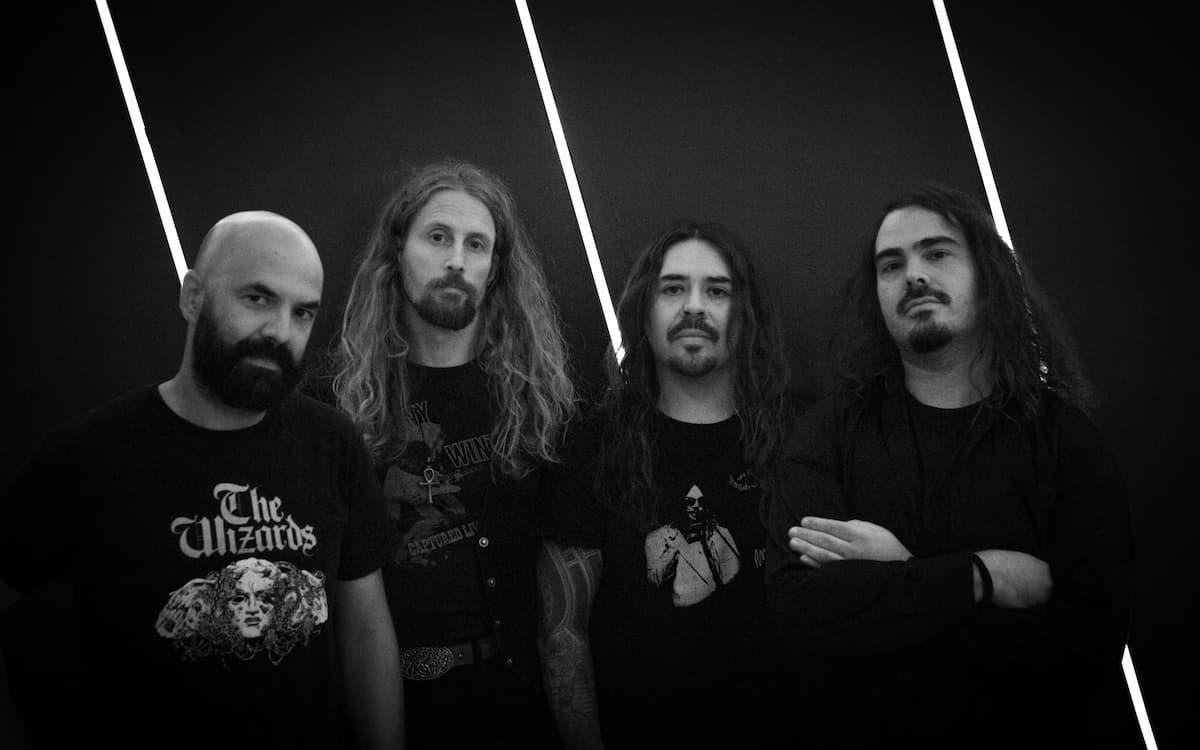
Saturna siguen siendo Saturna. James Vieco sigue siendo James Vieco. Rod Tirado sigue aplicando su enorme bagaje musical y su sensibilidad, haciendo que te preguntes por qué los bajistas no reciben más atención. Enric Verdaguer sigue aportando ese groove y esa base rítmica sólida. Y la guitarra de Max Eriksson sigue añadiendo otra voz al sonido de la banda.
Pero Light and Shadow es un disco ecléctico.
A few years later, here I am, listening to their sixth studio album, Light and Shadow, which comes out tomorrow, September 17, through Spinda Records, Discos Macarras and Ripple Music.
There’s something particularly satisfying about listening to a band whose music you already know well enough to recognize the fingerprints, while still finding new things to listen for.
Saturna are still Saturna.
James Vieco is still James Vieco.
Rod Tirado is still applying his vast musical background and sensitivity, making you wonder why bass players don’t get more attention. Enric Verdaguer is still providing the solid rhythmic backbone. And Max Eriksson’s guitar work continues to add another voice to the band’s sound.
But Light and Shadow is an eclectic record.
Hay hard rock, blues, psicodelia, rock setentero, toques ochenteros muy evidentes, pasajes acústicos más tranquilos, teclados, Hammond, Rhodes, y suficientes cambios de atmósfera como para que nunca parezca que Saturna están intentando repetir su trabajo anterior.
El disco también juega constantemente con su propio título: luz y sombra. Silencio y energía. Intimidad y peso. Eso se nota casi de inmediato.
There’s heavy rock, blues, psychedelia, 70s hard rock, some very noticeable 80s touches, quieter acoustic passages, keyboards, Hammond, Rhodes, and enough changes in mood that it never feels like Saturna are simply trying to repeat their previous work.
The album also plays with its own title constantly: Light and shadow. Silence and energy. Intimacy and weight. You can hear that almost immediately.
“Self Told Lies” fue una de las primeras canciones que escuchamos del álbum, y fue una elección cojonuda como adelanto. Me encantó cuando salió. Sigue encantándome. Y no creo que me canse de ella.
La banda cuenta que la canción llegó al estudio casi hecha. Vieco ya traía la estructura montada: intro y outro en 6/8 y una parte central más pesada. La dejaron estar, con mano izquierda y sin meterle casi mano.
Esa contención probablemente ayuda a explicar por qué funciona tan bien, y te da una idea bastante buena de por dónde va Light and Shadow sin spoilearte todo lo que viene después.
“Self Told Lies” was one of the first songs we heard from the album, and it was a damn good choice for a teaser. I loved it when it came out. I still love it. And I don’t think I’ll ever get tired of it.
The band says the song arrived at the studio almost completely done, with the structure from Vieco’s original composition: an intro and outro in 6/8 surrounding a heavier central section. They basically left it alone, approaching it with restraint and making very few changes.
That restraint probably helps explain why it works so well and it gives you a pretty good idea of what Light and Shadow is about without giving away everything that’s coming.
“Absence”, el otro single, es posiblemente mi tema favorito del disco.
Se transforma y cambia en los momentos exactos. Me encanta el tempo. Me encantan las voces. Me encanta el uso del espacio. Me encanta la melodía, la atmósfera que crea, los tonos de guitarra.
Y las guitarras respiran.
Los riffs no son especialmente complicados. Están basados en el blues y son repetitivos de esa manera hipnótica que no va de destreza técnica. Todo el tema tiene groove: las guitarras se enganchan con la batería y el bajo para crear un bolsillo sensual, de esos que te hacen mover la cabeza, con un borde psicodélico y brumoso.
Eso es un buen ejemplo de algo que Saturna hacen excepcionalmente bien.
No siempre necesitan añadir más. A veces solo necesitan sentarse dentro de un groove el tiempo suficiente para que se convierta en la canción.
La banda dice que “Absence” nació de una base que trajo Tirado y que fue evolucionando hacia algo más atmosférico y dinámico, con cambios de intensidad y pasajes más épicos. La letra gira en torno a la ausencia como idea recurrente, y esas primeras secciones llevan deliberadamente una influencia de Jim Morrison.
Todo eso está ahí.
“Absence,” the other early single, is possibly my favorite track on the album.
It morphs and changes at exactly the right moments. I love the tempo. I love the vocals. I love the use of space. I love the melody, the atmosphere it creates, the guitar tones.
And the guitars breathe.
The riffs themselves aren’t particularly complicated. They’re blues-based and repetitive in that hypnotic way that’s not about technical prowess. The whole track grooves – the guitars lock in with drums and bass to create a sultry, head-nodding pocket with a hazy, psychedelic edge.
That’s a pretty good example of something Saturna do exceptionally well.
They don’t always need to add more. Sometimes they just need to sit inside a groove long enough for it to become the song.
The band says “Absence” began with a foundation brought in by Tirado and gradually evolved into something more atmospheric and dynamic, with shifts in intensity and more epic passages. The lyrics revolve around absence as a recurring idea, and those early sections deliberately carry a Jim Morrison influence.
All of that is there.
De hecho, las voces son una parte enorme de la identidad de Saturna.
He comparado la voz de Vieco con los gritos potentes y llenos de energía de Chris Cornell, y esa garra y ese alma siguen ahí (bebiendo de cantantes de soul clásico como Otis Redding, Joe Cocker, Sam Cooke, Wilson Pickett o James Brown), pero Light and Shadow le da mucho espacio para moverse por otros terrenos. Hay incluso fraseo melódico y pentatónico de Ozzy con un toque nasal sutil en “No Questions” y la melancolía de Jeff Buckley en “Drifting” y aquí en “Absence”. Pero lo primero que escucho es ese groove.
In fact, the vocals are a huge part of Saturna’s identity. I’ve compared Vieco’s chops to Chris Cornell’s powerful, high-energy rock screams, and that grit and soul are still there (drawing from classic soul singers like Otis Redding, Joe Cocker, Sam Cooke, Wilson Pickett, or James Brown), but Light and Shadow gives him plenty of room to move elsewhere. There’s even Ozzy’s melodic and pentatonic phrasing with a subtle nasal touch on “No Questions” and the melancholy of Jeff Buckley on “Drifting” and here on “Absence”. But what I hear first is that groove.
Luego está “Falling Apart”, que no solo cuenta con el Hammond, cortesía de Lucas Herrera, sino que la batería de Verdaguer aquí nos da una masterclass de economía en el groove. Tiene ese rollo de shuffle de blues-rock, contundente y con matices dinámicos, con un carácter seco, casi de radio AM. Se contonea en vez de arremeter.
Y eso define básicamente la canción. Es una lección de servir a la canción en lugar de lucirse.
Luego entran las guitarras en el outro.
Simplemente sublime ese tema.
Then there’s “Falling Apart” which not only features the Hammond, courtesy of Lucas Herrera, but Verdaguer’s drumming here gives us a masterclass in groove economy. It has that blues-rock shuffle feel, punchy and dynamically nuanced, with a dry, almost AM-radio character. It struts rather than storms.
And that basically defines the song. It’s a lesson in serving the song rather than showing off.
Then the guitars come in on the outro. Just sublime.
“So Long” se acerca de otra manera.
El riff al principio es muy Rudolf Schenker: lento, pesado y muy sincopado, casi mecánico. Se siente como algo que merodea en lugar de esprintar.
No es tu típico riff rápido de hard rock o metal. Es sucio, a medio tempo y construido alrededor del espacio. Crujiente, seco y atrevido.
Los rides de Verdaguer también ayudan.
Luego las guitarras se juntan en el medio antes de que Max se marque otro solo hacia el final.
Temazo precioso.
“So Long” approaches things differently.
The opening riff is very Rudolf Schenker: slow, lumbering and heavily syncopated, almost mechanical. It feels like something prowling rather than sprinting.
It isn’t your typical hard rock/metal speed riff. It’s nasty, mid-tempo and built around space. Crunchy, dry and assertive.
Verdaguer’s ride work is a big part of that feeling, too.
Then the guitars come together in the middle before Max gets another solo toward the end.
Gorgeous track.
“Unheard”, con su ritmo locomotor, también tiene una intro pegadiza, esta vez inconfundiblemente The Who (aunque la banda dice que tiene un “rollo stoner rock de los 90”). Mientras que “Up For The Ride” también nos lleva al principio de la década de los 70. Las armonías de guitarra destacan incluso un pelín más aquí, y siempre he dicho que Saturna me recuerdan a Uriah Heep, pero con los teclados a lo largo de este álbum, escucho esa conexión más que nunca en Light and Shadow.
El tema acaba moviéndose hacia un duelo de guitarras que me recuerda a Jonatan LaRocca-Ramm y Joakim Nilsson de Graveyard. (Lamentablemente, no volveremos a ver ese dúo de guitarras en un escenario.)
Saturna describen el tema como una canción más “brillante” y “optimista”, construida a partir de una idea de James que la banda reinterpretó orgánicamente, con cada miembro añadiendo su propia identidad.
Una especie de “respiro” dentro del viaje. Pero no es el único.
The driving “Unheard” has a catchy intro also, this time, unmistakably The Who (although the band says it has a “90s stoner rock feel”). While “Up For The Ride” also takes us back to the early 70s. The guitar harmonies are particularly good here, and I’ve always said Saturna remind me of Uriah Heep, and with the keys throughout this album, I hear that connection more than ever in Light and Shadow.
The track eventually moves into a dueling guitar passage that reminds me Graveyard’s Jonatan LaRocca-Ramm and Joakim Nilsson. (Sadly, we won’t be seeing that particular guitar pairing onstage again.)
Saturna describe the track as a brighter, more uplifting song, built from an idea James had that the band reinterpreted organically, with each member adding their own identity.
A kind of “breather” within the ride. But it’s not the only one.
Fíjate, por ejemplo, en “Opus One”: es un añorante interludio de guitarra, menos de un minuto y medio, con Mariano Rupil a la guitarra clásica. O “About You”, otra pausa que la banda describe como un boceto crudo que acabó convirtiéndose en “So Long”, incluida casi como documento del proceso creativo.
Mientras que “Opus One” actúa deliberadamente como un momento de calma en la segunda mitad del disco, y “About You” no es simplemente una canción entre dos (es una idea antes de convertirse en otra cosa), sigo sin tener del todo claro cómo me siento con estos pequeños temas intermedios que tantas bandas parecen añadir hoy en día. A veces se sienten como relleno. A menos que estés ante un disco conceptual, no siempre son necesarios.
Take, for example, “Opus One”: It’s a weeping guitar interlude, less than a minute and a half long, with Mariano Rupil on classical guitar. Or “About You” – another pause that the band describes as a raw sketch that eventually turned into “So Long”, included almost as a document of the creative process.
While “Opus One” deliberately acts as a moment of calm in the second half of the record and “About You” isn’t simply a song sitting between two songs (it’s an idea before it became something else), I’m still not completely sure how I feel about these little interim tracks that so many bands seem to be adding these days. Sometimes they feel like filler. Unless you’re dealing with a concept album, they aren’t always necessary.
Luego, los 80 vuelven con “No Questions”. Max mete algunos armónicos artificiales, Vieco se pone más mordaz en su entrega y, como dije un par de párrafos antes, hay un rollo muy Ozzy que se suma al territorio habitual de Cornell.
Y entonces Max lo suelta todo con un solo a mitad de tema.
Si has leído mis entrevistas a Richie Kotzen (otro cantante del rincón Cornell) o a Doug Aldrich, sabrás que soy muy fan de los shredder, y este es exactamente el tipo de momento que explica por qué: Max, como siempre, es técnicamente afilado sin secuestrar la canción. La banda dice que el tema comenzó con un riff de Eriksson que era lo suficientemente diferente de sus patrones habituales como para querer desarrollarlo, y puedes escuchar ese filo en la versión final.
But no fear, the 80s are back with “No Questions”. Max throws in some pinch harmonics, Vieco gets more scathing with his delivery and, as I said a couple paragraphs earlier, there’s an Ozzy addition to the usual Cornell territory.
And then Max lets it rip with a mid-song solo.
If you’ve read my interviews with Richie Kotzen (another Cornell-esque singer) or Doug Aldrich, you know that I’m a sucker for a good shredder, and this is exactly the kind of moment that explains why: Max, as usual, is technically sharp without hijacking the song. The band says the track began with a riff from Eriksson that was different enough from their usual patterns that they wanted to develop it, and you can hear that edge in the finished version.
Lo he dicho una vez, y lo diré un millón de veces más si hace falta: estos cuatro músicos tienen más talento colectivo que cualquier otra banda que haya visto y escuchado salir de España. No paro de hablar de la voz de Vieco aquí en Dirty Rock Magazine, he mencionado la sensibilidad de Verdaguer detrás del kit y la consistencia y agudeza musical de Tirado, clavándola con la línea de bajo “justo en su punto”.
Pero Max Eriksson tampoco recibe suficiente crédito. Ya sea tocando junto a Johanna Platow en Lucifer o con otra banda barcelonesa que adoramos, The Mothercrow, Eriksson es un virtuoso de verdad. Lo importante es que no parece interesado en demostrarlo cada cinco segundos. Sabe cuándo entrar y cuándo apartarse, permitiendo que la guitarra y la voz se eleven mutuamente en lugar de competir por el protagonismo.
I’ve said it once, and I’ll say it another million times if I have to: these four musicians have more collective talent than any other band I’ve seen and heard hailing from Spain. I’ve gushed over Vieco’s voice here at Dirty Rock Magazine, I’ve mentioned Verdaguer’s sensibility behind the kit and Tirado’s consistency and sharpness, killing it as he gets the bass line “just right”.
But Max Eriksson doesn’t get enough credit, either. Whether he’s playing alongside Johanna Platow in Lucifer or with another Barcelona-based band we love, The Mothercrow, Eriksson is a true virtuoso. The important thing is that he doesn’t seem interested in proving it every five seconds. He knows when to step in and when to get out of the way, allowing the guitar and voice to elevate each other rather than competing for the spotlight.
Fíjate en “Drifting”, por ejemplo. La primera vez que escuché el tema, cuando empezó ese solo de guitarra, pensé que estaba escuchando un tema perdido de Whitesnake que acababa de resurgir. El solo vuelve alrededor del punto medio, mientras que el Rhodes de Herrera y la batería ligera dan a la canción una capa extra de atmósfera soul.
Este tema es donde el disco se vuelve propiamente ingrávido (el título es perfecto – “a la deriva”). Suena a la banda sonora de ese momento de felicidad absoluta en el que caminas por la playa con el pelo al viento y no te importa absolutamente nada durante unos minutos.
Se vuelve más intenso hacia el final, pero no necesariamente más duro; simplemente más insistente.
La banda la llama “la balada” del álbum, con Tirado aportando la base armónica inicial antes de que la canción crezca hacia una pieza emocional y progresiva. Sin embargo, curiosamente, “About You” me parece más una balada tradicional.
Take “Drifting”, for example. When that guitar solo first started, I thought I was listening to a long-lost Whitesnake track that had just resurfaced. The solo returns around the midpoint, while Herrera’s Rhodes and the light drumming give the song an extra soulful layer of atmosphere.
This track is where the record gets properly weightless (the title is fitting as hell). It sounds like the soundtrack for that blissful moment when you’re walking along the beach with your hair blowing in the breeze and not giving a shit about anything for a few minutes.
It gets more intense toward the end, but it doesn’t get necessarily harder; just more insistent.
The band calls it “the ballad” on the album, with Tirado providing the initial harmonic foundation before the song grows into an emotional, progressive piece. And yet, interestingly, “About You” feels more like a traditional ballad to me.
No podemos olvidarnos del tema que da título al disco. “Light and Shadow” arranca con algunos riffs pegadizos y realmente nunca para. La banda lo describe como una explosión continua de energía, directa y pesada, y dice que la canción acabó dando forma al concepto y a la identidad visual del álbum.
Una vez más, ahí está ese juego de guitarras que se ha convertido en sello de Saturna. Pero aparte de la armonía, lo que más escucho es melodía, especialmente hacia el final, y en última instancia, hard rock en su forma más pura, en todo su esplendor contoneante y groovy.
We can’t forget the title track. “Light and Shadow” starts out with some catchy riffs and doesn’t really ever stop. The band describes it as a continuous, no-break burst of energy, direct and heavy, and says the song ultimately helped shape the concept and visual identity of the album.
Once again, there’s that guitar interplay that’s become a Saturna trademark. But apart from harmony, what I hear most is melody, especially toward the end, and ultimately, hard rock in its purest form, in all its swaggering, groovy splendor.
“Words Of Doom” también empieza duro, ¡y pesado! Con un ADN de hard rock ochentero muy marcado e incluso un poco de glam acechando por los bordes. Luego entra Vieco y de repente todo se vuelve más etéreo.
Pero esto no es solo una canción con un riff grande y un cantante por encima. Las guitarras brillan de verdad durante el último tramo, y también la sección rítmica. Toda la banda se involucra en el desarrollo. Es definitivamente otro tema muy “Saturna”. De hecho, la banda dijo que es una conexión más cruda y directa con sus primeros años, principalmente gracias a los riffs oscuros de Tirado.
“Words Of Doom” starts hard, too – and heavy! With some distinctly 80s hard-rock DNA and even a little glam lurking around the edges. Then Vieco enters the picture and suddenly the whole thing becomes more ethereal.
But this isn’t just a song with a big riff and a singer over the top. The guitar work really shines during the final third, but so does the rhythm section. The whole band gets involved in the build. It’s definitely another track that is very “Saturna”. In fact, the band said it’s a rawer, more direct connection to their early years, mainly thanks to Tirado’s dark riffs.
Y finalmente – ¡ains! – llegamos al bonus track, “A Strange Mix Of Humans”. Cuando lo escuché por primera vez, pensé que la voz era Nick Oliveri. Es inquietantemente similar. Pero no, el cierre cuenta con palabras y voz de John Mann, con Mariano Rupil de vuelta a la guitarra clásica.
And finally, alas, we come to the bonus track, “A Strange Mix Of Humans”. When I first heard it, I honestly thought the voice was Nick Oliveri. It’s hauntingly similar. But no, the closer features words and voice from John Mann with Mariano Rupil back on classical guitar again.
Ese último pseudo-epílogo es bastante importante aquí.
Después de todos los riffs, armonías, solos, teclados, guitarras acústicas, grooves, cuasi-shuffles y todo lo demás que pasa en este disco, Saturna terminan dejando entrar en la sala algo mucho más humano y caótico.
Lo que nos devuelve al título: Luz y sombra. Vida y muerte. Amor y odio. Silencio y energía.
Saturna saben perfectamente que no necesitan elegir un lado. Light and Shadow se mueve entre ambos constantemente.
Y eso es probablemente lo que más me interesa de este sexto álbum.
That last pseudo-epilogue is pretty important here.
After all the riffs, harmonies, solos, keys, acoustic guitars, pocket grooves, quasi- shuffles and everything else going on in this album, Saturna finish by letting something much more human and chaotic into the room.
Which brings us back to the title.
Light and shadow. Life and death. Love and hate. Silence and energy.
Saturna knows full well they don’t need to pick one side. Light and Shadow keeps moving between both.
And that’s probably what I find most interesting about this sixth album.
Saturna saben escribir un riff, obviamente. Saben escribir una melodía. Tienen al guitar-hero de Max Eriksson, un cantante que puede pasar de la garra de Cornell a una oscuridad a lo Ozzy a algo mucho más soulero sin perderse en las referencias, y a Rod Tirado y Enric Verdaguer proporcionando la gravedad que permite que todo se mueva…
Saturna know how to write a riff, obviously. They know how to write a melody. They have guitar-hero Max Eriksson, a singer who can go from Cornell grit to an Ozzy darkness to something much more soulful without losing himself in the references, Rod Tirado and Enric Verdaguer providing the gravity that allows all of it to move…
Pero lo que no deja de volver a mí es el espacio.
Cuándo dejarlo estar. Cuándo llenarlo. Cuándo dejar que un groove se quede ahí. Cuándo golpear más fuerte. Cuándo parar.
Quizá por eso sigo aquí, después de todos estos años, preguntándome si son la banda más infravalorada de la península.
Light and Shadow sale mañana. Dale al play y juzga tú mismo.
But the thing that keeps coming back to me is space.
When to leave it. When to fill it. When to let a groove sit there. When to hit harder. When to stop.
Maybe that’s why I’m still here, after all these years, wondering if it’s the most underrated band on the peninsula.
Light and Shadow is out tomorrow. Press play and find out for yourself what all the fuss is about.
PRÓXIMOS CONCIERTOS:
25 de septiembre: Sala Laut (Barcelona)
1 de octubre: Dime que me Quieres (Madrid) con Troy Torino
2 al 3 de octubre: festival Tabernas Desert Rock Fest (Tabernas, Almería)
Saturna: Bandcamp I Instagram I Facebook
cover art: @jondix; fotos: Marta Remón