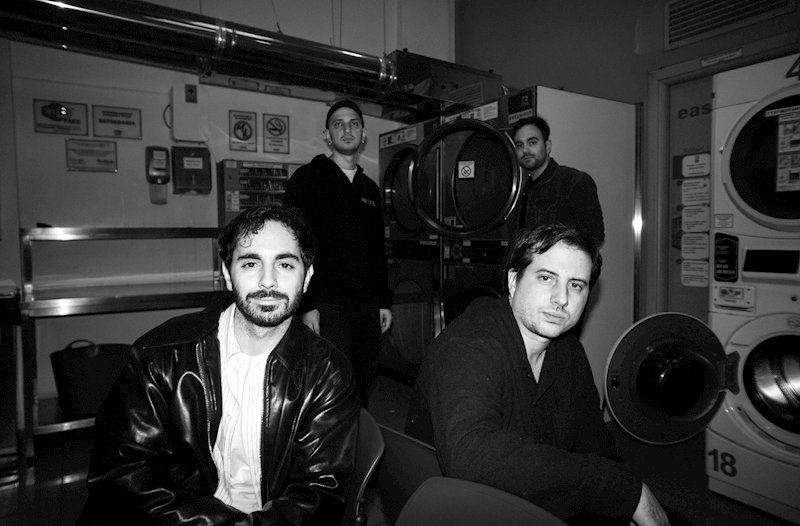
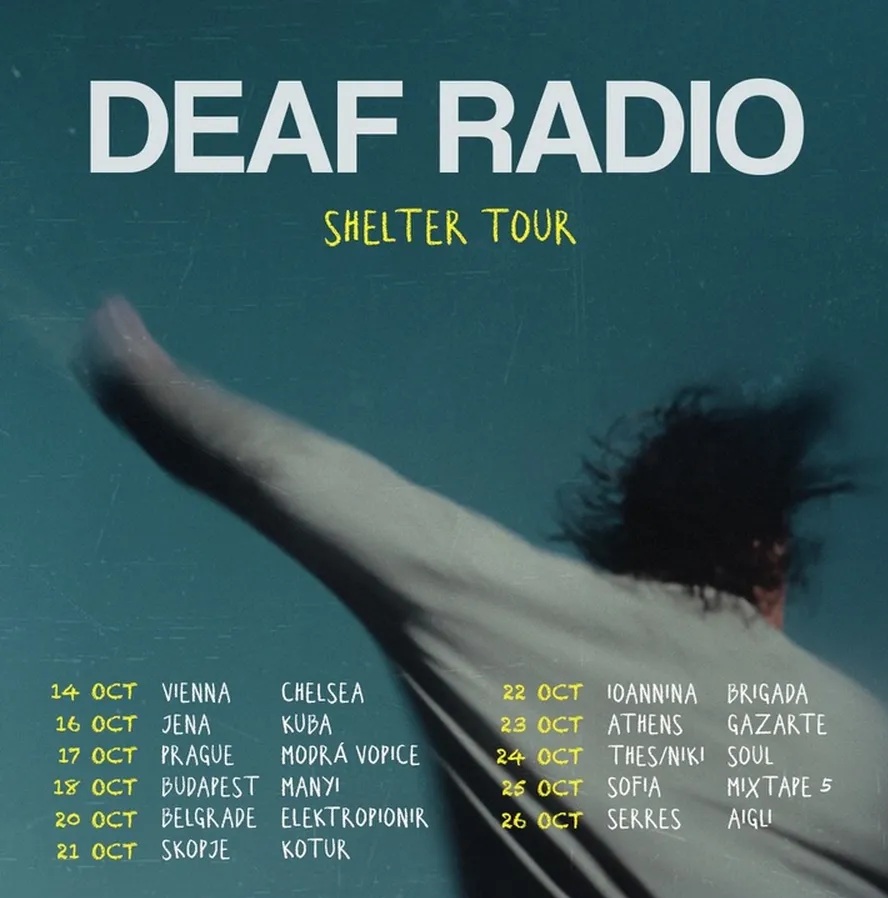
Los griegos Deaf Radio están de vuelta con su cuarto LP, Shelter, editado solo el pasado mes de septiembre. Con una nueva gira europea a punto de arrancar, Panos Gklinos (voces, guitarra), Dimitris Sakellariou (guitarra), Dimitris Georgopoulos (bajo) y George Diathesopoulos, (batería) están en plena evolución – ¡como debe ser!
Greek rockers Deaf Radio are back with their fourth LP, Shelter, released just last September. With a new European tour about to kick off, Panos Gklinos (vocals, guitar), Dimitris Sakellariou (guitar), Dimitris Georgopoulos (bass) and George Diathesopoulos (drums) are still evolving – as they should be!
Desde Alarm (2017), Deaf Radio me han gustado mucho, y después de tres discos bastante diferentes entre sí, su nuevo trabajo me ha dejado unas cuantas preguntas.
Los nuevos dioses y diosas de Grecia: https://www.dirtyrock.info/2023/03/los-nuevos-dioses-y-diosas-de-grecia
I’ve been following them ever since Alarm (2017), and after three albums that were pretty different from one another, their new record left me with quite a few questions.
The New Greek Gods and Goddessess: https://www.dirtyrock.info/2023/03/the-new-greek-gods-and-goddessess
Su debut tenía esa energía cruda, directa y en toda la cara. Modern Panic (2019) apretó todavía más y se hizo más pesado, mientras que Arsenal of Hope (2022) volvió hacia un terreno más indie y alternativo. Y ahora está Shelter, que da la sensación de que la banda ha cerrado el círculo sin volver realmente al punto de partida.
Their debut had that raw, in-your-face energy. Modern Panic (2019) pushed things even harder and heavier, while Arsenal of Hope (2022) moved back towards a more indie / alternative direction. And now there’s Shelter, which feels like the band has come full circle without actually going back to where they started.
Su música suena familiar, especialmente si, como yo, creciste con el rock alternativo de los 90. Pero no en plan nostálgico. Están esas guitarras grandes, esos estribillos con pegada, ese swag QOTSA de vez en cuando, pero también hay algo más “asentado”. Más seguro. Menos sobre cómo se supone que tiene que sonar Deaf Radio y más por sonar, simplemente, a Deaf Radio.
Deaf Radio sound familiar, especially if, like me, you grew up with ’90s alternative rock. But not in a nostalgic way. You’ve got the big guitars, the punchy choruses, that occasional QOTSA-ish swag, but there’s also something more “settled” about it. More confident. Less about figuring out what Deaf Radio are supposed to sound like and more about simply sounding like Deaf Radio.
Quizá por eso, mientras lo escuchaba, acabé pensando en mi propia generación.
Por alguna razón, nos han hecho creer que nuestra música tenía que llevarnos a sustancias que alteran la mente y hacernos sentir cabreados, introspectivos y/o vagamente existenciales. Hardcore y post-rock durante el día; drone, fuzz y “Nutshell” a las 3 de la madrugada… en una habitación a oscuras… dándole vueltas a veinte años de errores. (Yo lo he hecho. Más de una vez.)
Pero los millennials y los Gen X también sabemos divertirnos.
Maybe that’s why, while listening to it, I found myself thinking about my own generation.
For some reason, we’ve been led to believe that our music was supposed to involve mind-altering substances and make us feel pissed off, introspective and/or vaguely existential. Angry hardcore and post-rock during the day; drone, fuzz and “Nutshell” at 3 a.m.… in a dark room… mulling over twenty years of mistakes. (I’ve done it. More than once.)
But millennials and Gen Xers know how to have fun, too.
REVIEW/RESEÑA ‘SHELTER’: https://www.dirtyrock.info/2026/10/deaf-radio-shelter
Como decía en mi reciente reseña, también necesitamos música para el resto del día. Para levantarte de la cama, subirte al metro, ir a currar y fingir que eres un adulto funcional. Shelter es ese tipo de música. Puede que hable de duelo, errores, expectativas y de la búsqueda de un hogar, pero no te deja ahí tirado, miserable, con todo tu equipaje existencial a cuestas.
As I said in my recent review, we also need music for the rest of the day. For getting out of bed, getting on the subway, going to work and pretending to be a functional adult. Shelter is that kind of music. It may deal with grief, mistakes, expectations and the search for home, but it doesn’t leave you lying there miserable, weighed down by all your existential baggage.
Cuando me senté a charlar con los “dos Dimitris” (bajista y guitarrista), nos fuimos bastante más allá del inevitable “cuéntame cosas sobre el nuevo disco”. Hablamos de crecer en Atenas mientras el país se iba al carajo y de cómo aquella rabia acabó colándose en la música de los primeros Deaf Radio. Hablamos de qué pasa cuando esa rabia cambia a medida que te haces “mayor”. De la noche que se esconde en esas líneas de bajo. De lo peligroso (y aterrador) que resulta habernos acostumbrado a la guerra. De esa lista interminable de musts que nos imponemos sin siquiera darnos cuenta. De hacer música mientras sigues teniendo que pagar las facturas.
Podríamos haber estado hablando durante horas.
Esto es lo que me contaron.
When I sat down with the two “Dimitris” (bass and guitar players), we went well beyond the inevitable “tell me about the new album” questions. We talked about growing up in Athens while the country was falling apart, and how that anger found its way into the early Deaf Radio sound. We talked about what happens when that anger changes as you get “older.” About the ‘night’ lurking in those bass lines. About how dangerous (and terrifying) it is that we’ve normalized war. About that endless list of musts we impose on ourselves without even realizing it. About making music while still having to pay the bills.
We could have talked for hours.
Here’s what they had to say.
ORIGINAL INTERVIEW IN ENGLISH below
JESSICA: Hoy, en Dirty Rock, tenemos con nosotros a Dimitris, bajista de la banda griega Deaf Radio. Hola, Dimitris. Lleváis ya unos cuantos años en esto, pero aquí en España no os conocemos demasiado. Yo llevo siguiéndoos, no sé, ¿una década más o menos? Pero tampoco hay mucha información publicada sobre la banda. Me gustaría conoceros un poco mejor. Así que empecemos por lo básico. ¿Cómo os conocisteis? Cuéntame cómo empezó la banda.
DIMITRIS S: En realidad, yo no fui uno de los miembros originales de la banda. Entré en 2015. El bajista anterior, Adonis, no podía tocar en un concierto y ellos me conocían porque yo tocaba en otra banda de rock psicodélico, Cyanna Mercury. Así que me preguntaron si quería tocar con ellos en ese concierto. Yo era fan suyo. Acababan de sacar su primer disco. Así que, obviamente, dije que sí. Después Adonis se mudó y me convertí en miembro permanente.
JESSICA: ¿Te intimidó al principio entrar en una banda de la que eras fan?
DIMITRIS S: La verdad es que fue un desafío, porque tenía que aprenderme las canciones rapidísimo, en un mes o así. Pero por aquel entonces lo pasamos muy bien. Ya ves, sigo aquí con la banda, así que al final salió bien (risas).
JESSICA: ¿Y qué pasa con el resto de la banda? ¿Ha habido más cambios en la formación?
DIMITRIS S: Sí, algunos. Al principio la banda se llamaba 12 Gafs.
DIMITRIS G: Hola, chicos.
JESSICA: Ah, hola. Este es el otro Dimitris (risas), el guitarrista. Madre mía, va a ser complicado distinguir entre los dos: Dimitris, el del bajo; Dimitris, el de la guitarra (risas).
DIMITRIS G: (Risas) Sí, igual debería cambiarme el nombre un rato para no liarla. Perdón por llegar tarde, chicos. Me he quedado atrapado en el curro, ya sabéis…
DIMITRIS S: Sí. Todos, excepto uno, que es médico, vivimos la vida corporativa.
JESSICA: Normal. Es algo que hay que hacer, por desgracia.
JESSICA: Dimitris «guitarra» (risas), ¿llevas en la banda desde el principio?
DIMITRIS G: Sí, Panos, el cantante, y yo estamos juntos en esto desde 2010. Primero fundamos, como decía el otro Dimitris, una banda con otro nombre y otros dos miembros. Poco a poco, el batería fue el primero en marcharse y luego se unió George, que está con nosotros desde 2015. Después cambiamos el nombre y, alrededor de 2018, se unió Dimitris.
JESSICA: Vale, así que la sección rítmica ha cambiado… ¿Por qué cambiasteis el nombre a Deaf Radio?
DIMITRIS G: Creo que fue un cambio de dirección musicalmente. Éramos más una banda de garaje. Éramos más felices y teníamos un rollo más amateur, y queríamos dejar claro que estábamos cambiando, sobre todo en cuanto a identidad sonora.
JESSICA: Claro. A medida que crecemos, escuchamos música diferente, descubrimos cosas nuevas. ¿Qué escuchabais vosotros que haya dado forma al sonido de Deaf Radio?
DIMITRIS S: Sobre todo en los dos primeros discos, era bastante evidente: Queens of the Stone Age. Nos encantan.
JESSICA: Sí, se nota.
DIMITRIS G: Uno de nuestros discos favoritos es Like Clockwork, probablemente sea el punto dulce de nuestros gustos comunes. Siempre hemos tenido una conexión sentimental y emocional muy fuerte con ese disco en particular. Pero hay que tener en cuenta que en nuestros primeros discos tocábamos de una manera más bruta porque ni siquiera sabíamos tocar bien. O, por lo menos, no sabíamos contenernos, por ejemplo.
DIMITRIS S: A veces era más fácil meter cosas más punk y tres acordes en una canción.
JESSICA: Rollo Ramones.
DIMITRIS G: Sí. Incluso con el sonido de las guitarras, aprender cuál es tu espacio dentro de una canción, saber cuándo tienes que dar un paso atrás y dejar que los demás hablen… Todas esas cosas las aprendes con el tiempo. Probablemente por eso los primeros discos eran un poco más intensos, directos, más heavy. Pero sí, crecimos con QOTSA, obviamente, pero también con la generación anterior: Joy Division, David Bowie.
DIMITRIS S: Mucho Bauhaus también por aquí.
DIMITRIS G: También estaba toda la escena underground de Atenas, donde había garitos de new wave, dark wave… Ya sabes, gente vestida como The Cure en los ochenta. Así que tenemos influencias de toda esa escena un poco más oscura, y quizá eso se nota todavía más en el tercer y cuarto disco.
Pero, echando la vista atrás, en Grecia había muchísima rabia, mucho cabreo en la sociedad. Quizá eso llevó a mucha gente a hacer música más pesada. Hay una historia muy potente detrás. No es que los griegos empezáramos a tocar rock en 2010. Había bandas enormes, bandas increíbles, como Τρύπες.
DIMITRIS S: Sí, muchísimas más. Y también bandas más antiguas, de los sesenta y los setenta, como Pavlos Sidiropoulos, con ese rollo de rock psicodélico. En Grecia hay muchísima historia del rock.
JESSICA: Volviendo a esa rabia y ese cabreo: vuestras letras tienen mucha fuerza. ¿Qué viene primero? ¿La música o la letra?
DIMITRIS G: El noventa por ciento de las veces, creo que la música. Escribimos las letras, pero normalmente al principio no las hacemos encajar con la canción. Luego vemos cosas que hemos apuntado en cualquier sitio y pensamos: vale… esta historia tendría sentido en esta canción porque tiene un rollo parecido. O a veces tenemos una canción que nos hace sentir que queremos hablar de algo personal, y entonces eso acaba marcando toda la historia que vamos a construir alrededor de ella. Pero el 90-95 % de las veces, la música viene primero.
JESSICA: Bueno, vuestro sonido ha cambiado muchísimo desde Alarm. Más allá de lo que decías antes sobre cómo cambiáis a medida que crecéis, ¿pasó algo entre aquel disco y el momento en que grabasteis Shelter que os empujara hacia esta nueva dirección?
DIMITRIS G: Sí, nuestras vidas cambian. Quieres hablar y expresar cosas diferentes, emociones diferentes. Nos conocemos un poco mejor a nosotros mismos. Ya no somos aquellos tíos de 25 años que estaban cabreadísimos con toda la situación de Grecia. Cuando no teníamos futuro. Acabábamos de salir de la universidad, no encontrábamos trabajo y estábamos enfadados porque no podíamos tener la vida que alguien nos había prometido cuando estábamos en el instituto. Y luego están también nuestras vidas personales: te casas, empiezas a pensar en tener hijos y demás. Hay cosas diferentes de las que quieres hablar.
JESSICA: Vuestra canción «All My Friends» va precisamente de eso. Quiero decir, es algo por lo que hemos pasado todos.
DIMITRIS G: Totalmente. Es la conversación clásica de la que nos quejamos constantemente entre nuestros grupos de amigos: «Jo, no nos vemos nada, pero quiero verte y no tengo tiempo», o «Jo, qué buenos tiempos aquellos», y demás. Y queremos volver a vivirlos, y todo tiene ese punto agridulce.
JESSICA: Dimitris —el Dimitris del bajo— (risas), tú llegaste un poco después, así que viviste ese cambio de primera mano. Eras muy fan del sonido inicial de Deaf Radio. ¿Han cambiado tus emociones al respecto?
DIMITRIS S: Sí, totalmente. Estos tíos me han cambiado de alguna manera. Hace años estaba súper encerrado en ese sonido pesado. Y pensaba: «Ah, no quiero escuchar nada que sea menos contundente de lo que escuchaba antes». Pero ellos me abrieron los oídos para escuchar cosas más melódicas, no tan agresivas. O sea, no baladas, pero sí otras cosas. He aprendido muchísimo de ellos musicalmente, y he evolucionado como bajista, como músico y como persona. Para mí, ya no es solo la banda en la que toco. Ahora somos como una familia.
DIMITRIS G: Quería añadir una cosa… Estaba pensando… Antes hablábamos de influencias y normalmente repetimos las mismas referencias clásicas porque son bastante obvias. Pero, por ejemplo, últimamente estoy escuchando música clásica, sinfonías y cosas así, gracias a mi mujer. Y me he dado cuenta de que hay un solo que, en otro momento de mi vida musical, no habría tocado igual. Habría escrito un solo en plan: «¡Guau!».
DIMITRIS S: Más técnico.
JESSICA: Sí, un solo de shred.
DIMITRIS G: Sí. Pero esta vez, por ejemplo, en “No Place Like Home”, en el outro, toqué algo que suena a violines. Decidimos que no lo haríamos con violines, pero viene directamente de un universo musical y de unas referencias completamente diferentes. Y creo que esa es la gracia de cambiar las cosas que escuchas. Ojalá lo hiciera más, la verdad. Creo que Dimitris hace eso con la electrónica. Por cierto, también es DJ.
JESSICA: ¡Ah, vale! Se nota! No sé cómo explicarlo, pero se puede escuchar «la noche» en los graves.
DIMITRIS S: (Risas) Sí, es verdad. Hay mucha «noche» en mis líneas de bajo…
JESSICA: Son esos matices los que me encantan. Aunque seguís teniendo ese, ya sabes, «sonido Deaf Radio».
DIMITRIS S: Sí, claro. “Shelter”, por ejemplo, probablemente sea la canción más pesada del disco.
JESSICA: Totalmente.
DIMITRIS S: Y también está “Idling”, que empieza como una canción clásica de Deaf Radio, sobre todo en la intro. Sigues notando las influencias que siempre hemos tenido.
DIMITRIS G: Está guay. Quiero decir, obviamente no cambias tanto como para convertirte en una banda completamente diferente. Igual tenemos una canción en cada disco en la que hacemos algo totalmente distinto. En Arsenal of Hope, por ejemplo, “Bermondsey”, la última canción del disco, era completamente diferente. En Shelter, el primer tema es muy diferente. Pero, en general, tienes una estructura y, después de cuatro discos, ya tienes una identidad propia.
DIMITRIS S: Sí, y seguiremos evolucionando.
JESSICA: Siempre. Quién sabe hacia dónde irá el sonido de Deaf Radio… Más allá del sonido, hay un hilo conceptual muy evidente que recorre el disco. Habláis del miedo, del refugio, de los errores, del duelo, del crecimiento, del hogar… ¿Ha sido un proceso catártico para vosotros?
DIMITRIS S: Sí.
DIMITRIS G: Para mí, son las cosas que me preocupan ahora. “Big Mistakes” habla de ponerte a prueba frente a todas esas obligaciones que sientes que te imponen, cuando en realidad quizá te las estás imponiendo tú mismo, o al menos versiones anteriores de ti: las cosas que tienes que hacer, lo que se supone que tienes que conseguir, aquello en lo que necesitas hacer bien … Luego tenemos “All My Friends”, de la que hablábamos antes…
Y también está el estado del pvto mundo. Queremos hablar de ello. En discos anteriores no hablábamos directamente de la guerra, no porque no la tuviéramos en el radar ni porque no hubiera guerras. Obviamente, en 2017 el mundo tampoco era precisamente perfecto.
DIMITRIS S: Ahora hemos normalizado la guerra. Eso es lo que más miedo da.
DIMITRIS G: Exacto. Vemos Gaza y vemos que está todo arrasado, que ya ni siquiera parece un lugar, y después no es más que otro reel que has visto en el móvil y ya está. No sé… en 2022 hablábamos, por ejemplo, de la IA y de la sociedad moderna, porque empezábamos a darnos cuenta de todas esas cosas…
DIMITRIS S: Estaba empezando todo aquello, en realidad. Y luego llegó el covid y la adicción a las redes sociales.
DIMITRIS G: Exacto. Ahora no hablamos de nada de eso porque tenemos otras cosas en la cabeza. Así que sí, supongo que se trata de ir cambiando constantemente y de sacar lo que te molesta en cada momento de tu vida.
JESSICA: Claro. Cuando creas, siempre es un poco como hacer una foto de lo que estás viviendo en ese momento, así que tiene sentido. Acabáis de sacar Shelter – el mes pasado. ¿Qué os está pareciendo la respuesta? ¿Hay algo que os haya sorprendido, algo en la manera en que la gente está reaccionando al disco que no esperabais?
DIMITRIS S: Una cosa, por mi parte: que “Idling” sea una de las canciones más populares que tenemos en Spotify. No nos lo esperábamos. Le está yendo tan bien que está compitiendo con nuestra canción más popular hasta ahora, “Animals”.
DIMITRIS G: Yo también destacaría la profundidad de la respuesta. Creo que es la primera vez que leo comentarios o reseñas —como la tuya, por cierto— en los que la gente profundiza más. Es como si hubiéramos conseguido conectar a un nivel más profundo que con los discos anteriores.
DIMITRIS S: Sí, totalmente. El significado de todas esas ideas —el significado de hogar, de estar ocioso (“idle”), de qué significa «shelter»… Es como si la gente estuviera intentando explicar y traducir esas ideas dentro de su cabeza. En plan: «¿Qué significa exactamente “hogar”?». Y creo que llega más a la gente que el disco anterior, por ejemplo. Vemos comentarios mucho más emocionales en YouTube.
JESSICA: Desde luego conecta. Es curioso: normalmente no presto demasiada atención a las letras, sobre todo la primera vez que escucho un disco. Vuestras letras tienen muchísima fuerza, pero la música de Shelter es todavía más expresiva. Es como estar viendo una película. Como decía antes, puedo sentir «la noche» en vuestro bajo. Todos esos pequeños matices de las guitarras me cuentan una historia. Puedo sentir la rabia en los gritos. Y luego prestas atención a las letras y resulta que hablan de todo eso, pero combinado con el sonido… Te dan ganas de salir de tu propia cabeza… de seguir.
Me encanta vuestro primer disco. Creo que los debuts siempre tienen algo muy especial para una banda. Y me encanta esa sensación de urgencia de Alarm. Pero Shelter es claramente mucho más maduro y me alegra que esté recibiendo la atención que merece. Estáis a punto de volver a salir de gira fuera de Grecia. ¿Qué tipo de atención recibís fuera de vuestro país?
DIMITRIS G: Bueno, creo que en Grecia ya no tenemos aquella «ola de guitarras» que hubo, por ejemplo, en 2010, cuando estaba súper de moda. Ahora hay más música de rollo Gen Z, así que quizá hemos perdido un poco de terreno aquí. Pero, a nivel de algoritmos, estamos creciendo en todo el mundo en cuanto a Spotify, YouTube y demás. Está todo muy repartido por distintos sitios.
DIMITRIS S: Sí. Por un lado, en teoría, si miras los números, estamos creciendo, pero al mismo tiempo da la sensación de que el ambiente ha cambiado y no puedes seguirle exactamente el ritmo. Además, no va mucho con nosotros estar tan pendientes de todo eso.
DEAF RADIO: Ya, es que no quiero hacer TikTok. Preferimos ser nosotros mismos.
JESSICA: Lo respeto. Dice bastante de vosotros. Bueno, por desgracia, ya no tenemos más tiempo. Aunque probablemente podría estar hablando con vosotros durante horas. Solo quería daros las gracias por sacar tiempo para hablar con nosotros y espero veros pronto de gira.
DEAF RADIO: Ha sido genial hablar contigo y ha sido un placer. Gracias de nuevo por las palabras tan guays sobre la reseña del disco. ¡Hasta pronto!
DEAF RADIO: Website I Spotify I Facebook I Instagram
ORIGINAL INTERVIEW IN ENGLISH:
JESSICA: Hi. Here at Dirty Rock, we have Dimitris with us. He’s the bass player for the Greek band Deaf Radio. Hi Dimitris. You guys have been around for a while, but here in Spain, we don’t really know a lot about you. I’ve been following you for, I don’t know, probably a decade or so, but basically, I want to get to know a little bit more about the band. So let’s start with the basics. How did you guys meet? Tell me about how the band started.
Dimitris S: I was actually not one of the first members of the band. I entered the band in 2015. The previous bass player, Adonis, couldn’t play a gig and they knew me because I was playing in another band that I used to play in, Cyanna Mercury, a Greek psychedelic rock band. So, they asked if I wanted to join them for a gig. I was a fan of theirs. They had just released the first album. So of course I said yes. And then Adonis moved away, and I became a permanent member.
JESSICA: Was it intimidating for you at the beginning, to join a band that you were a fan of?
Dimitris S: It was a challenge, actually, because I needed to learn the songs really fast, in a month or so. But it was a really good time back then. You know, I’m still with the band, so it all worked out.
JESSICA: And what about the rest of the band? Have there been any other changes in the lineup?
Dimitris S: Yeah, some changes. In the beginning, the band was called 12 Gafs.
Dimitris G: Hey guys.
JESSICA: Oh, hey. That’s the other Dimitris (laughs), the guitar player. Oh, it’s going to be hard to separate the two of you, Dimitris bass, Dimitris guitar (laughs).
Dimitris G: (laughs) Yeah, I should change my name for a minute so it’s not such a mess. Sorry for joining late, guys. I was stuck at work, you know…
Dimitris S: Yeah. All of us, except one, who’s a doctor, are living the corporate life.
JESSICA: Okay. Yeah, day jobs are necessary.
JESSICA: Dimitris “guitar” (laughs) have you been in the band since the beginning?
Dimitris G: Yeah, me and Panos, the singer, have been together since 2010. We first founded, as the other Dimitris was saying, a band with a different name and two other members. Gradually, the drummer left first, and then George joined us, who has been together with us since 2015. And then we changed the name, and then around 2018 the other Dimitris joined us.
JESSICA: Okay, so the rhythm section has changed… Why was the name changed to Deaf Radio?
Dimitris G: I think it was a change of direction overall. We were more of a garage band. We were happier and had amateur vibes, and we wanted to demonstrate a change in direction, in terms of sonic identity, I guess.
JESSICA: Right. As we grow up, we listen to different music, we discover new things. What did you guys listen to that shaped the Deaf Radio sound?
Dimitris S: Especially in the first two albums, it was really obvious, actually, it was Queens of the Stone Age. We love them.
JESSICA: Yeah, you can definitely feel that present.
Dimitris G: One of our favorite albums is Like Clockwork, it’s probably the sweet spot in our current taste. And we’ve always been, sentimentally and emotionally, connected to that particular album. But it’s not only Queens, obviously. In our first albums, we were playing more rough because we didn’t even know how to play. At least we didn’t know how to pull back, for example.
Dimitris S: Sometimes it was easier, actually, to have more punky stuff and three chords in the song.
JESSICA: Very Ramones, yeah.
Dimitris G: Even the sound of the guitars, knowing your space within a song, knowing when you have to take a step back and let the others do the talking… All these things that you learn with time. That’s probably why the first albums were a little bit full-on, in-your-face, heavier. But yeah, we grew up with QOTSA, obviously, but also with the previous generation, like Joy Division, David Bowie.
Dimitris S: A lot of Bauhaus here.
Dimitris G: We also had the whole Athens underground scene, where you have new wave, dark wave bars, goths… You know, people dressed up like The Cure in the ’80s, so we’ve got these influences of a bit of a darker scene, and maybe that comes out even more in the third and the fourth album.
But in Greece, looking retrospectively, we had lots of rage, lots of anger in the society. Maybe that led people to become more heavy types of music. There’s a robust history. It’s not that Greeks started playing rock in 2010. There were huge bands, amazing bands, such as Τρύπες.
Dimitris S: Yeah, lots more. And older bands, like in the ’60s and ’70s, like Pavlos Sidiropoulos, psychedelic rock. There is a lot of rock history in Greece.
JESSICA: Going back to the rage and anger, your lyrics, they’re powerful. What comes first? The music, the lyrics?
Dimitris G: Ninety percent of the time, I think it’s the music. We write the lyrics, but we don’t match them to the song usually, initially, at least. So it’s kind of mumbling some weird words that don’t even exist. And then we look at things we’ve written on our phones or pieces of paper, and we think, okay… this story would make sense in that song because it has a similar vibe. Or maybe sometimes we have a song that feels like we want to talk about something personal, and then it drives the whole story that’s going to be set up around the song. But 90–95% of the time, the song, the music, comes first.
JESSICA: Well your sound has shifted a lot since Alarm. Apart from what you said before about changing as you grow up, was there anything that happened between then and when you recorded Shelter that made you move toward this new direction?
Dimitris G: Yeah, our lives change. You want to talk about and express different things, different emotions. We understand a little bit more about ourselves. We’re not the 25-year-old guys that just are super pissed off with the whole situation in Greece. When we had no future. We were just out of university and couldn’t find a job, and we were pissed off because we couldn’t have the lives that someone else had promised us when we were in high school. Also, in our personal lives: you get married, you think about children and so on. There are different things you want to talk about.
JESSICA: Your song “All My Friends” is about that. I mean, that’s something that everybody has gone through.
Dimitris G: Definitely. It’s a classic conversation that we keep moaning about amongst our groups, like, “Oh, we don’t see each other a lot, but I want to see you, but I don’t have time,” or “Oh those were the good times in the past,” and so on. And we want to relive them, and it’s all kind of bittersweet.
JESSICA: Dimitris – bass Dimitris (laughs) – you came into this a little bit later so you experienced the change firsthand. You were a big fan of the sound at the beginning of Deaf Radio. Have your emotions changed? Are you still such a big fan of this sound?
Dimitris S: Yeah, definitely. These guys have actually changed me in a way. Years ago, I was really stuck with this heavy sound. And I was like, “Ah, I don’t want to listen to something less heavy than what I used to listen to.” But they really opened my ears to listen more to something darker or more melodic, not so aggressive. I mean, no ballads, but something else, something different. I’ve learned a lot from these guys musically, and I’ve evolved as a bass player, as a musician, as a person. For me, it’s now not just the band that I’m playing in. We’re like a family now.
Dimitris G: I just wanted to say… I was thinking… Before we talked about influences and usually we repeat the same classic references because it’s quite obvious. But, for example, for me, I’ve been listening to classical music recently, symphonies and so on, thanks to my wife. For example, I realized that there’s a solo that in other times of my musical life, I wouldn’t have played the same. I would have written a solo that is like, “Wow!”
Dimitris S: More technical.
JESSICA: Yeah, a shredder solo.
Dimitris G: Yeah, but this time, for example, in “No Place Like Home”, in the outro, I played something that sounds like violins. We decided we wouldn’t do it with violins, but it’s straight out of a completely different universe of music and references. And I think that’s the beauty of changing the things that you listen to. I wish I did it more, actually. I think Dimitris does that a lot with electronics. By the way, he’s a DJ as well.
JESSICA: Oh, that makes sense! You can hear that. I don’t know how to explain it, but you can hear “the night” in your bass playing.
Dimitris S: (laughs) Right. That’s true. There is a lot of “night” in my bass lines…
JESSICA: Those are the nuances that I love. Although you still have that, you know, “Deaf Radio sound”.
Dimitris S: Yeah, sure. “Shelter”, for example, it’s probably the heaviest song on the album.
JESSICA: Definitely.
Dimitris S: And also you have “Idling,” which starts like a classic Deaf Radio song, especially in the intro. You can still feel the influences that we’ve always had.
Dimitris G: It’s good. I mean, obviously you don’t change so drastically, to the extent that you’re a different band. Maybe we have, I don’t know, one song on each album that we do something completely different. On Arsenal of Hope, for example, “Bermondsey,” the last song of the album, was completely different. On Shelter, the opening song is really different. But overall, you have a structure, and after four albums, you identify yourself.
Dimitris S: Yeah, and we’ll keep evolving.
JESSICA: Always. Who knows where the sound of Deaf Radio will go… Apart from the sound, there’s an obvious conceptual thread going through the record. You talk about fear, shelter, mistakes, grief, growth, home… Was this a cathartic process for you at all?
Dimitris S: Yeah.
Dimitris G: For me, these are the things that bother me now. “Big Mistakes” is about testing yourself against the “musts” that you feel are imposed by someone else, but in reality, maybe they’re imposed by previous versions of yourself—the must-dos, the things that you have to achieve, or what you need to be good at… “All My Friends”, we talked about before…
You have also the fuçking world around us and you want to talk about it. In previous albums, we didn’t talk directly about war, not because it wasn’t on our radar, or because there was no war. Obviously, in 2017 the world wasn’t perfect.
Dimitris S: We normalize war now. That’s the scariest thing.
Dimitris G: Exactly. We look at Gaza and we see that everything’s demolished, and it’s not even a place any longer, and then it’s just another reel that you’ve already seen on your phone and that’s it. In 2022, we were talking about AI and modern society on the previous album, because we started noticing these things—
Dimitris S: It was in the beginning of all that, actually. Then covid and the social media addiction.
Dimitris G: Right. We don’t talk about any of that now because there are other things on our mind. So yeah, it’s a matter of continually changing, and touching on elements that bother you at one period of time, I guess.
JESSICA: Sure. When you create, it’s always kind of like a snapshot of what you’re going through at the moment, so it makes sense. You just released Shelter last month. What do you think about the response that you’re getting? Anything surprising about how people are responding to it differently than what you expected?
Dimitris S: One thing for me: “Idling” is one of the most popular songs on our Spotify, which is the second song of the album. We didn’t expect that. It’s doing so well that it’s competing with our most popular song up til now, “Animals”.
Dimitris G: I would also say the depth of the response. I think it’s the first time that I’ve read comments or reviews – like yours, by the way – where people are going deeper. It’s like we’ve managed to connect on a deeper level compared to previous albums.
Dimitris S: For sure. The meaning of all the ideas – the meaning of home, of being “idle”, or “shelter”… It’s like people are trying to explain and translate the ideas in their minds. Like “What does “home” mean, exactly?” And I think it touches people more than the previous album, for example. You see more emotional comments on YouTube.
JESSICA: Well it definitely connects. It’s funny, I don’t usually pay a lot of attention to the lyrics, especially the first time I listen to a record. Your lyrics are definitely powerful, but the music in Shelter is even more expressive. It’s like you’re watching a movie. Like I said before, I can feel the “night” in your bass. All of the little nuances in the guitar parts tell me a story. I can feel the anger in the screams. And then, you pay attention to the lyrics, and it’s about all of that, but paired with the sound, you feel okay. It makes you want to get out of your head… continue. I love your first album. I think debuts are always really special for a band. And I love the urgency in Alarm. But Shelter is definitely much more mature and I’m glad it’s getting the attention it deserves. You’re about to go back on tour outside Greece. What kind of attention do you get outside your home country?
Dimitris G: Well I think in Greece, we don’t have the “guitar wave” we used to, which was super big in 2010, for example. Now there’s more Gen Z type music here, so we’ve lost a little bit of foothold here maybe. But algorithmically, we’re growing bigger all over the world in terms of Spotify, YouTube and so on, it’s so dispersed across multiple places.
Dimitris S: Yeah. On one hand, in theory, in numbers, we’re growing, but at the same time it feels like the vibe has switched, and you can’t follow it exactly. Plus, it’s not our style to pay so much attention to all that.
Deaf Radio: Yeah, I mean I don’t want to do TikTok. We prefer to just be ourselves.
JESSICA: I respect that. It says a lot about you guys. Well, unfortunately we don’t have any more time. Although I could probably talk to you guys for hours. I just wanted to say thank you for taking the time to talk to us and hope to see you on the road soon.
Deaf Radio: It was really great talking to you and it was our pleasure. Thanks again for the kind words in the album review. Take care!