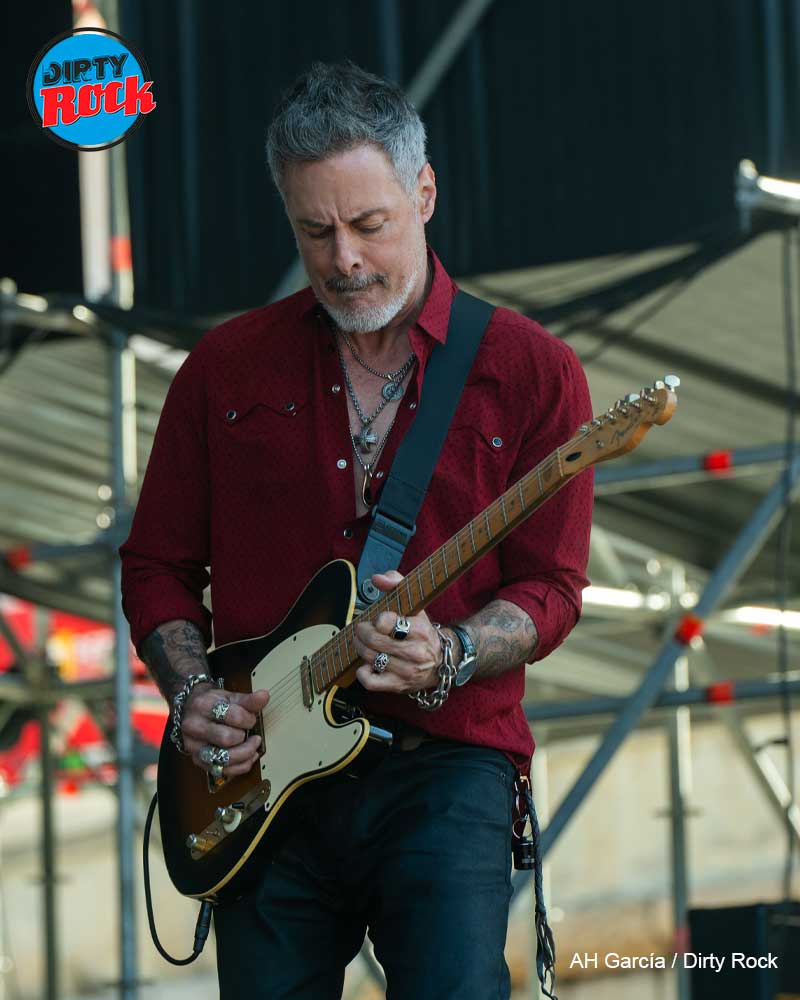
Después de una vida entera siguiendo su carrera, por fin pude sentarme a hablar con Richie Kotzen. No fue sencillo: su obra, descomunal y extensa, se resiste a cualquier síntesis rápida, y condensar décadas de música en una conversación breve imponía cierto respeto.
After a lifetime of following his career, I finally got to sit down with Richie Kotzen. It wasn’t an easy task: his extremely extensive body of work resists easy summaries, and trying to fit decades of music into a short conversation felt pretty daunting.
Sé que cambio de estilos, pero en el fondo soy un músico de rock muy influenciado por el soul y el R&B americano. Aparte del rock clásico – Bad Company, Free, el primer Rod Stewart – ese soul de Filadelfia, como los O’Jays y los Spinners, es una influencia enorme para mí. Crecí escuchando esa música.
Estamos ante un artista que ha ido reformulando lo extraordinaria que puede ser la música con la guitarra al frente, cuando la destreza deja de ser el objetivo y las canciones toman el mando. Un joven que colgaba el teléfono a Ibanez porque pensaba que lo llamaban reclutadores del ejército; que dijo no a los peces gordos de los sellos; que escribió una canción para Poison que acabó sonando en una investidura presidencial en Estados Unidos; y que, tras una mala noche sobre un escenario en Brasil, decidió deshacerse de las púas y no mirar atrás.
This is an artist who has been quietly reshaping what guitar-driven music can be when virtuosity stops being the point and songs take over. A kid who once hung up on Ibanez because he thought the calls were military recruiters, who said no to the big wigs and gatekeepers, who wrote a Poison song that somehow made it to a U.S. presidential inauguration, and who, after a bad night onstage in Brazil, decided to throw away his picks and never look back.
ESPECIAL RICHIE KOTZEN EN DIRTY ROCK MAGAZINE: https://www.dirtyrock.info/2024/05/richie-kotzen-mas-alla-de-las-seis-cuerdas/
Se sentía muy competitivo, y todos esos tipos son geniales, innovadores y alucinantes, pero a mí me parecía que no encajaba. Me parecía algo muy atlético, no necesariamente artístico, al menos para mí. No me veía esforzándome por tocar intervalos más amplios o arpegios más rápidos.
La historia de Kotzen está llena de estos giros. Niño casi prodigio del piano, a los siete años cayó en sus manos una guitarra de segunda mano, convirtiéndole en un músico capaz de tocar cualquier cosa —y hacerlo bien— y, aun así, decidió apartarse deliberadamente de la carrera “del shred” para perseguir sensaciones, relatos, groove y voz.
Kotzen’s story is full of these sideways turns. A child piano prodigy who picked up a second-hand guitar at seven, he grew into a musician capable of playing anything – and well – and then deliberately stepped away from the shredding race to chase feelings, stories, groove and voice.
Últimamente tengo la maravillosa sensación de estar muy satisfecho. Me siento muy bien representado artísticamente. Quiero decir, hay muchas cosas que no me gustan tanto, que he superado, o cosas que hice por una influencia externa, pero el 90% de lo que hay ahí fuera refleja exactamente quién era en cada momento. Es una sensación genial.
Ese instinto ha guiado una obra que suma más de treinta discos en solitario, un disco autoeditado de 50 canciones para celebrar su cincuenta cumpleaños y una negativa constante a seguir las reglas de la industria cuando no encajaban con las suyas.
“Infravalorado” se queda corto; “pasado por alto” no termina de encajar. Ha estado escondido a plena vista.
That instinct has guided a body of work that includes more than thirty solo albums, a self-issued 50-song release to mark his fiftieth birthday, and a career-long refusal to play along with industry expectations when they didn’t align with his own.
Underrated feels like an understatement; overlooked feels inaccurate. He’s been hiding in plain sight.
En muchas ocasiones, he elegido la integridad artística y el poder decir que no. Digo que no a muchas cosas porque no me interesan o no me apetece ser parte de ellas.
Desde hace unos 5 años, esa identidad musical inquieta ha encontrado un nuevo punto de equilibrio en Smith/Kotzen: una colaboración donde el peso del hard rock de Adrian Smith (Iron Maiden) choca – y se mezcla – con el alma del soul y R&B de Kotzen. El nuevo disco de Smith/Kotzen, Black Light / White Noise, estuvo a punto de llamarse de otra manera, casi pierde por el camino su tema titular y ahora se presenta como la expresión más clara hasta la fecha de un conjunto basada en lo sencillo, la confianza y la conversación.
For around five years, that restless musical identity has found a new balance in Smith/Kotzen — a collaboration where the hard rock & metal weight of Adrian Smith (Iron Maiden) collides with Kotzen’s deep soul and R&B core. Their new album, Black Light / White Noise, nearly took a different name, nearly lost its title track altogether, and now stands as the clearest expression yet of a partnership built on speed, trust, and conversation.
[En este nuevo disco] no veo mucha diferencia más allá de que las canciones son distintas. Es una continuación. […] Nunca empiezo pensando “Esta vez voy a hacer X”. Simplemente sigo a la canción, dejo que tome su curso y no le doy demasiadas vueltas.
El mes que viene, en Madrid y Barcelona, Smith & Kotzen estarán acompañados por la mujer de Kotzen, Julia Lage (Vixen) al bajo y Bruno Valverde (Angra) a la batería. Todo apunta a una química que remite a ese tipo de composición rápida e instintiva que Kotzen ha vivido con tantos otros grupos y artistas, nuevos y veteranos (Jason Becker, Steve Smith, Atma Anur, Greg Howe, Jeff Berlin, Greg Bissonette, Glenn Hughes, Joe Lynn Turner, Poison, Vinnie Moore, Stevie Salas, TM Stevens, Eric Martin, Billy Sheehan, Jerry Cantrell, Mike Portnoy… por citar solo unos cuantos). Ah, ¿y he mencionado que casi llegó a grabar un disco con Ozzy, Geezer y Deen Castronovo?
Next month, in Madrid and Barcelona, Smith & Kotzen will be playing alongside Richie’s wife Julia Lage (Vixen) on bass and Bruno Valverde (Angra) on the kit. There’s sure to be a chemistry that recalls the kind of fast, instinctive writing Kotzen has experienced with so many other bands and artists, new and old (Jason Becker, Steve Smith, Atma Anur, Greg Howe, Jeff Berlin, Greg Bissonette, Glenn Hughes, Joe Lynn Turner, Poison, Vinnie Moore, Stevie Salas, TM Stevens, Eric Martin, Billy Sheehan, Jerry Cantrell, Mike Portnoy…, just to name a few). Oh, and did I mention almost doing a record with Ozzy, Geezer and Deen Castronovo?
Me reuní con Sharon, me dijo que me querían en la banda, hablamos de dinero y merchandising. Y sí, fui a la habitación de Ozzy y estuve con él. Tenía una película puesta, creo que era Dos tontos muy tontos… en VHS
En esta entrevista, Kotzen habla sin rodeos de decisiones, etiquetas, timing y negativas calculadas que han dado forma a una carrera tan amplia que ni él mismo es capaz de contar todos los discos, además de la larga relación que ha ido construyendo con el público español.
In this interview, Kotzen speaks candidly about decisions, labels, timing, and the headstrong refusals that shaped a career so expansive even he struggles to count the records — along with the long relationship he’s built with Spanish audiences along the way.
Lo que aprendí de Stanley [Clarke] y Lenny [White] fue cómo comunicar con la música. O estás teniendo una conversación o estás soltando un monólogo que no va a ninguna parte.
Desmenuza momentos puntuales pero reveladores: volver a grabar la voz para la banda sonora de la película Bill & Ted, la lección que se llevó de Stanley Clarke y Lenny White, y por qué aún le duele haber perdido de joven una SG (sí, también toca Gibsons de vez en cuando).
He unpacks small, telling moments: re-cutting a vocal for a Bill & Ted soundtrack, the lesson in listening he took from Stanley Clarke and Lenny White, and why a three-pickup SG he lost as a kid still stings (yeah, it turns out he does like his Gibsons, too).
Es que me enamoré desde el principio de las Telecaster y las Stratocaster [pero] ¡Me encantan las Gibson! Mi bisabuelo trajo una Gibson acústica de Italia en los años 20 y le cantaba canciones populares italianas a mi madre con ella.
Lee la entrevista. Es el retrato de un artista que siempre ha seguido el instinto y la música, sin más, confiando en que, con el tiempo, la gente adecuada acabaría apareciendo.
Read along. This is a portrait of an artist who has always followed his gut and the music, first and foremost… and trusted that the right people would follow too.
Conciertos de Smith / Kotzen 2026
- 3 de febrero de 2026 – Madrid (sala La Riviera)
- 4 de febrero de 2026 – Barcelona (sala La Apolo)
entradas: madnesslive.es
foto de portada: Jose Merkanarias
ENTREVISTA COMPLETA: (in English below)
JESS: Muchísimas gracias por tomarte este tiempo para hablar con nosotros en Dirty Rock, aquí en España. Para mí, personalmente, es un honor. Te sigo desde que era una adolescente, y llevo décadas viendo cómo has ido cambiando el sonido de la música donde la guitarra es la protagonista.
Ahora vais a volver a España con Adrian Smith para presentar vuestro último disco juntos, y ya llegaremos a eso, pero antes tengo que preguntarte algo que siempre me ha rondado la cabeza.
En su día, grabaste esta joyita [enseña Fever Dream (1990, Roadrunner/Shrapnel)]. No sé si mucha gente lo sabe, pero “Dream of a New Day” salió en la banda sonora de la película de Bill & Ted, aunque era una versión regrabada.
Hubo un salto técnico bestial entre Arthur’s Museum y cuando Mike Varney te fichó, y luego con Fever Dream, que fue tu primer disco no instrumental. ¿Qué pasó ahí? ¿Fue una especie de pacto con el diablo, al estilo Robert Johnson?
RICHIE: Hice un trato. (risas)
JESS: Ya me lo imaginaba. (risas)
RICHIE: Te cuento lo que pasó. Cuando hice mi primer disco, me dieron el contrato basándose en material que había escrito y grabado con 17 años. Pero entre los 17 y los 20, a un chico joven le pasan muchas cosas. Para cuando salió ese primer álbum, yo ya era otra persona, simplemente por la evolución normal de crecer. Me di cuenta rápido de que no me apasionaba la música instrumental para guitarra. Yo quería hacer canciones, con letras.
Así que se grabó y sacó Fever Dream, luego mi contrato discográfico lo compró Interscope. Fui uno de los primeros artistas que ficharon.
JESS: Tú y Marky Mark, ¿no? (risas)
RICHIE: Sí, yo y Mark Wahlberg. Ted Field y Jimmy Iovine montaron el sello, y lo primero que hicieron conmigo fue meterme en esa banda sonora de la peli de Bill & Ted. Puse una canción, la que tú dices.
Entre grabar el Fever Dream original y la oportunidad de sacar esa canción en la banda sonora, pasó más tiempo y yo había evolucionado aún más. Así que quise regrabar la voz. Volví a grabar la voz principal, el bajo, y probablemente los coros, pero no regrabé todo. Esa es la versión que sale en la banda sonora.
Pero para responder a tu pregunta, no hubo “tratos” con nadie. (risas) Fue simplemente esa ventana de tiempo – de los 17 a los 21 – en la que un chaval cambia mucho.
JESS: Es verdad. Y por aquel entonces, trabajabas con Becker y con muchos de los monstruos de guitarra de Shrapnel. ¿Esa competencia también te empujó, al estar con gente como Malmsteen, Derringer, Marc Ford, Leslie West, Marty Friedman?
RICHIE: Sinceramente, lo que hizo fue alejarme del género. Se sentía muy competitivo, y todos esos tipos son geniales, innovadores y alucinantes, pero sentía que yo no encajaba. Me parecía algo muy atlético, no necesariamente ‘artístico’, al menos para mí. No me veía esforzándome por tocar intervalos más amplios o arpegios más rápidos. ¿Sabes?
JESS: Te entiendo.
RICHIE: Estaba perdiendo el interés en el instrumento en sí, porque sentía que había llegado a un punto en el que podía tocar cualquier cosa que se me pasara por la cabeza. Así que entonces quería hacer música… canciones.
No veía un futuro para mí en la música instrumental de guitarra, así que empecé a tomarme más en serio mi voz. Abandoné la guitarra en cierta medida y me centré en escribir canciones, historias y letras. Y luego pensaba: “Vale, tengo esta canción. ¿Cómo hago para que suene por los altavoces tal como la escucho en mi cabeza?”. Ese era el proceso.
JESS: Bueno, tu forma de componer es una de las cosas que más te distingue. Y sí, eso fueron los 80, cuando el virtuosismo técnico parecía la última meta para los guitarristas. El hecho de que tú te apartaras de eso siendo tan joven dice mucho de cómo iría tu carrera.
RICHIE: De lo que me aparté fue de cómo se definía el virtuosismo. Para mí, la dirección era más atlética que musical. Para mí, el mejor guitarrista de la historia es George Benson – ese fue mi primer concierto. Ahí hay un nivel de musicalidad y gusto, combinado con la habilidad de tocar cualquier cosa en cualquier momento. Pat Metheny es otro. Y yo no me veía encajando en esa categoría ‘shred’.
JESS: Bueno, hablando de Shrapnel, desde que Mike Varney te descubrió no has dejado de sorprender. Por cierto, le mandó a un amigo mío de Metal and Rock [programa de radio de Granada, España] un mensaje de audio sobre ti hace un par de años – fue muy emotivo. Habló de ti de una manera increíble, igual que Richie Zito. […] Te tienen en un pedestal altísimo. Y una cosa que decían es que básicamente puedes hacerlo todo. Tienes unos 30 discos en solitario, todos esos proyectos distintos – ¡hasta hiciste Flamenco con Ben Woods! Si tuvieras que definir el hilo común que une toda tu obra, ¿cómo lo describirías?
Ivoox monográfico de Richie Kotzen en Metal N’ Rock: https://go.ivoox.com/rf/128459306
RICHIE: Realmente no pienso en describir con palabras lo que hago porque la música es para escucharla. Sé que cambio de estilos, pero en el fondo soy un músico de rock muy influenciado por el soul y el R&B americano. Aparte del rock clásico – Bad Company, Free, el primer Rod Stewart – ese soul de Filadelfia, como los O’Jays y los Spinners, es una influencia enorme para mí. Crecí escuchando esa música.
Todo lo que hago tiene que tener esa conexión, si no, me desconecto. Por ejemplo, no hay un historial real de que yo flirtee con la música clásica. Me encanta, pero no la domino, así que hay limitaciones.
JESS: Son muchas influencias distintas. Has dicho en el pasado que Vertú te enseñó a escuchar. ¿Qué te enseñaron músicos como Stanley Clarke o Lenny White sobre el diálogo musical, y cómo lo trasladaste a proyectos de rock como The Winery Dogs o Smith/Kotzen?
RICHIE: Una cosa que me ayudó mucho a crecer como músico fue trabajar siempre con gente que tenía perspectivas diferentes – gente que sabía cosas que yo no dominaba tanto.
Trabajar con Stanley y Lenny con 29 años fue una de las experiencias de aprendizaje más grandes de mi vida. Eran innovadores y pensaron que yo podía aportar algo e influir positivamente en el disco que querían hacer. Así que compusimos y creamos juntos, y aprendí mucho.
Creo que es importante para los músicos más jóvenes tocar con otra gente. Ahora puedes ver músicos de un nivel altísimo en internet, pero la música sigue siendo un lenguaje. O estás teniendo una conversación o estás soltando un monólogo que no va a ninguna parte.
Lo que aprendí de Stanley y Lenny fue el elemento de la comunicación en la música.
JESS: ¿Alguna vez lamentaste dejar Vertú, o al menos dejarlo en un segundo plano, para tocar con Mr. Big?
RICHIE: No dejé nada. Simplemente estaba pensado como un proyecto divertido – hacer un disco, girar y luego cada uno a su vida. Fue lo que fue, tocamos en el Montreux Jazz Festival, giramos por Europa – fue genial.
JESS: Hablando de tocar con otros, Ozzy, por desgracia, nos ha dejado, y leí algo sobre que casi te unes a Ozzy durante la breve salida de Zakk Wylde. ¿Qué puedes contarnos de eso?
RICHIE: Fue una época rara para mí porque en 1994 estaba fichado por Geffen e hice un disco en solitario en el que puse toda el alma, y ellos la cagaron. Al mismo tiempo, Zakk tenía Pride & Glory. Un disco increíble. Así que él estaba con eso y yo con lo mío, y por entonces, mi A&R, John Kalodner, dejó la discográfica.
JESS: Claro, se fue con Aerosmith.
RICHIE: Exacto, a Sony, creo. Y de repente no tenía a nadie en Geffen que supiera mucho de mí.
JESS: Bueno… principios de los 90, fue una época loca musicalmente.
RICHIE: Sí, Kurt Cobain acababa de morir, de hecho. Pasaban muchas cosas. Así que me llamó mi mánager y me dijo: “Vuelas a Nueva York”. Me reuní con Sharon, me dijo que me querían en la banda, hablamos de dinero y merchandising y todo. Y sí, fui a la habitación de hotel de Ozzy y estuve con él viendo una película, creo que era Dos tontos muy tontos… en VHS. (risas)
JESS: ¡Muy Ozzy! (risas)
RICHIE: Sí, así que estuvimos ahí. Luego le mandé algunos riffs, pasaron los meses… Al final Zakk volvió e hizo el disco. Yo volví otra vez con ellos a unirme, pero ya se había desvanecido la “magia” del asunto y luego otro hizo la gira, y se acabó. Tenía 25 años… No mucha gente sabe eso, eh.
JESS: Vaya historia. Pero tocaste con Geezer, ¿verdad? ¿Y Castronovo?
RICHIE: Sí – con Geezer… y Deen a la batería.
JESS: Alucinante… Bueno, ahora te has juntado con Adrian Smith. Describiste vuestro primer disco juntos como algo fluido y conversacional. Black Light / White Noise parece más estructurado. ¿Fue intencionado? ¿El proceso fue diferente esta vez?
RICHIE: Sinceramente, no veo mucha diferencia más allá de que las canciones son distintas. Es una continuación. El mismo proceso de grabación, el mismo enfoque. Nunca empiezo pensando “Esta vez voy a hacer ‘x'”. Simplemente sigo a la canción, dejo que tome su curso y no le doy demasiadas vueltas.
JESS: Esta vez giras con Bruno Valverde y Julia Lage.
RICHIE: Sí – Julia acaba de conseguir la ciudadanía americana.
JESS: ¡Guau! Tiene que ser muy emocionante tocar con gente que te inspira o con la que tienes una conexión especial. Quiero decir, hablábamos de Vertú y has tocado con Jeff Berlin,…
RICHIE: ¡Guau! ¿Sabes que toqué con Jeff? ¡Has hecho los deberes! (risas)
JESS: Sí, ya te dije, te sigo desde hace mucho. Y además, Jeff es uno de los pioneros del slap. ¿Quién no sabe quién es Jeff Berlin? (risas)… En fin, tocar con tu mujer debe cambiar las cosas. Johnny Cash, para mí, mejoró cuando empezó a tocar con June. ¿Vosotros, tú y Julia, os potenciáis en el escenario? ¿Cambia tu enfoque debido a esa conexión?
RICHIE: Sin duda es una sensación muy bonita. Lo bueno es que ella constantemente me sorprende. Hace unas cosas increíbles con su instrumento. Hay una línea al unísono (bajo, batería, guitarra) en la canción “Taking My Chances” que es muy rollo Mahavishnu Orchestra. Se la enseñé rápidamente e ipso facto la tenía dominada. Luego, el otro día, me corrigió cuando toqué la línea de guitarra de forma diferente a como la había hecho en el disco. Quiero decir, tiene un oído increíble.
Además, ella aporta todo un bagaje rítmico brasileño que yo no tengo de forma natural. Así que sí, es genial. Y Bruno a la batería también es un monstruo.
JESS: Es fantástico que todos os retéis y os potenciéis así. Después de dos discos con esa química, ¿ves a Smith/Kotzen como una colaboración permanente?
RICHIE: Sí, todo se reduce a la música. Mientras haya inspiración y energía, por supuesto.
JESS: ¿Hay algún género que no hayas explorado y que te gustaría?
RICHIE: Sabes, eso es interesante. Últimamente estoy en un momento… Empecé muy joven, y he hecho mucho. En este punto, tengo la maravillosa sensación de estar muy satisfecho. Me siento muy bien representado artísticamente. Quiero decir, hay muchas cosas que no me gustan tanto, que he superado, o cosas que hice por una influencia externa, pero el 90% de lo que hay ahí fuera refleja exactamente quién era en cada momento. Es una sensación genial. Estoy en una fase en la que quiero decir “Vamos a ver qué pasa”.
Ahora es más bien: si tengo una idea para una canción, la escribo y la grabo. Si no, tampoco pasa nada.
JESS: Claro, porque ya lo has hecho todo! (risas) Aunque hay una cosa que no has hecho. Entrevisté a Doug Aldrich el verano pasado y hablamos de sonidos característicos de guitarras, vibratos, trémolos y Gibsons… Así que me acordé de ti y del hecho de que ¡parece que no te gustan las Gibson! (risas)… Soy de cerca de Kalamazoo y ¡me ofende! (risas)
RICHIE: (risas) ¡No! (risas) ¡Me encantan las Gibson! Mi bisabuelo trajo una Gibson acústica de Italia en los años 20 y le cantaba canciones populares italianas a mi madre con ella. Tengo esa guitarra. Creo que hay un vídeo por ahí de mí disfrazado del Joker tocando a Paganini en esa Gibson por Halloween o algo así.
JESS: Todo muy normal… (risas)
RICHIE: Ya. (risas) Es que me enamoré desde el principio de las Telecaster y las Stratocaster. Y me quedé con ellas. Me permiten hacer todo lo que imagino. También tengo una Yamaha de caja hueca. ¡Ah, espera! Sí que tenía una SG Custom de tres pastillas. Era preciosa. Pero me timaron cuando era un crío… Le rompí el trémolo y la llevé a una tienda de música y los tíos dijeron que no valía nada – dos cientos dólares o algo así. Ahora esa guitarra, cuando la veo en páginas especializadas, vale como 15.000… Creo que era del 69… Hoy vale una fortuna. Eso sí que duele. Ojalá tuviera esa guitarra.
JESS: Así que sí te arrepientes de algo – ¡lo hemos averiguado! (risas) Bueno, tenemos que ir cerrando, así que déjame preguntarte esto: Has conseguido vivir de tu música durante casi 40 años (algo realmente increíble, sobre todo con cómo están las cosas hoy), has sacado ¿20? ¿30? discos en solitario – ¡uno de ellos tenía 50 canciones! En la mayoría, te has producido tú mismo y has tocado todos los instrumentos (incluidas las voces) tú solo, has hecho todos los géneros, hay guitarras que llevan tu nombre, has pasado la vida girando por todo el mundo y has tocado en algunos de los locales más legendarios… ¿Por qué el nombre RICHIE KOTZEN no es más conocido?
RICHIE: No tengo respuesta a eso. Hay una desconexión entre lo que describes y ser un nombre superconocido. Implica muchas cosas, tiene que ver con el timing, con la “maquinaria” de la industria que se pone detrás de los artistas. Esas cosas están un poco fuera de nuestro control y a mí no se me alinearon bien. O quizás es simplemente que lo que hago solo le gusta a un determinado público.
Pero te diré esto: nunca fue algo que yo persiguiera. Ni cuando estuve en posición, al menos dos o tres veces como artista solista, de poder llegar muy lejos. Por ejemplo, cuando estaba en Interscope, estaba realmente en lo más alto, pero lo que ellos querían que hiciera era distinto a lo que yo quería. Y me negué, e insistí en que me dejaran fuera del contrato. Elegí la integridad artística y el poder decir que no. Digo que no a muchas cosas porque no me interesan o no me apetece ser parte de ellas.
Quizás si hubiera dicho que sí más a menudo, las cosas serían distintas – pero yo estoy bien así.
JESS: Bueno, por mi parte, creo que eso es una de las cosas que más te define. Es increíblemente admirable. Gracias a esa firmeza, has tenido la carrera que has tenido, has hecho la música que haces y has influido en otras bandas muy consolidadas con las que has tocado durante periodos muy cortos. Eso no es fácil. Afortunadamente, aquí en Dirty Rock, Richie Kotzen es un nombre muy conocido. Tenemos muchas ganas de verte en España en unas semanas.
¿Algo que quieras decirle a la gente que te sigue desde el principio y a los que te descubrirán por primera vez en España?
RICHIE: Pues gracias, sobre todo. Me encanta tocar en España. Tengo una larga historia de conciertos allí y vuestro apoyo lo es todo. Tengo muchas ganas de volver.
JESS: Muchas gracias por tu tiempo. Para mí ha sido un sueño hecho realidad; no voy a hacer más el ridículo de fan. Terminaré simplemente agradeciendo a toda la gente involucrada en traerte de vuelta, a Madness Live, a ti y a Adrian por vuestra música, y especialmente a ti por tu tiempo hoy.
RICHIE: Gracias a ti, de verdad.
FULL INTERVIEW TRANSCRIPT:
video interview: https://www.youtube.com/watch?v=5x7ONgiEUS0
JESS: Thank you so much for taking the time to talk to us at Dirty Rock here in Spain. This is an honor for me, personally. I’ve been following you since I was a teenager, and I’ve seen how you’ve been changing the way guitar-driven music can sound for decades now.
You’re about to come back to Spain with Adrian Smith to promote your latest album together, and we’ll get to that in a minute, but I have to ask you something I’ve always wondered about.
Back in the day, you recorded this little puppy [shows Fever Dream (1990, Roadrunner/Shrapnel)]. I don’t know if a lot of people know this, but “Dream of a New Day” actually came out on the Bill & Ted movie soundtrack, although it was a re-recorded version.
You went through a significant technical jump between Arthur’s Museum and when Mike Varney signed you, and then with Fever Dream, your first non-instrumental album. What happened there? Was it a Robert Johnson kind of thing?
RICHIE: I made a deal. (laughs)
JESS: It sounded like it. (laughs)
RICHIE: I’ll tell you what happened. When I made my first album, I got that deal based on material I was writing and recording when I was 17. So, in the window between being 17 and 20 years old for a young dude, a lot happens. By the time that first album was released, I was already a different person, just by the nature of what happens when a teenager grows up. I quickly realized I didn’t really have a passion for instrumental guitar music. I wanted to make music that involved songs with lyrics. I wrote lyrics, I sang, and I wanted to take things in that direction.
So Fever Dream was recorded and released, and then my recording contract was bought by Interscope. I was one of the first artists they signed.
JESS: You and Marky Mark, right? (laughs)
RICHIE: Yeah—me and Mark Wahlberg. Ted Field and Jimmy Iovine formed the label, and I was really one of the first people there. The first thing they did with me was get me on that Bill & Ted soundtrack. I had a song on it, which is the one you’re asking about.
Between recording the original Fever Dream and the opportunity to release that song on the soundtrack, more time had passed and I had evolved even more. So I wanted to re-sing it. So I re-did the lead vocal, the bass guitar, and probably the background vocals, but I didn’t re-record everything. That’s the version you hear on the soundtrack.
But to answer your question, there were no “deals” made. (laughs) It was just that window—from 17 to 21 years old—where a lot happens for a young man.
JESS: That’s true. And, at the time, you were working with Becker and a lot of the Shrapnel shredders. Did that competition push you as well, working with players like Malmsteen, Derringer, Marc Ford, Leslie West, Marty Friedman?
RICHIE: Honestly, what it did was push me away from the genre. It felt competitive, and all those guys are great and innovative and amazing, but for me there was a disconnect. It felt very athletic, not necessarily artistic, to me at least. I didn’t see myself fitting in and striving to play wider intervals or faster arpeggios. You know what I mean?
JESS: Oh definitely.
RICHIE: I was kind of losing interest in the instrument itself, because I felt I’d reached a point where I could play whatever I was hearing in my head. So now I wanted to make music, to create.
I didn’t see a trajectory for myself in instrumental guitar music, so I started taking my singing voice more seriously. I kind of abandoned the guitar to a degree and focused on writing songs and stories and words. Then I’d think, “Okay, I’ve got this song. How do I make it come out of the speakers the way I hear it in my mind?” That was the process.
JESS: Your songwriting is one of the things that really sets you apart. But yeah, that was the ’80s, when technical virtuosity felt like the ultimate goal for guitarists, and the fact that you shied away from that at such a young age really says a lot about how your career would go.
RICHIE: What I shied away from was how virtuosity was being defined. To me, the direction was more athletic than musical. For me, George Benson is the greatest guitar player ever—that was my first concert. There’s a level of musicality and taste there, combined with the ability to play anything at any time. Pat Metheny is another one. And I just didn’t see myself fitting into that shred category.
JESS: Well, talking about Shrapnel, ever since Mike Varney discovered you, you haven’t ceased to amaze. By the way, he sent a friend of mine at Metal N’ Rock [radio program out of Granada, Spain] an audio message about you a couple of years ago—it was so touching. He spoke so incredibly highly of you, as did Richie Zito. […] They have you on such a high pedestal. And one thing they said is that you can basically do anything, as well. You’ve done around 30 solo albums, all these different projects—you even did Flamenco with Ben Woods. If you had to define the common thread that runs through all your work, how would you describe it?
RICHIE: I don’t really think about verbally describing what I do because music is something you listen to. I know I have a pendulum swing in styles, but at the core of it I’m a rock musician who is heavily influenced by American soul and R&B. Outside of classic rock—Bad Company, Free, early Rod Stewart—that Philadelphia soul thing, like the O’Jays and the Spinners, is a huge influence for me. I grew up listening to that music.
Whatever I do has to have that connection, otherwise I disconnect. For instance, there’s no real history of me flirting with classical music. I love it, but I’m not well-studied, so there are limitations.
JESS: That’s a lot of different influences. You’ve said in the past that Vertú taught you to listen rather than just play. What did musicians like Stanley Clarke or Lenny White teach you about musical dialogue, and how did that translate to rock projects like The Winery Dogs or Smith/Kotzen?
RICHIE: One thing that really helped me grow as a musician was always working with people who had different perspectives—people who knew things I didn’t so much about.
Working with Stanley and Lenny at 29 years old was one of the biggest learning experiences of my life. These were innovators, and they thought I had something to contribute and be a positive influence on the album they wanted to make. So, we wrote and created together, and I learned a lot.
I think it’s important for younger musicians to play with other people. You can see incredibly high-level playing online now, but music is still a language. You’re either having a conversation or delivering a monologue that doesn’t go anywhere.
What I learned from Stanley and Lenny was the communication element of music.
JESS: Do you ever regret leaving Vertú, or at least putting it on the side burner to play with Mr. Big?
RICHIE: I didn’t leave anything. It was simply meant to be a fun project—make an album, tour, and then everyone goes back to their lives. It was what it was, we played Montreux Jazz Festival, toured Europe—it was great.
JESS: Speaking of playing with others, Ozzy, unfortunately has left us, and I read some stuff about you almost joining Ozzy during Zakk Wylde’s hiatus. What can you tell us about that?
RICHIE: That was a strange time for me because in 1994 I was signed to Geffen and made a solo album I put my heart into, and they dropped the ball. At the same time, Zakk had Pride & Glory. Amazing album. SO he was doing that and I was doing my thing, and at the time, my A&R guy, John Kalodner, left the label.
JESS: Right, he went with Aerosmith.
RICHIE: Exactly, to Sony, I think. and suddenly I didn’t have anyone at Geffen who knew much about me.
JESS: Right, early 90s, it was a crazy time musically then.
RICHIE. Yeah, Kurt Cobain had just died in fact. There was a lot going on. And one day, my manager called and said, “You’re flying to New York.” I met with Sharon, she said they wanted me in the band, we talked money and merch. And yeah, I went to Ozzy’s hotel room and hung out with Ozzy. He had a movie on, I believe it was Dumb and Dumber … on VHS. (laughs)
JESS: That’s so Ozzy! (laughs)
RICHIE: Yeah, so we hung out, I sent him some riffs, then months passed. Eventually Zakk came back and made the album. I did go back again, but the “romance” of it all had kind of disappeared and then someone else did the tour, and that was it. I was 25 years old. Not a lot of people know about that.
JESS: What a story. You played with Geezer, though. Right? And Castronovo?
RICHIE: Yeah—Geezer and Deen on drums.
JESS: Amazing… Well, now you’ve teamed up with Adrian Smith. You described your first album together as effortless and conversational. Black Light / White Noise feels more structured. Was that intentional? Did it flow differently?
RICHIE: Honestly, I don’t really see a difference beyond the songs being different. It’s a continuation. Same recording process, same approach. I never go in thinking, “This time I’m going to do X.” I just follow the song, let it take its course and don’t overthink it.
JESS: This time you’re touring with Bruno Valverde and Julia Lage.
RICHIE: Yeah—Julia just got her American citizenship.
JESS: Wow! It’s very exciting playing with musicians who inspire you or when you have a special connection with them. I mean, we were talking about Vertú and you’ve played with Jeff Berlin, …
RICHIE: Wow! You know I played with Jeff? You did your homework!
JESS: Yeah, like I said, I’ve been following you for a long time. And plus, Jeff is one of the pioneers of slap. Who doesn’t know who Jeff Berlin is? Come on… Anyway, playing with your wife must change things. Johnny Cash, for me, got better when he started playing with June. Do you and Julia elevate each other onstage, does your approach change because of that connection?
RICHIE: Well, it’s definitely a warm fuzzy feeling for sure. The beauty of is that she constantly surprises me. There’s a unison line (bass, guitar, drums) in the song “Taking My Chances” that’s very Mahavishnu Orchestra-inspired. I played it quickly for her, and a couple days later she had it nailed. Or like the other day, she even corrected me when I played the line different than how I had played on the record. I mean her ear is really something.
Plus, she also brings a whole Brazilian rhythmic background that I don’t naturally have. So yeah, it’s great. And Bruno on the kit is a monster, too.
JESS: It’s so great, that all of you get to challenge and elevate each other like that. After two albums with so much chemistry, do you see Smith/Kotzen as a permanent collaboration?
RICHIE: Yeah, it all comes down to the music. As long as there’s inspiration and energy, sure.
JESS: Are there any genres you haven’t explored that you’d still like to?
RICHIE: You know, that’s interesting. I’m going through this thing lately… I started so young, and I’ve done so much. At this point, I have this wonderful feeling like I’m very satisfied. I feel very well represented artistically. I mean, there’s a lot of things that I don’t love so much, that I’ve grown out of, or things that I did because of an outside influence, but 90% of what’s out there reflects exactly who I was at the time. That’s a great feeling. I’m in a phase where I want to just say “Let’s see”.
Now it’s more like: if I have an idea for a song, I’ll write and record it. If not, that’s okay too—and I mean that in a positive way.
JESS: Right, because you’ve already done it all! Although there is one thing you haven’t done. I interviewed Doug Aldrich last summer and we were talking about signature guitar sounds and vibrato and tremolos and Gibsons… So, it made me think of you and the fact that you don’t seem to like – Gibsons! (laughs)… I’m from near Kalamazoo and I find offence in that! (laughs)
RICHIE: (laughs) No! (laughs) I love Gibson guitars! My great-grandfather brought a Gibson acoustic from Italy in the 1920s and he used to sing Italian folk songs on it to my Mom. I have that guitar. I think there’s a video out there somewhere of me dressed like the Joker playing Paganini on that Gibson for Halloween or something.
JESS: So normal! (laughs)
RICHIE: (laughs) I just fell in love early on with Telecasters and Stratocasters. And I just stuck with them. They let me do everything I envision. I have a Yamaha hollow body, too. Oh wait! I did have a three-pickup SG Custom. It was gorgeous. But I got ripped off when I was a kid… I broke the tremolo on it and I took it to a music store and the guy said it was useless and only worth a couple hundred dollars. Now that guitar, when I see it on specialized guitar sites, is worth like 15,000… I think it was made in like ’69… Today it’s worth a fortune. That one hurts. I wish I had that guitar
JESS: So you do have a regret—we found it! (laughs) Well, we need to wrap things up so let me ask you this: You’ve managed to make a living out of your music for almost 40 years (an incredible feat, especially with how things are today), you’ve put out 20? 30? solo albums – one of which had 50 songs on it! On most of them, you’ve produced yourself and played all the instruments (including the vocals) yourself, you’ve done all the genres, you have guitars named after you, you’ve spent your life touring all over the world and have played in some of the most legendary venues … How come the name RICHIE KOTZEN is not a household name?
RICHIE: I can’t answer that. There’s a disconnect between what you described and being a household name. It involves a lot of things, it has to do with timing, industry “machinery” that gets behind the artists. Those things that are kind out of our control and that didn’t line up right. Or maybe is just that what I do only appeals to a certain demographic.
But I will say this: it was never something that I went after. When I was in position at least two or three times at a solo artist in which I was in a major position to go far. For example, when I was at Interscope, I was really at the top of food chain, but what they wanted me to do was different than what I wanted. And I refused and insisted on being left out of the contract. But I chose artistic integrity and the power of saying no. I say no to a lot of stuff because it doesn’t interest me or doesn’t feel like something I want to be a part of.
Maybe if I’d said yes more often, things would be different—but I’m okay with that.
JESS: Well, I for one, think that it’s one of the things that stands out about you. It’s incredibly admirable. Because of that staunchness, you’ve had the career you have and played the music you play and had impacts on other well-established bands that you played with during a very short period of time. Not an easy thing to do. Thankfully here at Dirty Rock, Richie Kotzen is a household name. We’re very excited to see you in Spain in a few weeks.
Anything you want to say to people who’ve followed you since the early days and to first-timers in Spain?
RICHIE: Just thank you, I guess. I love playing in Spain. I have a long history of playing there and the support means everything. I’m very excited to get back.
JESS: Thank you so much for your time. This has been a dream come true for me; I won’t fan girl anymore. I’ll just end up by saying thank you to all the poelpe involved in getting you back over here, Madness live, to you and Adrian for your music, and especially for your time today.
RICHIE: Thank you, I really appreciate it.